
Four Antonello da Messina works stolen from Sicilian MuMe museum
Ferragosto holiday heist bypasses security systems, stolen masterpieces may end up as criminal collateral
Images
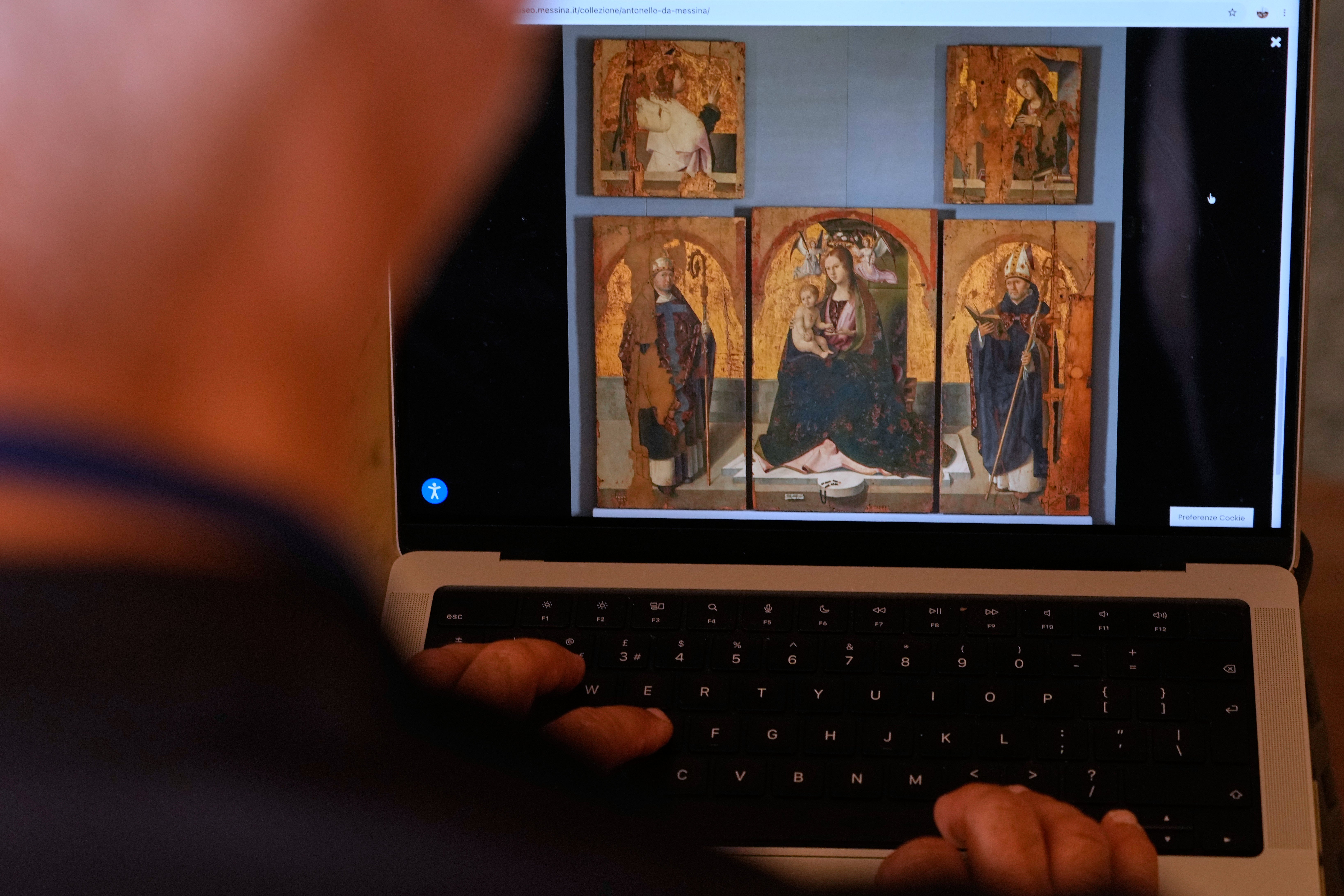 The thieves made off with three of the five surviving panels of the San Gregorio Polyptych, dated from 1473 (AP)
independent.co.uk
The thieves made off with three of the five surviving panels of the San Gregorio Polyptych, dated from 1473 (AP)
independent.co.uk
Four Renaissance artworks vanish from Sicilian museum, thieves bypass alarms at Messina’s MuMe during Ferragosto, famous pieces may be harder to sell than to steal
Four works attributed to the Sicilian Renaissance painter Antonello da Messina were stolen from the MuMe regional museum in Messina on Saturday evening, shortly before 10 p.m., according to The Independent citing Italian reporting. The theft took place during Ferragosto, the peak public holiday of the Italian summer, when crowds, reduced staffing and disrupted routines can make even well-known institutions easier to probe. Museum director Marisa Mercurio said the thieves bypassed the site’s security systems and removed pieces that include three panels from the 1473 San Gregorio Polyptych as well as a double-sided panel depicting the Virgin Mary and a Pietà that was kept in an armoured case.
The immediate loss is cultural, but the mechanics are familiar: regional museums hold nationally significant objects while operating with local budgets, uneven staffing and legacy security systems that must work every night, not just when politicians visit. Ferragosto concentrates tourism and attention, yet it can also thin out the people who know the building best, creating a narrow window where a small team can test procedures and move quickly. The Independent reports that the museum was closed on Sunday as evidence was collected, a reminder that the public’s access to a collection is often the first thing sacrificed after a breach.
The stolen works are the kind that cannot be sold through reputable channels without immediate detection. Lynda Albertson, an art-crime analyst and chief executive of the ARCA art crimes research association, told The Independent that stealing an Antonello may be easier than selling one because the pieces are instantly recognisable. That does not make them useless to criminals. Albertson said famous artworks are often used as collateral, valued not for display but for leverage inside illicit networks where ownership is enforced by threats rather than paperwork.
The heist also lands amid a period of heightened attention to high-end art crime. The Independent notes that the theft came shortly after police in Parma recovered stolen works by Renoir, Cézanne and Matisse, with detentions following that earlier break-in. Italy has shown it can recover art after the fact; preventing theft in the first place is harder, because the cost is paid upfront while the benefit is invisible.
In March, the Italian government bought Antonello da Messina’s devotional work Ecce Homo at Sotheby’s in New York, a purchase The Independent says boosted the painter’s profile. This weekend, four Antonello works left a museum in Messina without a receipt, and the building closed the next day to let investigators walk the empty rooms.