
Polish pilgrims die in Hungary bus crash
M3 motorway rollover near Mezőkeresztes sends survivors to hospitals across region, enhanced checks promised after another night-drive disaster
Images
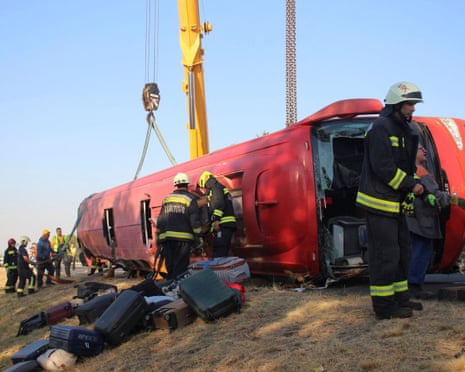 Emergency services at the scene of the crash near the town of Mezőkeresztes. Photograph: Balazs Toth/Mezőkövesd Képekben/Reuters
theguardian.com
Emergency services at the scene of the crash near the town of Mezőkeresztes. Photograph: Balazs Toth/Mezőkövesd Képekben/Reuters
theguardian.com
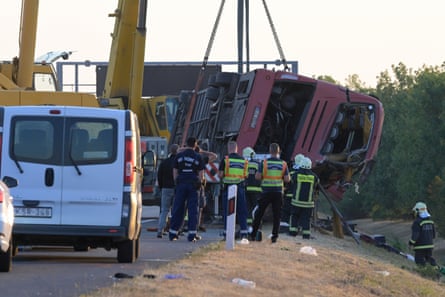 A crane lifts the bus from the side of the motorway. Photograph: Zoltán Máthé/EPA
theguardian.com
A crane lifts the bus from the side of the motorway. Photograph: Zoltán Máthé/EPA
theguardian.com
A bus carrying Polish Catholic pilgrims crashed on Hungary’s M3 motorway near Mezőkeresztes early Sunday, killing 12 people and sending most of the passengers to hospitals in several cities, according to The Guardian. Hungarian police detained the driver as investigators examined early indications that he may have fallen asleep at the wheel. The vehicle was reported to have left the road around 1am local time and overturned into a ditch.
The bus was carrying 57 passengers and two drivers, and the pilgrims were described as coming from Poland’s south-eastern Podkarpackie region and returning from the Catholic shrine in Međugorje in Bosnia and Herzegovina. Poland’s foreign ministry said survivors were transferred to hospitals in Eger, Debrecen and Miskolc, while Hungarian emergency services reported dozens of injuries, including people trapped under the crushed roof who had to be pulled out through windows. Polish authorities activated consular support, and Poland’s infrastructure minister announced enhanced checks on buses and drivers’ working hours—an administrative response that tends to arrive after the crash, not before it.
The accident lands in a well-worn corridor of long-distance coach travel that moves religious groups, tourists and seasonal workers across central Europe at night, when traffic is light and schedules are tight. Two-driver crews are meant to reduce fatigue risk, but the system still relies on paper compliance and after-the-fact enforcement, while passengers—often older travellers on organised trips—have limited ability to judge whether rest rules are being followed. The Guardian notes that similar tragedies have struck Polish pilgrim trips before, including a 2022 crash in Croatia that also killed 12 people, and a 2002 crash in Hungary with a higher death toll. Each incident produces condolences from leaders and a new promise of checks; the core vulnerability remains the same: a single lapse at motorway speed turns a packed coach into a mass-casualty event.
Hungary’s prime minister, Péter Magyar, and Poland’s president, Karol Nawrocki, issued condolences, while prosecutors in Poland were reported to be involved in the investigation. The motorway was closed for hours as emergency crews worked the scene.
By dawn, the pilgrims’ bus lay on its side in a ditch off the M3, and the first official action was not a roadside inspection but a detention and an investigation file.