
Polish tourist bus crashes in Hungary
12 killed and at least 10 injured on M3 motorway near Mezokeresztes, driver taken into custody as police cite possible fatigue
Images
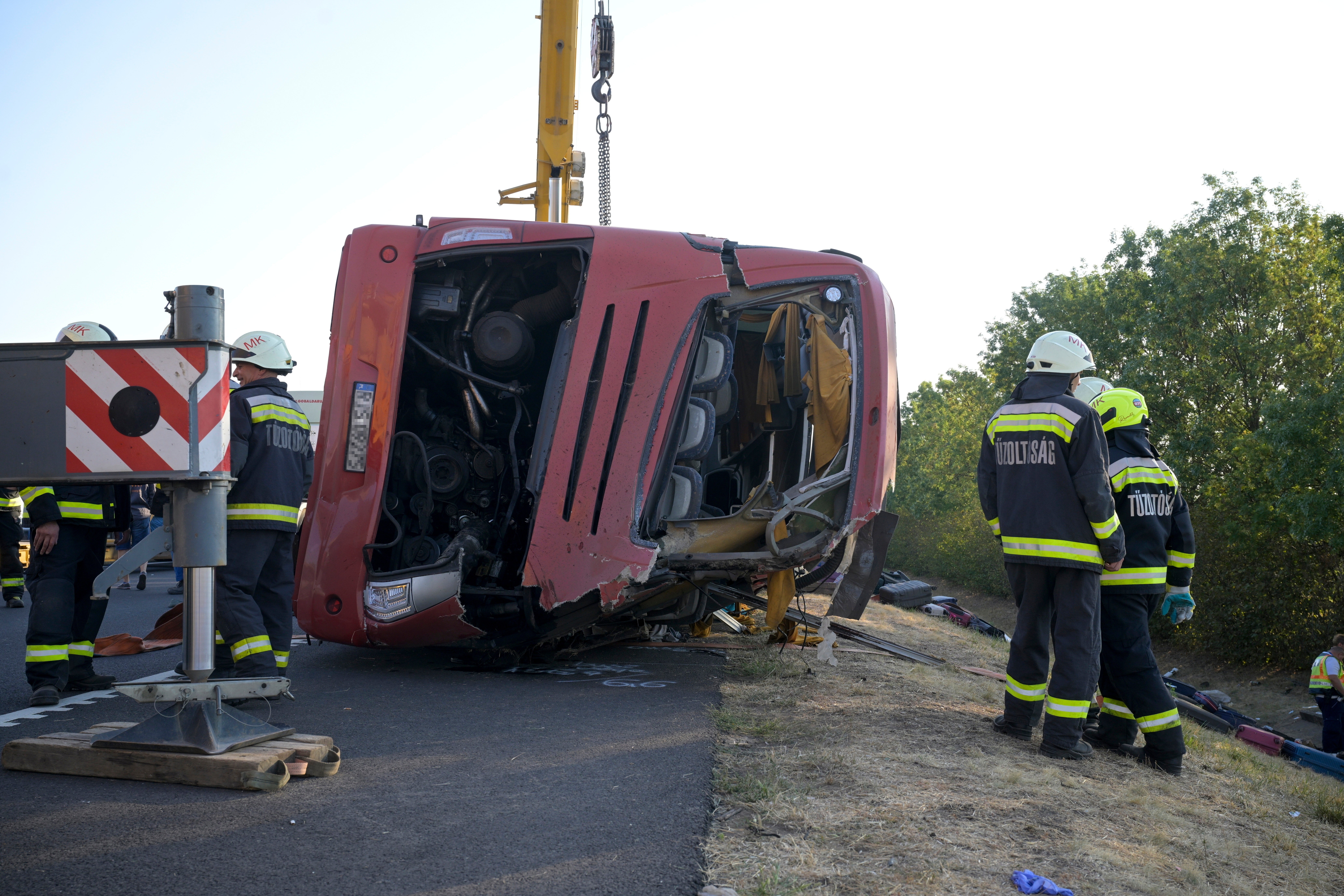 (MTVA - Media Service Support and Asset Management Fund)
independent.co.uk
(MTVA - Media Service Support and Asset Management Fund)
independent.co.uk
Twelve people were killed when a Polish-registered coach carrying a tourist group crashed overnight on Hungary’s M3 motorway near Mezokeresztes, according to Reuters reporting carried by the Independent. Police said the bus veered into a ditch and overturned, leaving it on its side with smashed windows as luggage and personal belongings spilled across the roadside.
The bus was carrying 57 passengers and two drivers, the Independent reports, and at least 10 others were injured. Hungarian officials said rescue workers were dispatched and the injured taken to hospital, while Polish authorities activated consular support and asked that information be verified through official channels. Police said the driver was taken into custody as investigators examined preliminary indications that he may have fallen asleep.
Long-distance coach travel inside the EU is marketed as the cheap, low-friction alternative to flights and rail: one vehicle, one ticket, one borderless itinerary. But the economics that make it attractive—tight schedules, overnight driving, and pressure to keep a vehicle moving—also concentrate risk in a single moment of inattention. When a crash happens at motorway speed, the casualty count reflects not only the violence of the impact but the simple arithmetic of occupancy.
The official statements after such incidents tend to focus on individual error—fatigue, speed, distraction—because that is where criminal liability sits. Yet the operational reality is shaped by contracts and margins: tour operators sell packages, carriers compete on price, and drivers absorb the consequences of delays that customers do not want to pay for. In that environment, “two drivers” reads less like redundancy than a reminder that the route was demanding enough to require it.
Hungary has seen repeated scrutiny of road safety after major crashes involving foreign coaches in past years, and every investigation produces the same practical questions: how rest periods are documented, how strictly they are enforced, and what happens when the timetable is already broken. The Independent notes that the bus was heading toward Nyiregyhaza; for passengers asleep in their seats, the distinction between a routine overnight transfer and a mass-casualty event was measured in seconds.
By daylight the coach was still lying in the ditch, and two governments were issuing condolences while police reconstructed why it left the carriageway.