
Trump threatens to declare Strait of Hormuz US territory
Remarks come as waterway stays mostly closed after months of war, gasoline prices rise while legal status stays unchanged
Images
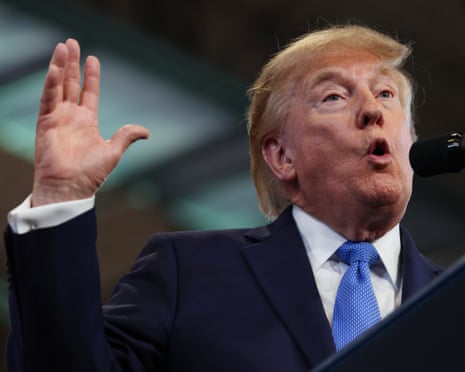 Donald Trump at the David S Mack Center for Training and Intelligence in Garden City, New York, on Friday. Photograph: Samuel Corum/Getty Images
theguardian.com
Donald Trump at the David S Mack Center for Training and Intelligence in Garden City, New York, on Friday. Photograph: Samuel Corum/Getty Images
theguardian.com
Donald Trump told an audience at a police academy on Long Island that he may declare the Strait of Hormuz “a territory of the United States,” according to The Guardian. The remark came as the waterway remains all but closed after months of war involving the US, Israel and Iran, and after Washington has tightened a blockade on Iranian shipping and ports.
Hormuz is not a rhetorical prop in most presidencies. Roughly a fifth of the world’s seaborne oil typically passes through the narrow strait, and the Guardian notes fuel prices have risen sharply since the conflict began. Trump framed higher gasoline prices in the US as a price worth paying to stop Iran from obtaining a nuclear weapon, saying Americans paying “a little bit more” should accept it.
The statement also sits awkwardly beside the legal and operational realities of a navigable strait bordered by Iran and Oman. Trump has repeatedly claimed the US has “total control” over Hormuz, and at the academy event he said “no ships get through unless we want them to,” language that treats a global transit route as a checkpoint. Whether the remark signals policy or performance was unclear, the Guardian reports, but it arrives as peace talks remain stuck and Tehran refuses to reopen the strait.
Iran’s deputy foreign minister, Kazem Gharibabadi, responded on X that Tehran would not be intimidated, and that the strait would be opened or closed under Iran’s authority. Iran has also set out conditions for reopening: compensation for war damage, sanctions relief, the release of frozen assets and what it calls a correction in US behavior. Those demands, and the US claim of a sustained blockade, point to a standoff where shipping schedules and insurance costs do the real negotiating long before diplomats do.
For allies and oil importers, the episode underlines how quickly an energy chokepoint can become a domestic political talking point in Washington. For the US, it offers a way to repackage a costly, open-ended pressure campaign as control—while the bill shows up at the pump.
Trump’s line about turning Hormuz into US territory was delivered at a police academy lectern in New York. The strait itself remained closed enough that the White House was still arguing about who gets to decide when ships move again.