
Nigel Farage skips Clacton by-election count
He declares victory from Farage Fest while police cite robust operation, a resignation election turns into a dispute over the declaration stage
Images
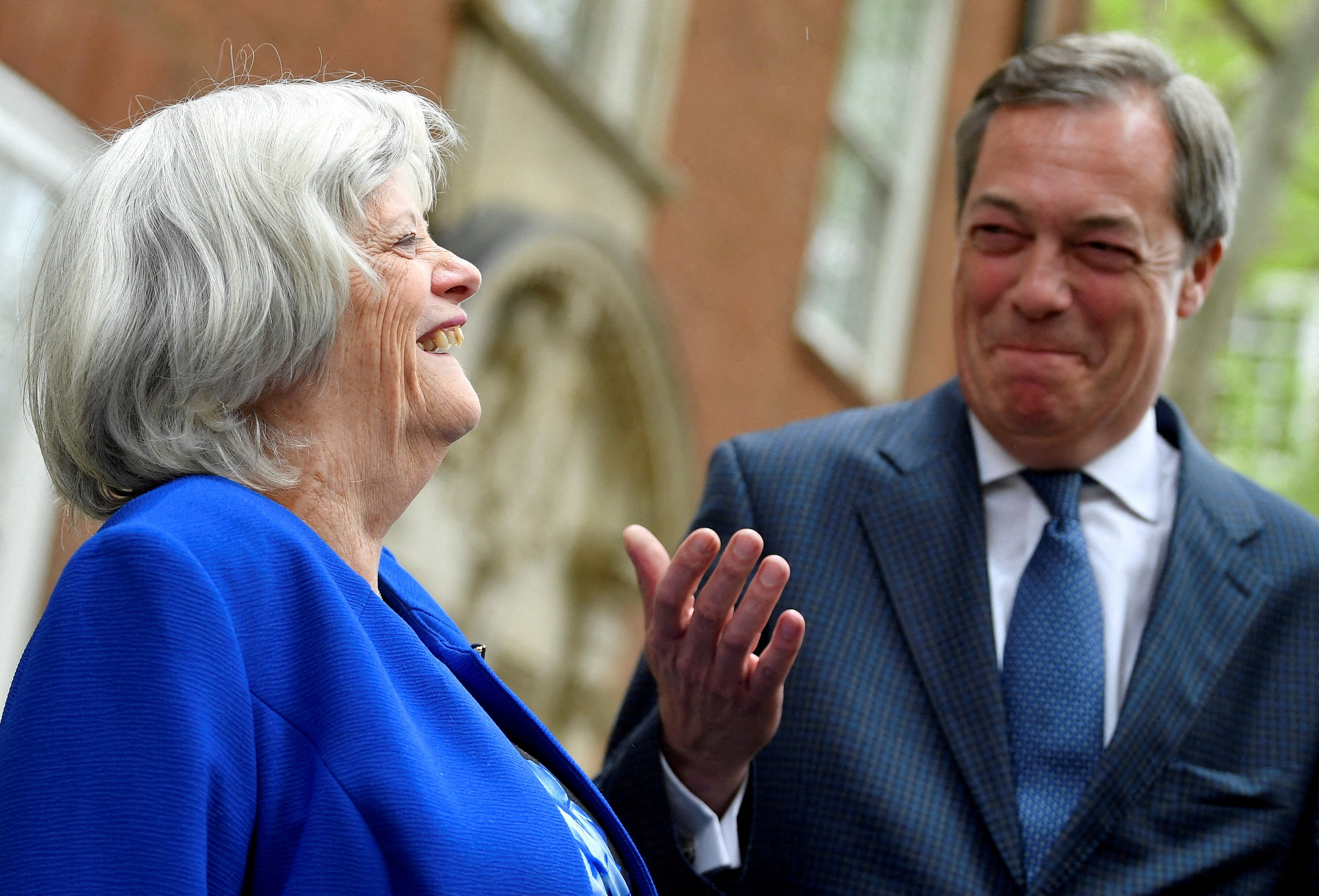 File: Brexit campaigner and Member of the European Parliament Nigel Farage and Anne Widdecombe pose for a photocall to promote her joining the ‘Brexit Party’ (Reuters)
Reuters
File: Brexit campaigner and Member of the European Parliament Nigel Farage and Anne Widdecombe pose for a photocall to promote her joining the ‘Brexit Party’ (Reuters)
Reuters
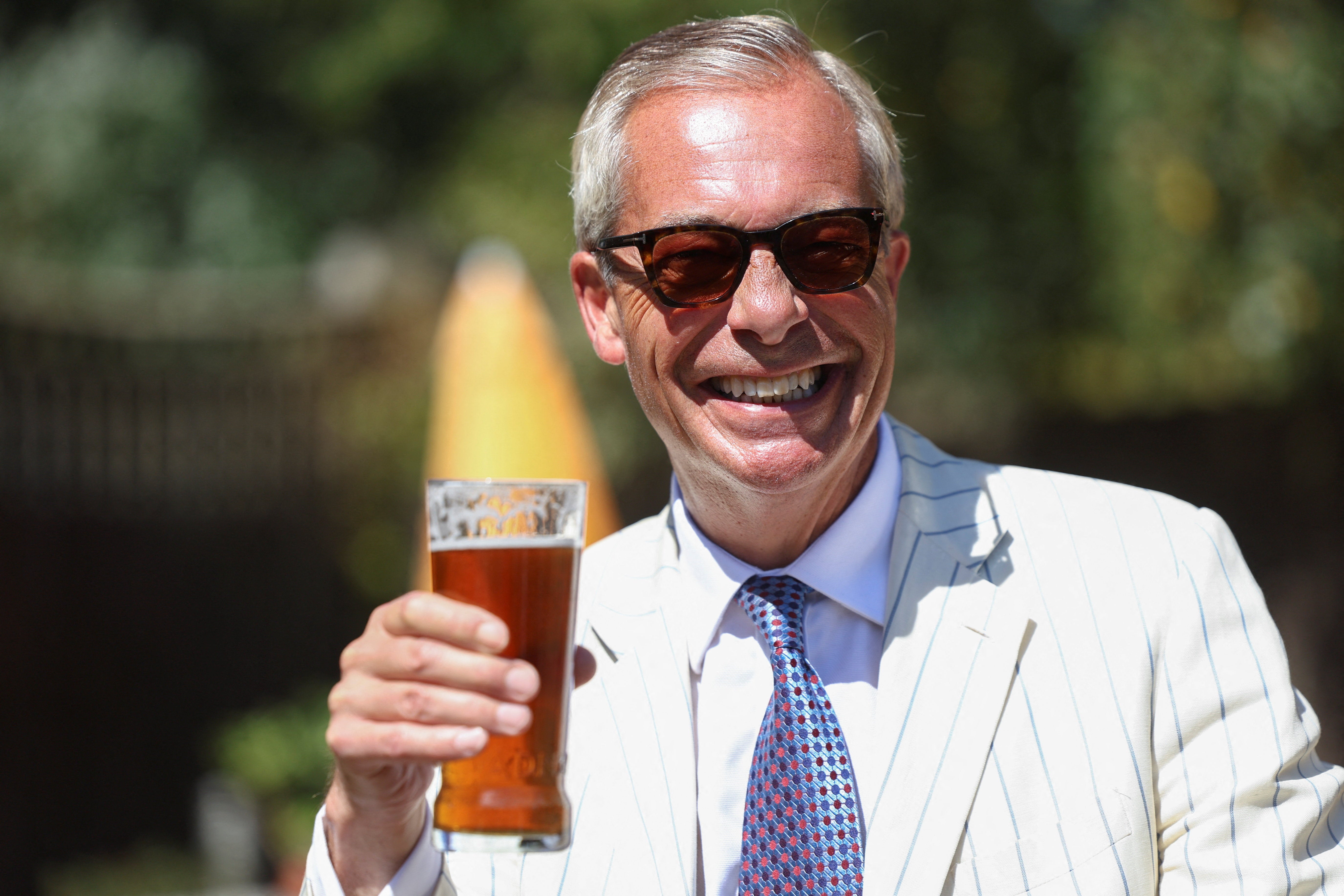 Britain's Reform UK party leader Nigel Farage visits The Ship, on the day of voting in the Clacton by-election, triggered by his own resignation, in Kirby Le Soken, Essex, Britain, 13 August 2026 (Reuters)
Reuters
Britain's Reform UK party leader Nigel Farage visits The Ship, on the day of voting in the Clacton by-election, triggered by his own resignation, in Kirby Le Soken, Essex, Britain, 13 August 2026 (Reuters)
Reuters
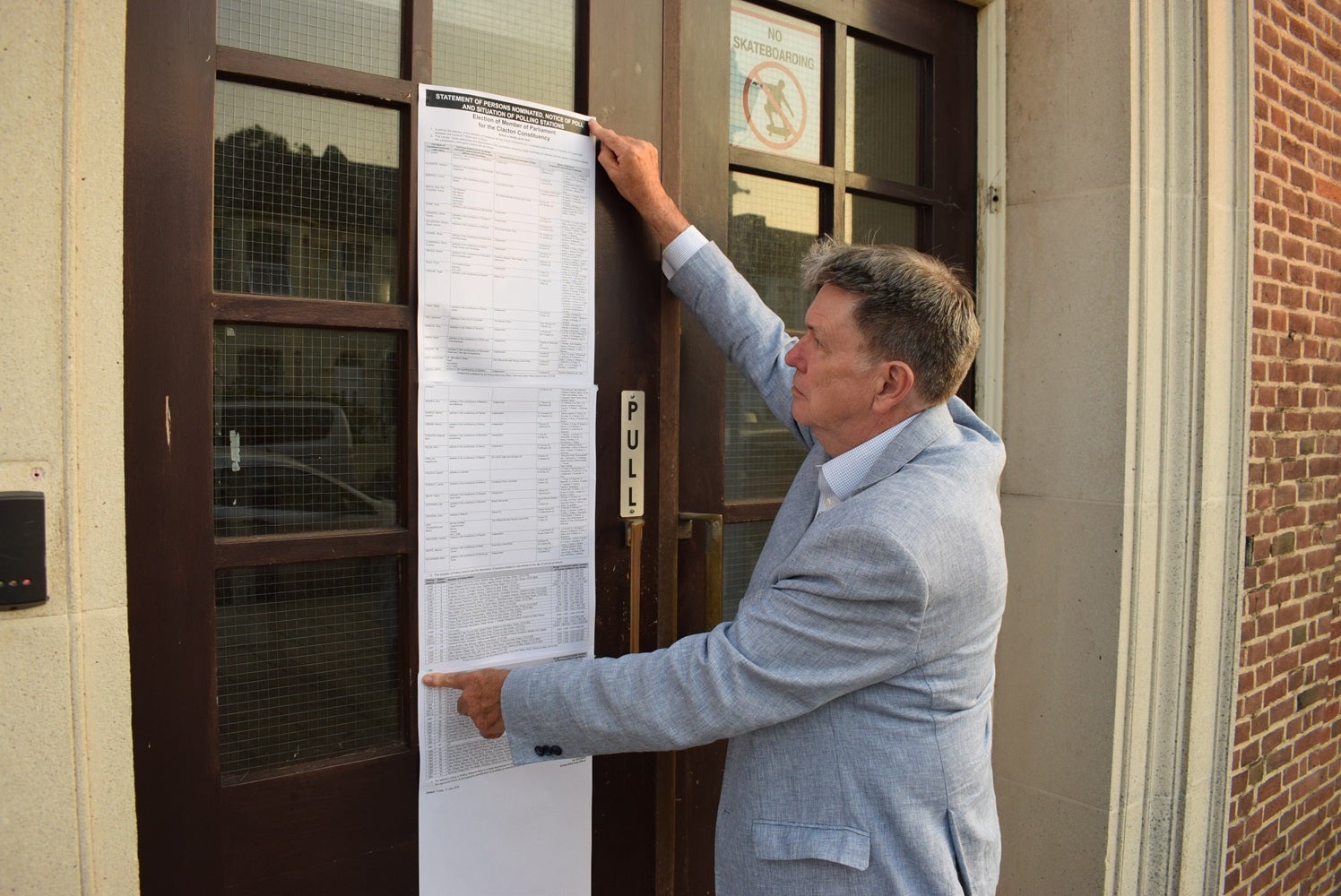 Ian Davidson, chief executive of Tendring District Council, posting the Statement of Persons Nominated for the Clacton by-election, at the town hall (PA Media)
PA Media
Ian Davidson, chief executive of Tendring District Council, posting the Statement of Persons Nominated for the Clacton by-election, at the town hall (PA Media)
PA Media
 Getty
Getty
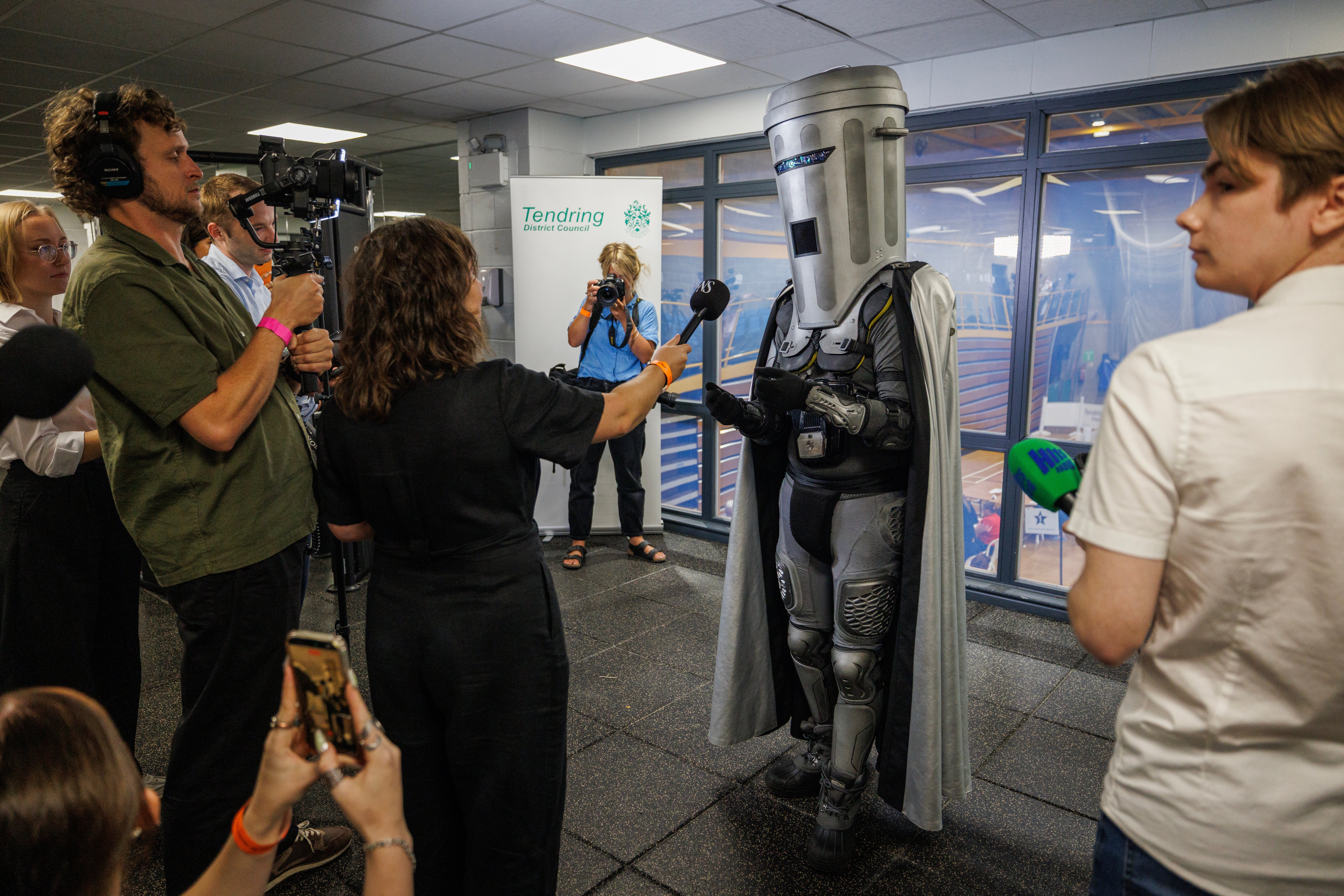
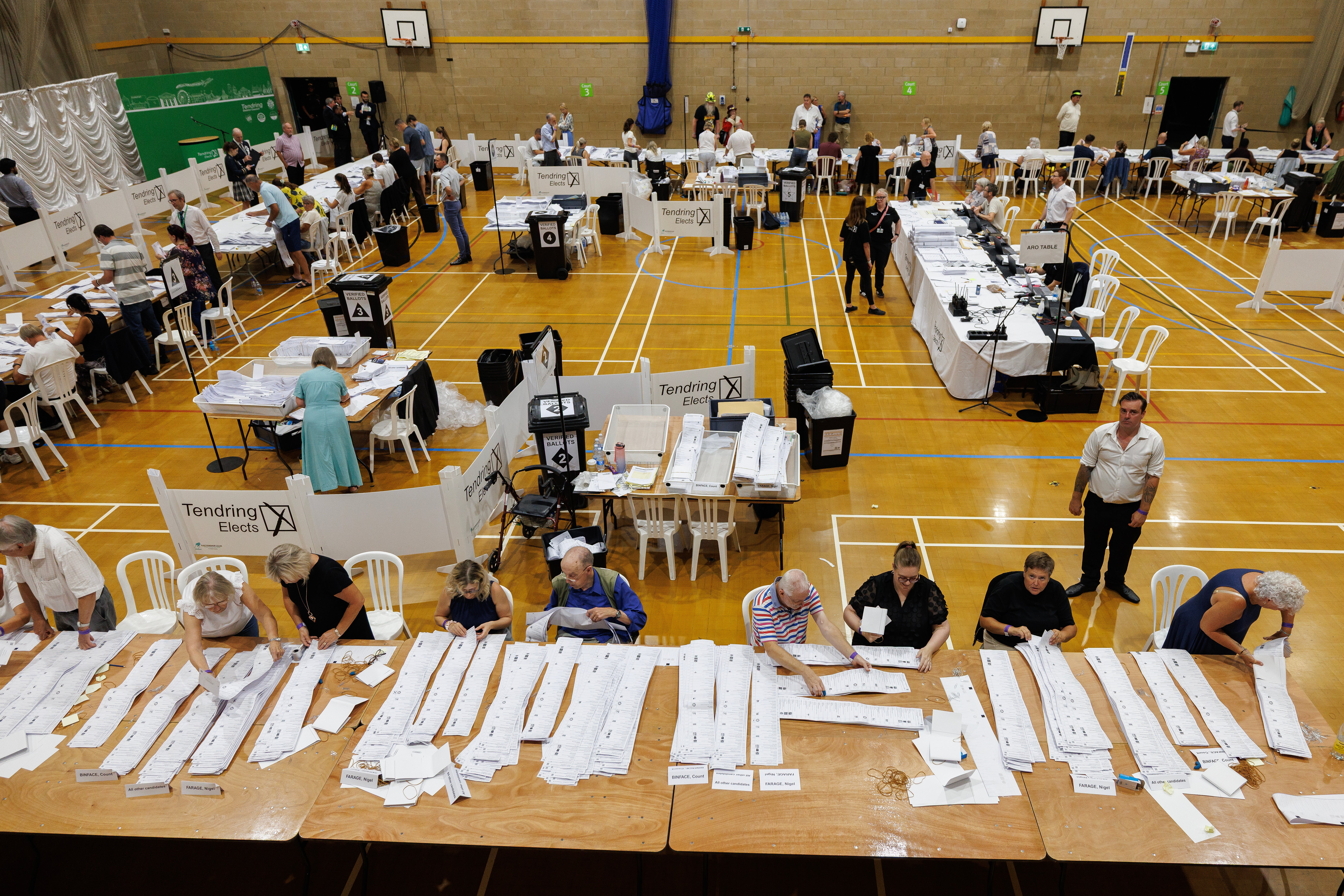 Election workers count ballots at Clacton Leisure Centre after voting closed in the Clacton-on-Sea By-election on 14 August 2026 in Clacton-on-Sea, England (Getty)
Getty
Election workers count ballots at Clacton Leisure Centre after voting closed in the Clacton-on-Sea By-election on 14 August 2026 in Clacton-on-Sea, England (Getty)
Getty
 Nigel Farage dons pinstripe suit as casts his vote in the Clacton by-election
standard.co.uk
Nigel Farage dons pinstripe suit as casts his vote in the Clacton by-election
standard.co.uk
 <p>CLACTON-ON-SEA, ENGLAND - AUGUST 14: Election workers count ballots at Clacton Leisure Centre after voting closed in the Clacton-on-Sea By-election on August 14, 2026 in Clacton-on-Sea, England. The Clacton-on-Sea by-election was triggered by Reform UK leader Nigel Farage resigning his seat to seek voter "absolution" amid parliamentary scrutiny over an undeclared £5 million donation from a Crypto billionaire. In protest of what they called a political stunt, the main UK parties have boycotted the race, leaving a ballot paper of 33 opponents consisting of independents and fringe candidates. The absence of mainstream competition has positioned the satirical space-warrior candidate Count Binface as Farage's primary, high-profile challenger. (Photo by Dan Kitwood/Getty Images)</p>
standard.co.uk
<p>CLACTON-ON-SEA, ENGLAND - AUGUST 14: Election workers count ballots at Clacton Leisure Centre after voting closed in the Clacton-on-Sea By-election on August 14, 2026 in Clacton-on-Sea, England. The Clacton-on-Sea by-election was triggered by Reform UK leader Nigel Farage resigning his seat to seek voter "absolution" amid parliamentary scrutiny over an undeclared £5 million donation from a Crypto billionaire. In protest of what they called a political stunt, the main UK parties have boycotted the race, leaving a ballot paper of 33 opponents consisting of independents and fringe candidates. The absence of mainstream competition has positioned the satirical space-warrior candidate Count Binface as Farage's primary, high-profile challenger. (Photo by Dan Kitwood/Getty Images)</p>
standard.co.uk
Nigel Farage skips Clacton by-election count, he declares victory from Farage Fest and cites police warning, a one-man race becomes a test of whether rituals still matter
Nigel Farage said he would not attend the declaration of the Clacton by-election result as votes were being counted, instead announcing an “overwhelming” victory from an event billed as “Farage Fest” in the Essex countryside. According to The Independent, Farage said he did not want to be “humiliated by nobodies,” while the Evening Standard reports he framed his absence as following advice from Essex Police about an “organised campaign” to “disrupt and degrade the result.” The count was taking place at Clacton Leisure Centre under what the acting returning officer, Tendring District Council chief executive Ian Davidson, called a “robust policing operation.”
The by-election itself was a political oddity: Farage resigned and then immediately sought re-election, while the major parties boycotted the contest, leaving a field crowded with minor candidates and a satirical rival, Count Binface. Farage used his victory speech to argue the vote was a rebuke to “the political establishment,” and claimed he had secured more votes than when he won the seat at the 2024 general election, the Standard reports. The Independent notes he tied the contest to scrutiny of his finances and said the scale of his win would vindicate his resignation and decision to stand again.
What would normally be a procedural moment—candidates standing on a stage as the returning officer reads out numbers—became the focal point because it is one of the few places in British politics where slogans meet arithmetic in public. Farage’s explanation shifts between security and status: he cited police warnings about disruption, but also spoke about refusing to be demeaned at the declaration. Davidson, for his part, emphasised that attendance is a candidate’s personal decision while insisting the count would proceed safely.
The boycott by Labour, the Conservatives and the Liberal Democrats removed the usual two-party pressure that forces candidates to compete on turnout operations and local issues, and replaced it with a referendum-style atmosphere where the loudest narrative can dominate. Farage’s claim that canvassers from multiple parties backed Count Binface as the “uni-party” candidate illustrates how easily a low-competition election can be repackaged into a broader grievance story, even when the ballot is crowded rather than competitive.
In Clacton, the police presence and the empty space at the declaration both became part of the campaign message. The votes were still being counted at the leisure centre while the candidate most associated with the seat stayed several miles away.
The returning officer said the count would continue “in a safe and secure manner.” Farage said he would not stand on the stage when the result was read out.