
Vietnam seizes more than a tonne of ivory at Quy Nhơn port
Police say shipment came from Republic of the Congo and was hidden in timber, biggest local haul sits alongside earlier multi-ton seizures elsewhere
Images
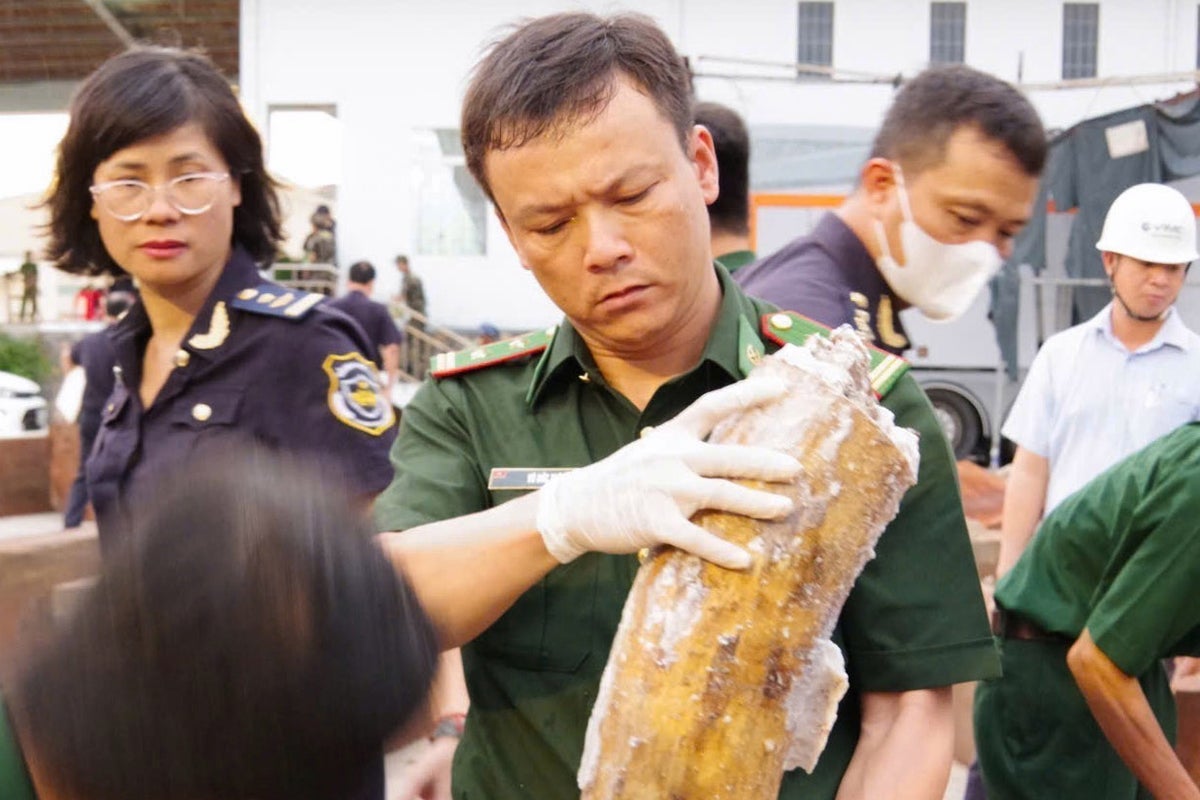 Authorities in Vietnam discover more than a ton of concealed ivory illegally shipped from Africa
independent.co.uk
Authorities in Vietnam discover more than a ton of concealed ivory illegally shipped from Africa
independent.co.uk
Vietnam seizes more than a tonne of ivory at Quy Nhơn port, authorities say 221 pieces were hidden inside sawn timber shipped from Africa, and police have opened a criminal investigation under protected-species rules.
According to the Vietnam News Agency, the shipment arrived in three containers and was discovered during customs clearance inspections. Alongside the ivory, officials said they found 79.3 kilograms of animal bones believed to come from big cats such as tigers—materials that can be processed into products used in traditional Chinese medicine, Euronews reported. Gia Lai provincial police said the cargo had been transported from the Republic of the Congo.
The seizure is being presented as a port success story, but it also sketches the shape of the market. Vietnam has long been described by international monitors and its own media as a transit hub for illegal wildlife, with a large share moving onward to China while a domestic market persists inside Vietnam and across Southeast Asia. That combination—high trade volumes, complex logistics chains, and persistent end-demand—creates room for concealment strategies that look mundane rather than exotic: timber shipments, multiple containers, and paperwork that can pass until someone decides to look closely.
Vietnam’s authorities framed the haul as the biggest ever discovered at Quy Nhơn. The comparison point is telling. Much larger seizures—of more than seven tons—have been made in the past decade at ports in Danang and Haiphong, suggesting that interdictions can spike when enforcement attention and intelligence align, then fade as routes and methods shift. A port can tighten checks for a period, traffickers can reroute, and the overall business continues as long as the expected profit outweighs the expected probability of loss.
The legal backdrop is clear: most trade in ivory from elephants and other endangered animals is banned under CITES, the Convention on International Trade in Endangered Species of Wild Fauna and Flora, a treaty joined by almost all UN member states. The operational reality is messier. CITES constrains licit trade, but smuggling is priced like any other risk—spread across consignments, hidden in legitimate cargo, and diversified across products, from ivory to bones.
At Quy Nhơn, the ivory was laid out for cameras as evidence. The three containers that carried it had already crossed an ocean and reached a Vietnamese port before the system caught up.