
Aquaculture boom shifts costs to wild fisheries
El País cites fishmeal supply chain behind farmed salmon and shrimp, empty seafood counters become a marketing prop
Images
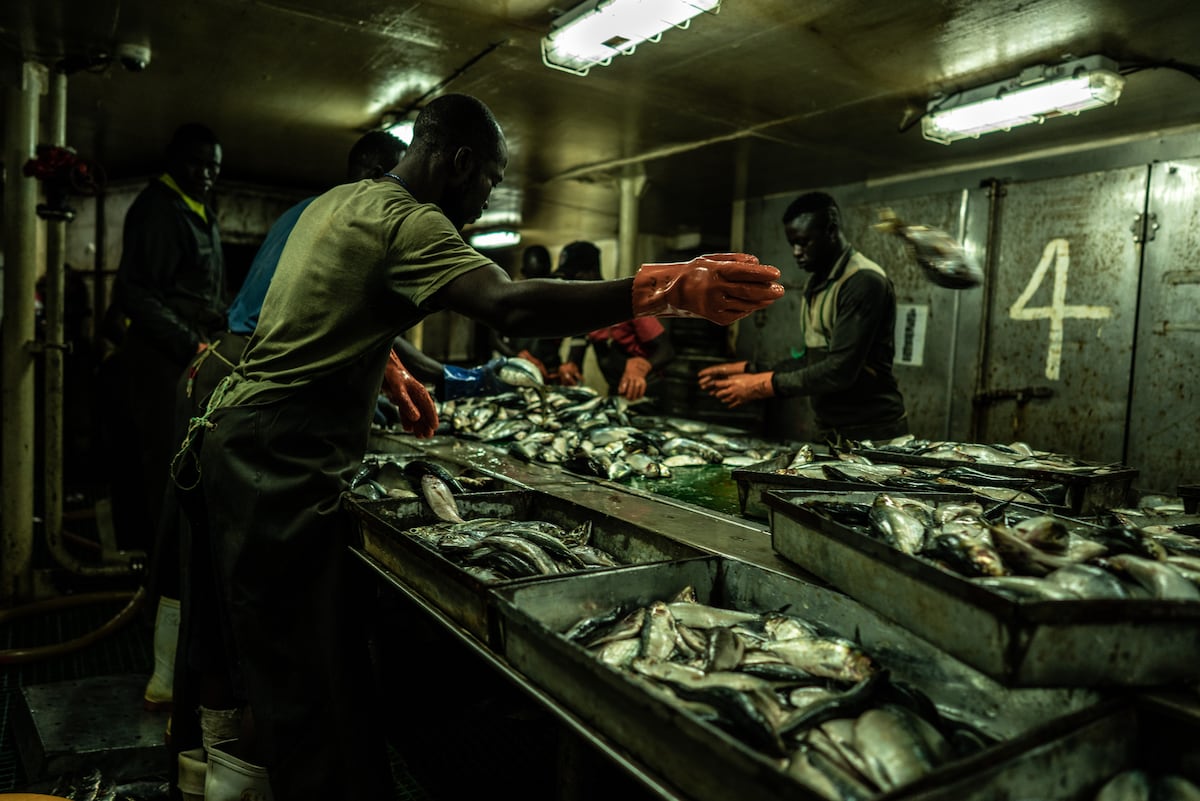 Aquaculture is depleting the oceans: A farmed salmon can consume more than six times its weight in wild fish
english.elpais.com
Aquaculture is depleting the oceans: A farmed salmon can consume more than six times its weight in wild fish
english.elpais.com
In September 2025, shoppers at Madrid’s Mercado de la Paz found fish counters deliberately left empty as part of an ad campaign by Spain’s aquaculture association Apromar. The industry’s message was blunt: without fish farming, seafood would become a luxury. But an investigation cited by El País describes a supply chain in which farmed fish can increase pressure on wild stocks rather than relieve it.
According to the report, roughly half of the world’s seafood now comes from aquaculture, a sector valued at €270 billion and described as the fastest-growing in global food production. Much of that growth is concentrated in species consumers associate with “sustainable” alternatives—salmon, shrimp, trout, sea bass and sea bream—yet these are often raised on feed made from wild-caught fish. Daniel Pauly of the University of British Columbia’s Sea Around Us project tells El País that two-thirds of global aquaculture involves species dependent on fishmeal and fish oil. In some operations, the article says, a farmed salmon may consume more than six times its own weight in wild fish before it reaches the market.
The economics push the costs offshore. The investigation by the Outlaw Ocean Project, a Washington-based journalism organization, maps the fishmeal industry that turns small pelagic fish into feed for farms supplying wealthier markets. El País reports that in places such as Gambia and Mauritania, fish that once supported local diets are increasingly diverted to fishmeal factories for export, worsening food insecurity. The same reporting links fishmeal plants and associated fleets to labour disputes, pollution complaints and protests—often triggered by the stench from processing—alongside workplace deaths described as preventable.
Retail branding, meanwhile, remains clean and European. El País writes that shrimp sold by major retailers including Carrefour, El Corte Inglés and E.Leclerc—raised on farms in Ecuador—has been fed with fishmeal from Latin American plants linked in the investigation to worker deaths, allegations of illegal fishing and repeated community protests. Carrefour said it had opened an investigation and would take measures if violations are confirmed, potentially excluding suppliers; the other two retailers did not respond to requests for comment.
The article also describes allegations of forced labour in parts of the seafood supply chain, including reports from Russia’s Far East and China’s Xinjiang region. The effect is a system where the consumer sees a fillet, while the inputs are scattered across fleets, factories and ports that are harder to inspect and easier to replace.
Apromar’s empty counters were staged to warn of scarcity. The investigation suggests the scarcity is being relocated—away from supermarket displays and toward the coastal communities that supply the feed.