
Overcrowded Lake Kariba ferry capsizes in Zimbabwe
At least 15 dead and 27 missing after boat hits large waves, capacity limits reappear only after disaster
Images
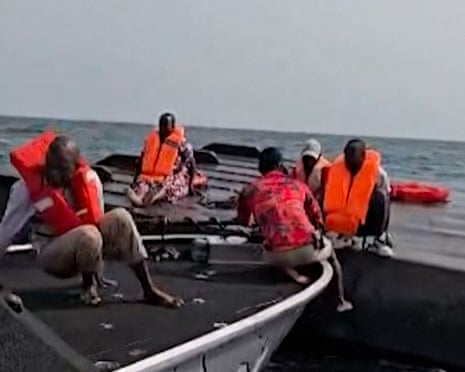 Passengers rescued from the ferry that capsized on Tuesday on Zimbabwe's Lake Kariba. Photograph: Maxton Kanhema/AFP/Getty Images
theguardian.com
Passengers rescued from the ferry that capsized on Tuesday on Zimbabwe's Lake Kariba. Photograph: Maxton Kanhema/AFP/Getty Images
theguardian.com
Lake Kariba’s ferry service turned into a mass-casualty rescue on Tuesday after an overcrowded vessel capsized in rough water off the Zimbabwean town of Kariba. At least 15 people were confirmed dead and 27 were missing, according to Zimbabwe’s civil protection unit, while search teams worked into Wednesday, The Guardian reports.
Officials said ticket sales indicated 114 adult passengers and five crew members were on a boat rated for 90, with an unknown number of children also aboard. A crew member told Zimbabwe’s national broadcaster ZBC that there were 153 people onboard when the ferry overturned, underlining the uncertainty that follows any accident where manifests are treated as paperwork rather than an operating constraint. Passengers told ZBC the boat began taking on water about 30 minutes after departure, before being hit by large waves.
Video shared by ZBC showed people perched on the upturned hull as speedboats approached and a helicopter circled overhead. A specialised underwater team was flown in as the operation shifted from surface searches to recovery work. The ferry had been travelling to islands and fishing camps, routes that are routine on the lake and often treated as informal infrastructure for communities and seasonal work.
Lake Kariba is not a remote pond but a strategic asset: the world’s largest manmade lake by volume, created in the 1950s by damming the Zambezi River. The dam supplies at least a third of the electricity for both Zimbabwe and Zambia, yet the transport safety regime on the water has repeatedly failed to match the lake’s economic importance. Boat overturnings are described as common, and the history is long enough to read like a warning system that never becomes policy: in 2014, 26 people—most of them children—drowned on the Zambian side of the lake when a boat capsized while taking them to independence day celebrations. On the Zimbabwean side, five people drowned in 2021, and further incidents were reported in 2023.
The immediate cause this week was waves, but the fatal variable was load. Overcrowding is a rational response when the cost of turning passengers away is borne by individuals trying to reach work sites and camps, while the downside is spread across families, rescuers and an already-stretched state apparatus. The Guardian notes that the lake’s creation displaced tens of thousands of people; decades later, the same water continues to impose costs, only now through preventable transport losses.
By Wednesday, rescuers were still looking for the missing while survivors described a boat that started filling with water within the first half-hour of its journey.