
UK calls Cobra meeting over extreme heat
Met Office forecasts up to 38C and issues rare amber warnings, second heatwave summit this year meets fifth heatwave summer
Images
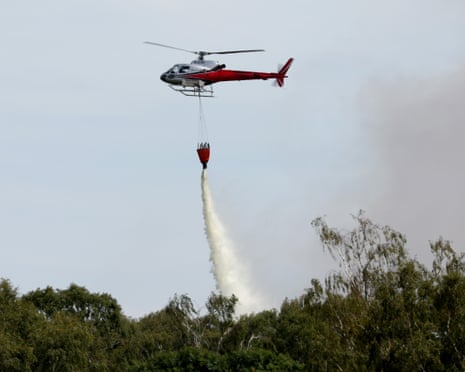 A waterbombing helicopter fighting a fire at the Holme Fen nature reserve in Peterborough, England. Andy Burnham will chair a meeting of the government’s emergency Cobra committee on Wednesday. Photograph: Ryan Jenkinson/Getty Images
theguardian.com
A waterbombing helicopter fighting a fire at the Holme Fen nature reserve in Peterborough, England. Andy Burnham will chair a meeting of the government’s emergency Cobra committee on Wednesday. Photograph: Ryan Jenkinson/Getty Images
theguardian.com
Britain will convene an emergency Cobra meeting on Wednesday as extreme heat drives wildfires and drought conditions across the country. The Guardian reports that temperatures of 33C are forecast for Wednesday and could reach 38C on Thursday, with rare amber “extreme heat” warnings issued for London and several regions from Thursday morning to midnight.
This is the second Cobra meeting this year focused on heatwaves, following one in June, and it comes as parts of the UK experience what the paper describes as their fifth heatwave of the summer. The Met Office has recorded 35 days at 30C or higher so far this year, surpassing the previous record set in 1995, according to the Guardian. Those numbers matter politically because they turn “preparedness” into a repeatable administrative task rather than an occasional crisis: every new heat episode becomes a test of whether government departments can coordinate the basics—water, fire response, health capacity—without improvisation.
The meeting is expected to include ministers from Defra, the Home Office and the Department of Health and Social Care, along with officials from the Environment Agency, the Guardian reports. A Downing Street spokesperson said the government understands the pressures on firefighters, farmers and NHS staff. That list hints at where costs land first: emergency services absorb the immediate workload, while agriculture and hospitals carry the slow-burn consequences of heat, smoke and dehydration.
The Fire Brigades Union’s general secretary Steve Wright warned of an “unprecedented summer of dangerous and volatile wildfires,” according to the Guardian. The paper also reports that the current “fire wave” is the most widespread the UK has experienced. The practical problem is that wildfire risk is being amplified by a combination of wet winters and prolonged heatwaves—vegetation grows, then dries—creating fuel at scale. When the pattern repeats, response becomes less about one-off mobilisation and more about staffing, equipment and land management choices made months earlier.
Opposition parties are already using the moment to demand specific policy moves. The Guardian quotes Green Party leader Zack Polanski calling for measures including taxing fossil fuel companies, creating cool spaces in communities and setting maximum working temperatures.
For now, the government’s public advice is familiar—follow heat alerts, drink fluids, check on vulnerable people. On Thursday, the amber warning runs from 9am to midnight.