
Nairobi bulldozes parts of Kibera for housing scheme
Ruto affordable-housing program funded by compulsory levy falls short of targets, residents hold Makao Bora cards but lack guarantees
Images
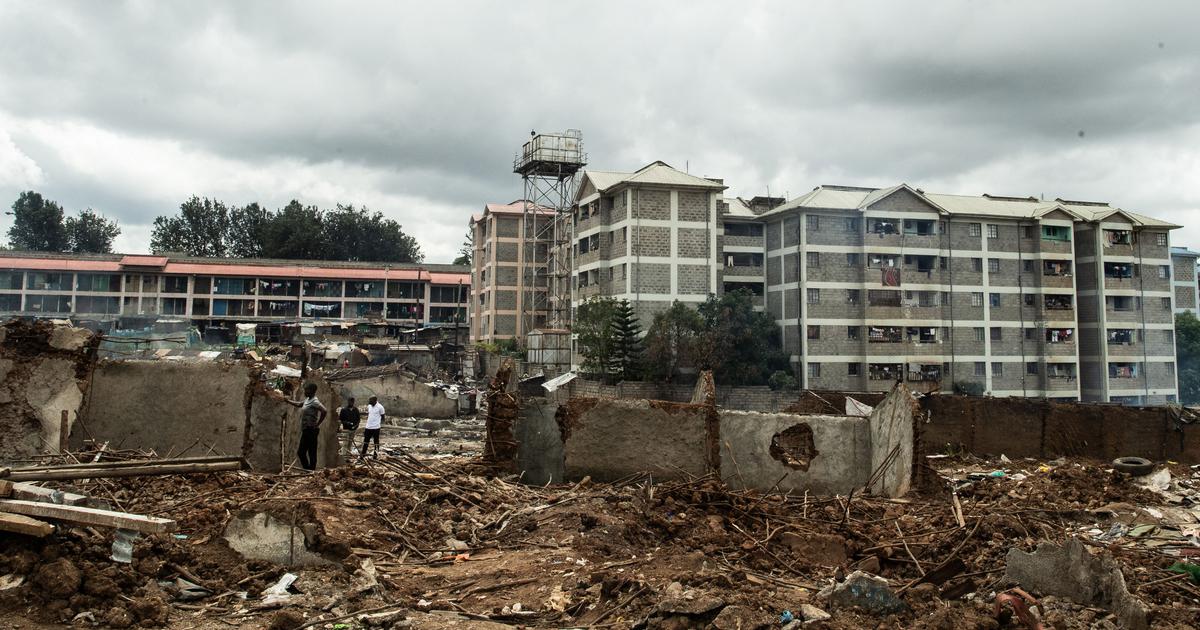 Residents of Soweto Zone D clear the remains of demolished structures following government-planned demolitions carried out to make space for a state affordable housing programme at the Kibera informal settlement, in Nairobi in April.
|
AFP
scroll.in
Residents of Soweto Zone D clear the remains of demolished structures following government-planned demolitions carried out to make space for a state affordable housing programme at the Kibera informal settlement, in Nairobi in April.
|
AFP
scroll.in
Bulldozers have begun cutting new roads through parts of Kibera, Nairobi’s best-known informal settlement, as Kenya pushes ahead with an “affordable housing” redevelopment tied to President William Ruto’s flagship programme. The Conversation reports that the project mixes social housing, “affordable” units and market-rate homes, while residents in the demolition zone wait to learn whether they will be recognised as beneficiaries. The work is being showcased publicly, including footage shared by Ruto of apartment blocks rising beside corrugated-iron homes.
The redevelopment sits inside a national plan that promises scale but has delivered far less so far. According to The Conversation, the programme aims to produce 200,000 housing units per year, yet by March 2026 only 8,367 units had been completed since Ruto took office in September 2022, with more projects at various stages. Financing is not voluntary: employees pay a compulsory levy of 1.5% of gross monthly salary, matched by employers, while people outside formal employment are also expected to contribute 1.5% of gross income. That structure creates a steady revenue stream for construction, but it also means the costs of the policy are spread across workers long before the homes exist, and regardless of whether contributors will ever qualify for an allocation.
Kibera is not just a cluster of substandard dwellings; it is a dense labour reservoir close to the city centre and a web of micro-enterprises that depend on foot traffic and proximity. The Conversation notes that earlier “upgrading” projects in Nairobi’s informal settlements have improved sanitation, roads and services, but they have also tended to raise rents and ongoing costs. When that happens, original residents often respond by subletting or leaving, and better-off households move in—turning a poverty-focused project into a mechanism for social replacement.
The pressure point in Kibera is not only displacement today but affordability tomorrow. Critics, the article says, question whether the new homes will be priced for lower-income households and whether allocation will be transparent. The State Department for Housing and Urban Development has enumerated residents and issued Makao Bora cards as proof of registration, but residents still do not know how that registration translates into a right to return, what the monthly costs will be, or whether informal workers can sustain them. Kibera’s political weight as a voting bloc adds urgency, but it does not resolve the basic question of who can keep a set of keys once the construction crews leave.
For now, the project’s most concrete output is the physical reordering of the settlement—new roads, cleared plots and rising blocks—while the terms of who gets to live there remain largely administrative.