
Magnitude 7.4 earthquake hits Colombia
More than 100 reported dead as buildings collapse in Cali and Pereira, new president de la Espriella faces first national test
Images
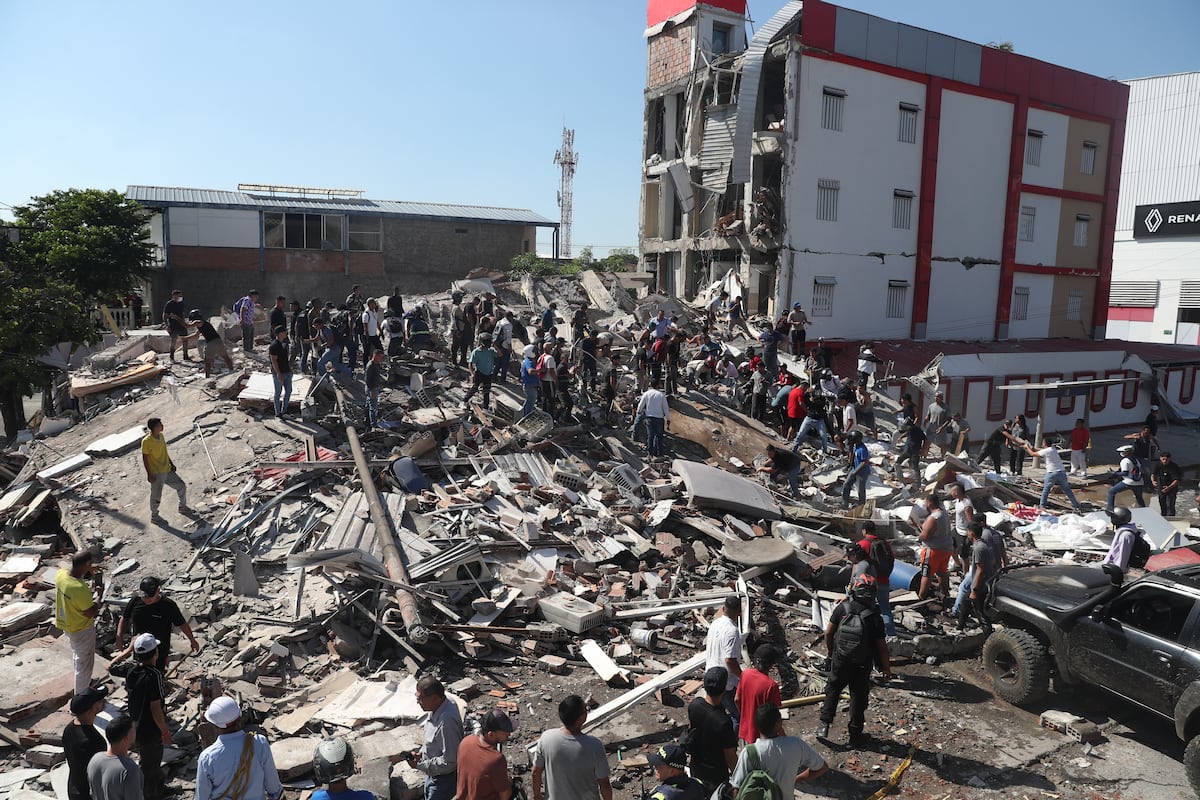 Over 100 people dead after magnitude 7.4 earthquake hits Colombia
english.elpais.com
Over 100 people dead after magnitude 7.4 earthquake hits Colombia
english.elpais.com
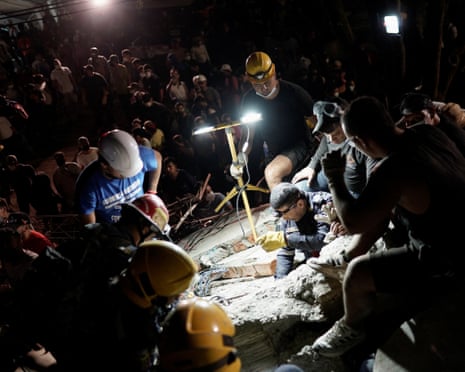 Rescuers work at the site of a collapsed building in Cali, western Colombia, on Monday evening. Photograph: Sergio Acero/Reuters
theguardian.com
Rescuers work at the site of a collapsed building in Cali, western Colombia, on Monday evening. Photograph: Sergio Acero/Reuters
theguardian.com
Colombia’s strongest earthquake in a decade hit the country’s central and western regions on Monday morning, killing more than 100 people and collapsing buildings in major cities, according to El País and live reporting from The Guardian. Colombia’s Geological Service put the epicentre in San José del Palmar in the Chocó department, and officials said the shaking was felt as far away as Panama and Ecuador. In Cali, local authorities reported dozens of structures collapsed with people trapped inside, while Pereira’s mayor said many of the dead were in the city’s metropolitan area. Hospitals in several cities were placed on red alert and multiple airports suspended operations as rescue teams and volunteers searched rubble into the evening.
The disaster lands days into a politically fraught transition. Abelardo de la Espriella was sworn in as president on August 7 after a bitter handover in which outgoing president Gustavo Petro and his allies boycotted the inauguration and alleged election fraud without evidence, El País reported at the time. Now the new administration is being judged first on logistics: how quickly it can coordinate firefighters, medical services, transport and local governments across a wide impact zone, and how transparently it can report casualties and structural risks as aftershocks and inspections continue.
The early response has been a mix of centralised command and local improvisation. De la Espriella travelled to Bogotá within hours and announced a Unified Command Center, while the government declared a national disaster to speed mobilisation of resources, according to El País. In Cali, The Guardian described volunteers using basic tools and their hands, pausing to listen for whistles from people trapped under masonry and forming human chains to move debris. Local authorities also moved to impose order: Cali declared a nighttime curfew, and the civil aeronautics agency suspended operations at several airports.
Colombia’s geography makes earthquakes a recurring test of state capacity rather than a one-off shock. The country sits on three tectonic plates and registers tens of thousands of tremors each month, most too small to feel, El País noted. When a rare, destructive quake hits densely populated areas, the cost is shaped less by the magnitude than by the quality of construction, enforcement and maintenance—things that are usually negotiated in city halls long before the ground moves.
By Monday evening, rescuers were still pulling survivors from collapsed buildings in Cali while officials warned the death toll was likely to rise. The first national crisis of Colombia’s new presidency began with citizens in pyjamas in Bogotá streets and ended with volunteers listening for whistles in the dark.