
France imposes water restrictions across most departments
Government says 67 areas at crisis alert and aquifers fall below normal, England drought spreads with no region classed normal
Images
 Drought forces water restrictions across nearly 70% of France
euronews.com
Drought forces water restrictions across nearly 70% of France
euronews.com
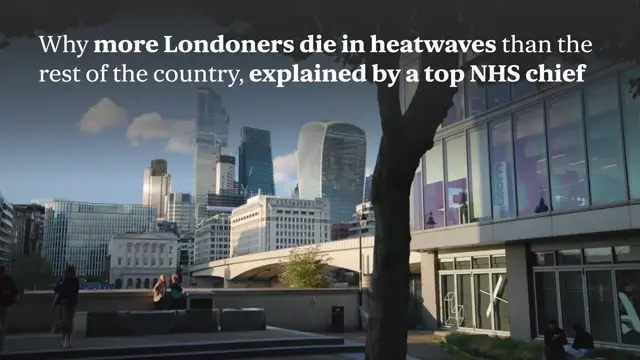 Why more Londoners die in heatwaves than the rest of the country, explained by NHS chief
standard.co.uk
Why more Londoners die in heatwaves than the rest of the country, explained by NHS chief
standard.co.uk
 <p>Sunseekers at Brockwell Park in south London. Parts of the UK are set to see their fifth heatwave of the summer as the country continues to bake in an unprecedented period of dry, hot weather. Picture date: Sunday August 9, 2026.</p>
standard.co.uk
<p>Sunseekers at Brockwell Park in south London. Parts of the UK are set to see their fifth heatwave of the summer as the country continues to bake in an unprecedented period of dry, hot weather. Picture date: Sunday August 9, 2026.</p>
standard.co.uk
 standard.co.uk
Nearly 70% of France was under water-use restrictions as of 10 August, according to the French government, after three months of heatwaves pushed much of the country into drought conditions. Euronews reports that 67 of France’s 101 departments were at the highest “crisis” alert level, where water is reserved for priority uses such as drinking supplies, sanitation, healthcare and civil protection. In England, the Environment Agency says more than two-thirds of the country is now officially in drought, with 71.3% of England classified as drought-hit and no area described as “normal”, according to the Evening Standard.
The immediate measures are familiar—limits on watering gardens and green spaces, bans on filling swimming pools, restrictions on washing cars, and tighter rules for irrigation. But the scale is turning household inconveniences into a competition between sectors that all assume they are essential. In France, the Bureau of Geological and Mining Research (BRGM) says two-thirds of aquifers that provide most drinking water have fallen below normal levels, with the drawdown sharper this year because July brought both a rainfall shortfall and higher demand—especially from agriculture and tourism. That combination matters: the hottest month on record can reduce supply at the same time as it raises consumption, leaving authorities to ration the same resource across residents, farms, and businesses whose peak season is summer.
The knock-on effects are not confined to taps. Europe’s recent summer has already shown how heat and low river levels can force power plants to cut output when cooling water runs short, while drought also weakens hydropower and stresses transport routes that depend on navigable waterways. Water restrictions arrive as wildfires have burned across parts of the continent, and France has recorded thousands of excess deaths during the heatwaves, according to Euronews’ summary of official assessments. In England, the National Drought Group—bringing together officials, water companies and farming leaders—has warned that all regions are under pressure, while farmers are already talking about crop failures and feed shortages that can reappear later as food-price spikes.
Politics is moving in behind the emergency response. Euronews notes that water has become a campaign issue ahead of France’s 2026 presidential race, with Gabriel Attal arguing he does not want to “leave” the topic to the Greens and La France insoumise. Jean‑Luc Mélenchon has seized on the same strain to propose reorganising administration around river basins—an attempt to make water storage and allocation a governing question rather than a seasonal crisis meeting. In the UK, Downing Street has defended its response while pointing to longer-term resilience measures such as reservoir investment, even as millions of customers are already under hosepipe bans and the country braces for another heatwave.
France’s ecology minister is due to convene a drought crisis meeting this week, after tanker trucks and bottled supplies were already being used in some areas in late July. In both countries, the restrictions are written as temporary rules, but the numbers—67 departments at crisis level in France and 71.3% of England in drought—describe something closer to a new baseline.