
Stanford team uses AI-designed bacteriophages to kill resistant E. coli
Evo 2 model trained on millions of genomes and released openly, biosecurity debate shifts from drugs to datasets
Images
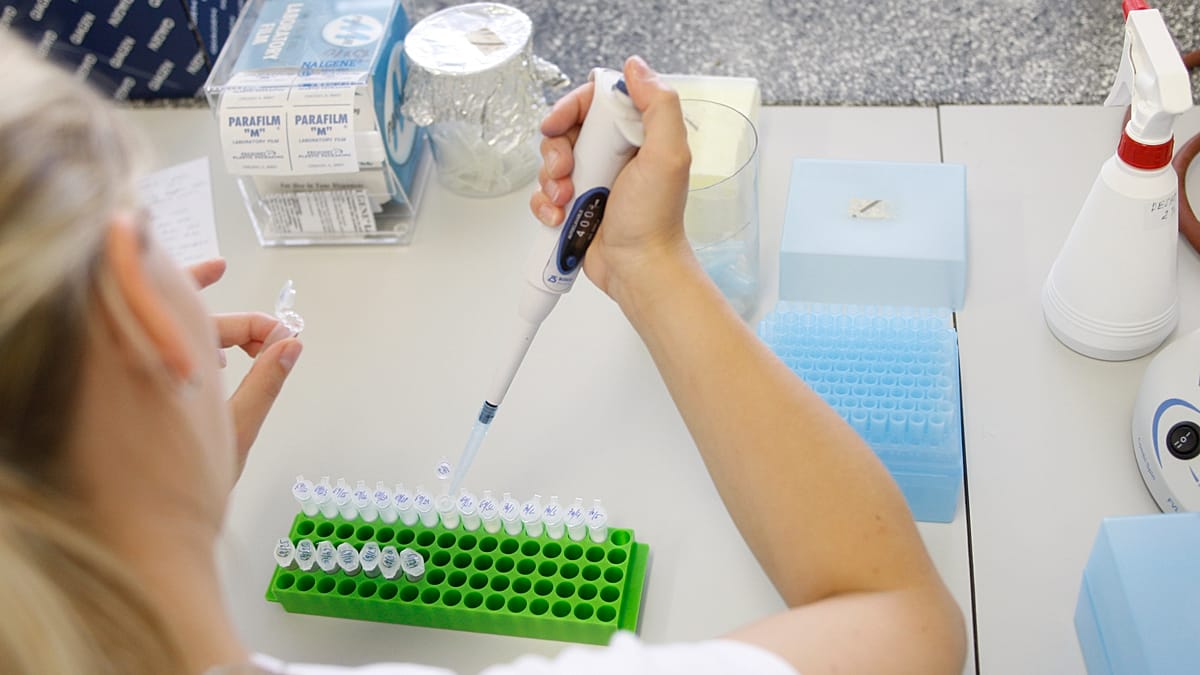 Scientists create first AI-designed viruses to fight drug resistance
euronews.com
Scientists create first AI-designed viruses to fight drug resistance
euronews.com
A Stanford University team working with the ARC Institute has used a generative AI model called Evo 2 to design bacteriophages—viruses that infect bacteria—and shown in laboratory tests that a 16-phage cocktail can rapidly kill E. coli that resisted naturally occurring phages, according to Euronews. The researchers describe the work as a path toward tailor-made “living antibiotics” for infections that no longer respond to standard drugs.
The immediate appeal is practical: bacteriophages can be highly specific, targeting a bacterium while leaving much of the rest of the microbiome intact. But specificity also creates a maintenance problem. As one of the study’s authors, Stanford chemical engineer Brian Hie, told Euronews, a bacterium that becomes resistant to a single phage can neutralise that treatment; the workaround is to use mixtures of genetically distinct phages so the microbe has to solve multiple problems at once. That logic resembles combination therapy in antivirals and cancer—except here the “active ingredient” is a replicating organism that can mutate and interact with its target.
Evo 2 was trained on millions of natural genomes to learn what the article calls the “grammar” of functional DNA. The same capability that helps generate useful phages also raises a question the life sciences have avoided answering at scale: who decides which biological sequences are too risky to circulate freely. Euronews notes there is no universal framework governing the datasets used to train biology-capable AI models. Developers sometimes exclude high-risk material voluntarily; the Evo 2 team said in early 2025 it removed pathogens that infect humans and other complex organisms to reduce ethical and safety risks and to pre-empt misuse.
Even with those exclusions, the model was released openly for anyone to download, a choice that shifts the burden from a controlled lab environment to the wider world. Simon Clarke, an associate professor at the University of Reading, told Euronews that naturally occurring pathogens remain a more immediate threat because they are easier to access and produce, but the direction of travel is clear: tools that lower the barrier to designing functional genetic sequences will spread faster than harmonised oversight. The article also points to an open letter signed by more than 100 researchers earlier in 2026 warning that a small subset of biological data, if misused, could create biosecurity risks—an argument for treating some datasets less like public archives and more like dual-use materials.
For now, the evidence is still bounded by the lab: a designed phage cocktail that beats natural phages against E. coli. The same open-source release that enables rapid follow-on work also makes it harder to know who is building what next.