
Iran nears Oman deal to reopen Strait of Hormuz
Tehran signals control over inbound shipping while tying access to US port blockade, shipping data already shows traffic falling
Images
 A drone view shows vessels in the strait of Hormuz. Photograph: Reuters
theguardian.com
A drone view shows vessels in the strait of Hormuz. Photograph: Reuters
theguardian.com
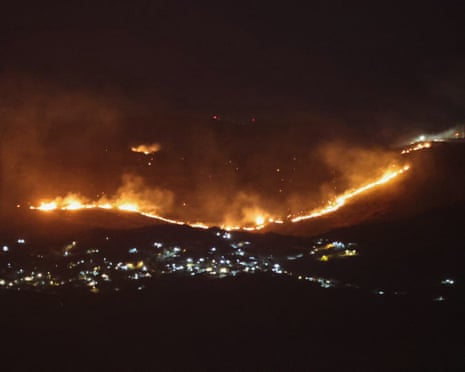 Forest fires sweep through the outskirts of the southern Lebanese village of Kfar Shouba as a result of Israeli shelling on Wednesday. Photograph: AFP/Getty Images
theguardian.com
Forest fires sweep through the outskirts of the southern Lebanese village of Kfar Shouba as a result of Israeli shelling on Wednesday. Photograph: AFP/Getty Images
theguardian.com
Iran says it is close to finalising a deal with Oman to reopen the Strait of Hormuz, a shipping lane that previously carried about a fifth of the world’s oil and gas, according to the Guardian’s live reporting and Reuters. The strait has been effectively closed since the start of the war in February, and Tehran is now signalling it will not return to the old arrangement of an open international waterway.
The outline being discussed is less a reopening than a redesign. Several reports cited by the Guardian suggest Iran would exercise control over ships entering the Gulf through Hormuz, while Oman would oversee outbound traffic. Iran has also linked any reopening to the US lifting what it calls a blockade of Iranian ports, turning maritime access into a bargaining chip rather than a neutral corridor. Reuters, cited in the Guardian, reported that Iranian sources pushed back on US President Donald Trump’s claim that a deal was imminent, saying key details remain unresolved even if some form of control concession has already been made.
Shipping markets tend to price chokepoints as if they are either open or closed; this negotiation points to a third state, where passage is available but conditional. If inbound ships face an Iranian gatekeeper, insurers, charterers and flag states must decide whether “reopened” still means predictable, contractable transit. The arrangement would also formalise the idea that regional states can allocate traffic rights in a waterway that global trade previously treated as routine infrastructure.
The timing is shaped by the region’s spillover conflicts. The Guardian reports that the Iran-backed Houthis said they attacked two Saudi oil tankers with ballistic missiles and have imposed a maritime blockade on Saudi Arabia, while shipping data showed traffic through Hormuz and Bab-el-Mandeb falling sharply from one day to the next. In parallel, Israel and Lebanon are in US-backed talks in Rome even as Israel issues new evacuation orders in southern Lebanon and both sides report casualties. Each additional front increases the value of controlling the remaining safe routes—and raises the cost for commercial operators who cannot wait for diplomats to finish.
Trump told Fox News earlier in the week that talks were “moving along nicely” and that the strait would be open “very soon”. Iran’s public line is narrower: Hormuz can reopen, but not as it was, and not without reciprocal moves elsewhere.
For now, the most concrete datapoint is not a draft agreement but the shipping trackers: fewer vessels attempted the passage yesterday than the day before.