
Nigeria says it rescued more than 300 kidnap hostages in one operation
Captives held in Kainji Lake national park forests, ransom economy persists alongside pay rises for soldiers
Images
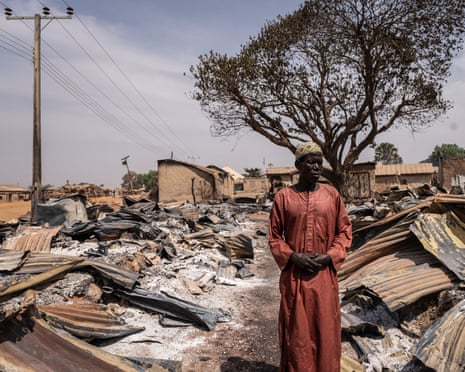 Over 160 of the freed abductees had been kidnapped in a February attack on Woro, Kwara state, pictured. Photograph: Light Oriye Tamunotonye/AFP/Getty Images
theguardian.com
Over 160 of the freed abductees had been kidnapped in a February attack on Woro, Kwara state, pictured. Photograph: Light Oriye Tamunotonye/AFP/Getty Images
theguardian.com
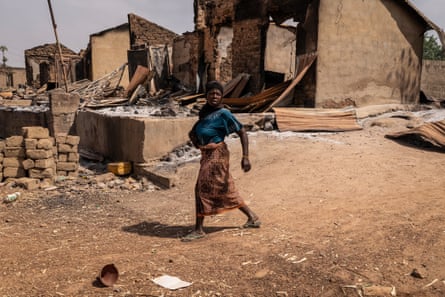 A woman walks past debris, burnt structures and damaged shops after the February attack on Woro. Photograph: Light Oriye Tamunotonye/AFP/Getty Images
theguardian.com
A woman walks past debris, burnt structures and damaged shops after the February attack on Woro. Photograph: Light Oriye Tamunotonye/AFP/Getty Images
theguardian.com
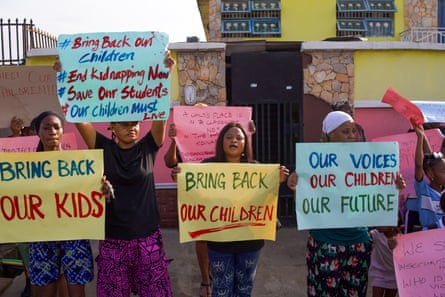 Teachers and students went to Lagos in June to call for the release of those abducted from a school in Oyo state. Security services freed at least 40 students and teachers in July. Photograph: Emmanuel Adegboye/EPA
theguardian.com
Teachers and students went to Lagos in June to call for the release of those abducted from a school in Oyo state. Security services freed at least 40 students and teachers in July. Photograph: Emmanuel Adegboye/EPA
theguardian.com
Nigerian security forces say they have rescued more than 300 people abducted by militants in a single operation, with captives found in the forests of Kainji Lake national park in north-central Nigeria, according to The Guardian. President Bola Ahmed Tinubu described it as the largest single-day hostage recovery in the country’s history, after a joint operation involving the military, police and counter-terrorism units. The survivors are undergoing medical evaluations at an army installation before being reunited with their families.
The operation is being presented as proof of improving coordination, but it also underlines the geography that has made mass kidnapping a durable business. The Guardian notes that armed groups—including bandit gangs and jihadists—operate from large, sparsely governed forests and shrublands across northern Nigeria. In that terrain, hostages can be moved, hidden, and traded with a speed that outpaces formal policing, while communities have limited leverage beyond paying to make the problem go away.
The numbers attached to the market are now large enough to function as a parallel revenue stream. Citing data for July 2024 to June 2025, The Guardian reports at least 4,722 kidnappings across 997 incidents, with at least 762 deaths in the same period. Abductors demanded a total of ₦48 billion in ransoms, while families and communities paid at least ₦2.57 billion to secure releases—money that moves faster than prosecutions and is rarely recovered.
Tinubu’s government has paired rescue announcements with measures aimed at keeping the security services staffed. The Guardian reports that the presidency announced a 30% to 80% salary increase for thousands of soldiers, described as the largest in years for an army widely seen as underfunded and unequipped to handle multiple insurgencies. The same report says the army recently declared wanted the governor of Islamic State West Africa Province and his deputy, highlighting how Nigeria’s kidnapping economy overlaps with insurgent organisations that can recruit, tax, and intimidate.
The immediate beneficiaries of a successful rescue are the freed captives and their families. The longer-term question is whether the state can keep shrinking the ungoverned spaces where kidnappers can warehouse hundreds of people at a time, or whether each high-profile operation simply resets expectations for the next negotiation.
The hostages were found in a national park forest.