
Berlin luxury development targets former Nazi bunker, Vossstrasse site near Holocaust memorial pits housing plan against heritage listing
Senate cites fear of neo-Nazi pilgrimage and a 2006 zoning approval
Images
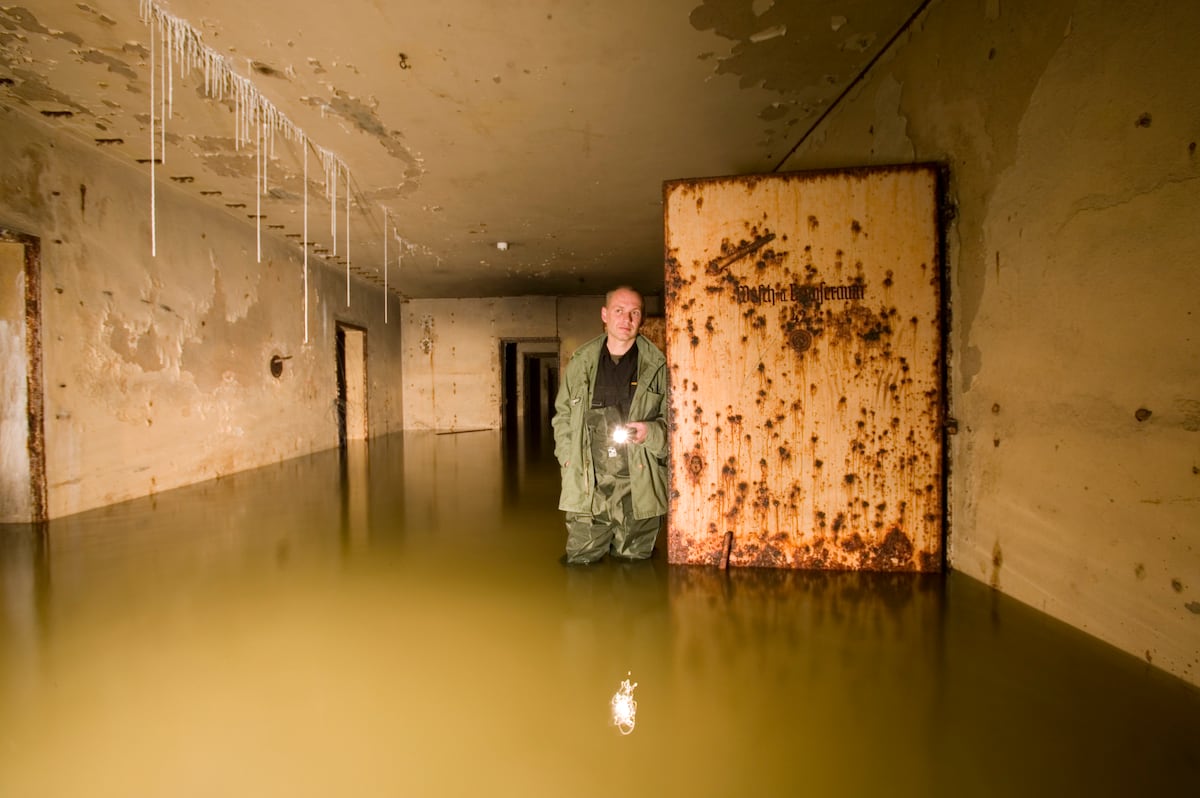 Luxury housing or historical memory: Controversy in Berlin over a real estate project atop a former Nazi bunker
english.elpais.com
Luxury housing or historical memory: Controversy in Berlin over a real estate project atop a former Nazi bunker
english.elpais.com
Sixty-six apartments are planned for a vacant plot on Vossstrasse in central Berlin, a site that, according to El País, conceals the last remaining bunker of the New Reich Chancellery. The project—reported as a seven-storey residential block paired with a six-storey office building—would remove what Berliner Unterwelten calls the Great Bunker of the New Reich Chancellery, next to the Memorial to the Murdered Jews of Europe.
Berlin has spent decades turning parts of its Nazi-era landscape into documentation centres and memorials, while other traces were flattened, buried, or absorbed into later layers of the city. After the war, major buildings tied to Adolf Hitler’s rule were destroyed, and rubble and soil from the razed government district helped form Teufelsberg, later used by the Americans as a Cold War espionage site. That history is part of the dispute: the city is full of places where one era’s strategic infrastructure became another era’s symbol, and where “erasing” and “preserving” are often separated by nothing more than a planning decision.
The current clash turns on who gets to define the public interest when the past sits under valuable land. El País reports that the Berlin Senate has opposed protecting the bunker as a monument, describing the area as suitable for high-end housing and citing a long-standing urban plan approved in 2006 by the regional parliament. The Senate has also told Berliner Unterwelten it does not want the site to become a neo-Nazi pilgrimage destination, an argument the association rejects as a pretext for demolition. Heritage bodies have pushed in the opposite direction: El País says regional heritage authorities recommended listing the bunker, and that a regional council for cultural heritage issued a recommendation in March 2025 describing the New Reich Chancellery as the place where the second world war was planned and launched and as a symbol of the regime’s catastrophic end.
The incentives are straightforward. The plot is described as highly desirable, in part because of its proximity to the Brandenburg Gate, and the developer is presented as a Hamburg investor. When housing is scarce and politically urgent, a structure that cannot be easily monetised competes badly against one that can be sold, taxed, and counted toward targets. The bunker, by contrast, produces value mostly as an embarrassment that can be explained—through controlled access, documentation, and context—rather than as floor space.
Berliner Unterwelten, which has documented Berlin’s underground heritage since 1997 and runs guided tours, argues that the site matters not only for Nazi history but also for the later geography of the Berlin Wall, since the bunker sat in the former “death strip” during the German Democratic Republic and was closed to the public from 1961 to 1989. That is precisely the kind of layered site that becomes harder to replace once it is gone: the city can commission plaques and exhibitions, but it cannot reconstruct an original structure without turning it into a replica.
The decision now sits with a city government that, according to El País, says housing construction at the location is a priority. The bunker remains underground, and the apartments are still on paper.