
Psilocybin trial reports remission in treatment resistant depression
King’s College London study in Nature Medicine tests single dose with psychological support, clinic setting and staffing emerge as the scarce inputs
Images
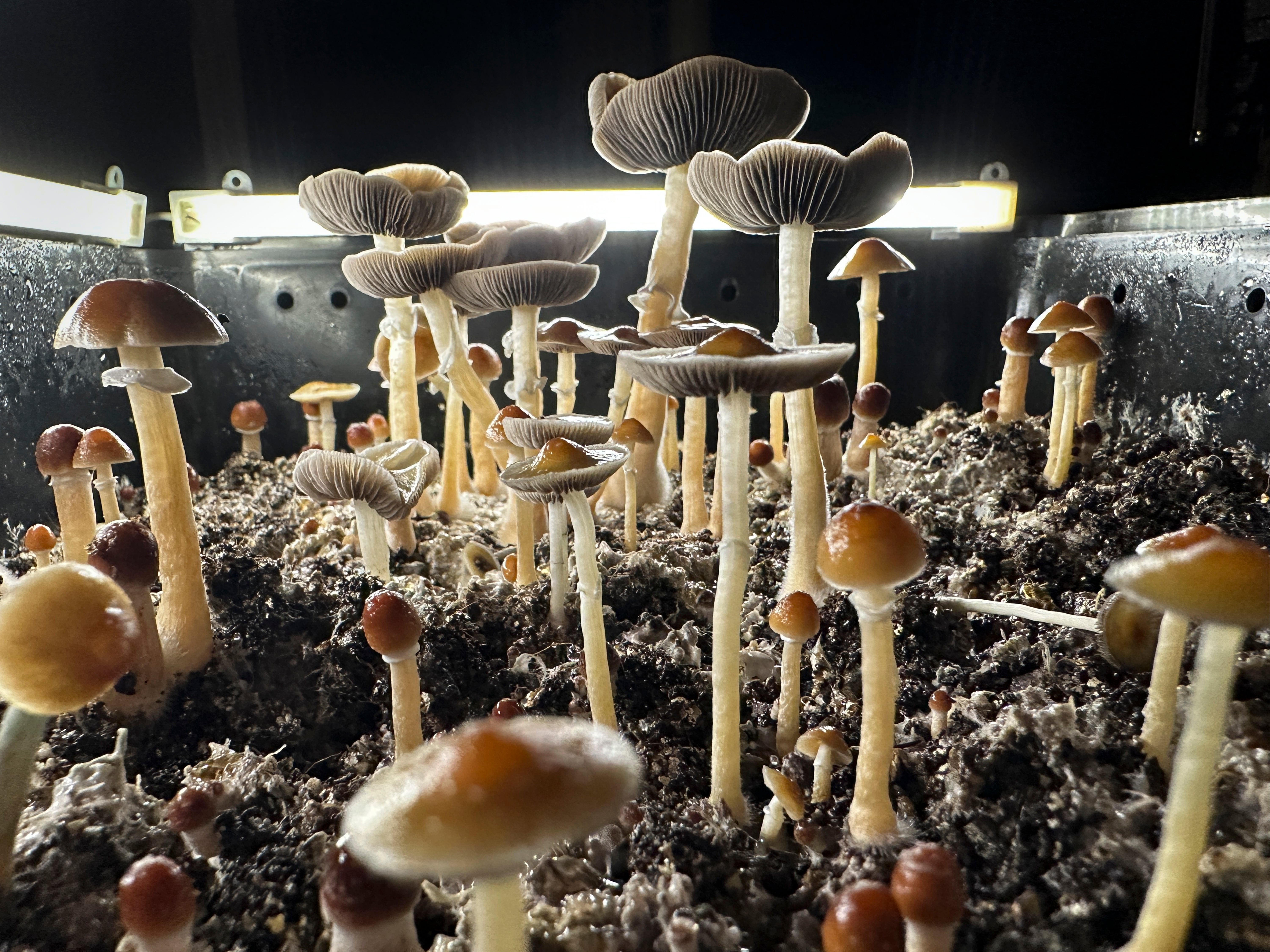 Psilocybin mushrooms stand ready for harvest in a humidified ‘fruiting chamber’ in the basement of a private home on July 28, 2023 in Fairfield County, Connecticut (Getty)
Getty
Psilocybin mushrooms stand ready for harvest in a humidified ‘fruiting chamber’ in the basement of a private home on July 28, 2023 in Fairfield County, Connecticut (Getty)
Getty
A single 25mg dose of psilocybin combined with psychological support produced measurable improvements in people whose depression had not responded to prior treatments, according to a publicly funded clinical trial led by King’s College London and published in Nature Medicine. The study enrolled 60 participants at South London and Maudsley NHS Foundation Trust, randomising half to psilocybin and half to placebo. After three weeks, 40% of those given psilocybin were in remission, compared with 3% in the placebo group, the Independent reports.
The result lands in a field where enthusiasm has often run ahead of infrastructure. Psychedelic therapy is not just a molecule but a controlled experience: the trial provided psychological support to both groups, and researchers noted that some differences could reflect non-drug factors as well as pharmacology. That caveat cuts both ways. If part of the benefit comes from the setting, preparation and follow‑up rather than the drug alone, then scaling the treatment becomes a staffing and training problem, not merely a manufacturing one.
The study’s design also addresses a recurring criticism of psychedelic research: blinding. Psilocybin’s subjective effects can make it obvious who received the active treatment, complicating placebo-controlled comparisons. Professor James Rucker, affiliated with King’s College London’s Institute of Psychiatry, Psychology & Neuroscience and South London and Maudsley, said the trial showed a randomised comparison with a “true placebo” was feasible even in patients who had failed many treatments.
Researchers also used the trial to test where such therapy could realistically be delivered. Catherine Bird, a senior clinical trials manager at King’s College London, said psilocybin could be administered safely outside hospital wards, provided the environment is calm and supported and staff are trained—suggesting that medical monitoring may be less of a bottleneck than suitable facilities and personnel. Rucker said the findings support larger publicly funded trials in community settings, which can be more convenient and less anxiety‑provoking for patients than hospitals.
Patient accounts in the report underline why regulators and health systems struggle to classify the intervention. One participant described the session as emotionally intense, including vivid experiences involving deceased family members, followed by exhaustion—effects that look unlike standard antidepressant titration and more like a one‑off procedure with aftercare.
The trial followed participants for six weeks, and the psilocybin group’s response rate rose to 56% by that point. The study also reported wide variation in individual outcomes.
In a 60-person trial, the difference between 25mg psilocybin and placebo showed up quickly. The harder question is whether health systems can reproduce the same “calm, supported environment” at scale, and who pays for the staff time when the drug itself is taken once.