
Israel strikes southern Lebanon after evacuation order
Lebanon reports one killed and 11 injured in Tebnine, Rome talks test ceasefire while security zone persists
Images
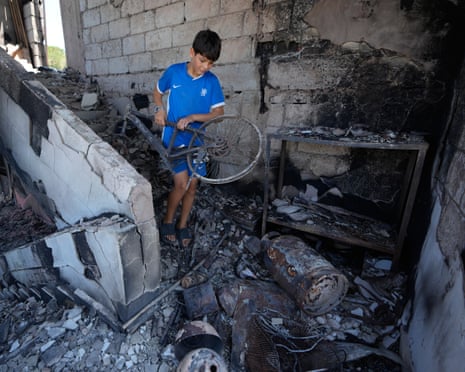 A Lebanese boy removes his damaged bicycle from his destroyed home in south Lebanon on Wednesday after an Israeli airstrike. Photograph: Mohammed Zaatari/AP
theguardian.com
A Lebanese boy removes his damaged bicycle from his destroyed home in south Lebanon on Wednesday after an Israeli airstrike. Photograph: Mohammed Zaatari/AP
theguardian.com
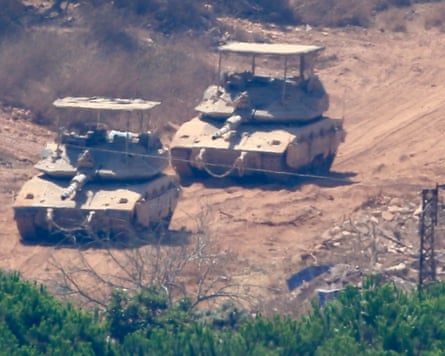 Israeli tanks in south Lebanon on Wednesday. Photograph: EPA
theguardian.com
Israeli tanks in south Lebanon on Wednesday. Photograph: EPA
theguardian.com
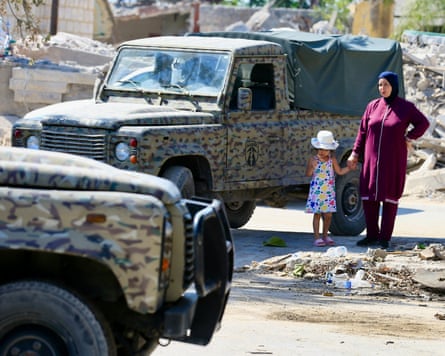 A woman and child stand next to Lebanese military vehicles in Zawtar al Gharbiya, southern Lebanon, one of the pilot zones. Photograph: EPA
theguardian.com
A woman and child stand next to Lebanese military vehicles in Zawtar al Gharbiya, southern Lebanon, one of the pilot zones. Photograph: EPA
theguardian.com
An Israeli airstrike hit the southern Lebanese town of Tebnine on Wednesday, killing one person and injuring 11, according to Lebanon’s health ministry. The strike hit a cemetery area, and another attack and evacuation order targeted the village of al‑Mansouri, where residents were told to move north shortly before bombing began, The Guardian reports. Israel said the strikes were aimed at Hezbollah infrastructure and framed them as a response to ceasefire violations.
The episode is a test of what the June ceasefire is worth in practice: the agreement may have reduced sustained exchanges of fire, but it has not removed the incentives for either side to treat the border zone as a place where force can be used without paying the full political price of a renewed war. Israel has occupied parts of southern Lebanon as what it calls a security zone, and the Guardian describes continued bombing in and around the occupied area, including people killed when they approach. That posture allows Israel to claim it is enforcing security while also keeping leverage in talks that hinge on withdrawal and disarmament.
Diplomacy is running in parallel. Negotiators from Lebanon and Israel met in Rome this week for another round of talks on a permanent arrangement, with the Lebanese government seeking an Israeli pullback and Israel demanding Hezbollah disarmament. The Guardian says the meetings have produced “pilot zones” where the Lebanese army has assumed control, effectively turning parts of the south into trial areas for whether Beirut can police Hezbollah’s presence and infrastructure. Progress is described as slow, and the gap in demands is not technical: withdrawal is reversible only with force, while disarmament is politically combustible in Lebanon and difficult to verify on the ground.
The military facts keep intruding. Two Israeli troops were killed and seven wounded in an explosion in southern Lebanon on Wednesday, with the cause not yet clear, and the Guardian notes recent Israeli casualties from booby‑trapped vehicles and mines attributed to Hezbollah. Israel’s displacement order — the first since the ceasefire began, according to the Guardian — echoes the earlier phase of the conflict when warnings and evacuations became part of the operational routine and helped push large-scale civilian movement. Once issued again, the logic is hard to contain: any side can argue that warnings make strikes lawful and that civilians who remain have assumed the risk.
In Tebnine, the strike landed in a cemetery.
In Rome, negotiators are still discussing how quickly soldiers can leave the same ground they are still fighting over.