
India threatens Meta safe harbour over Modi video
Parliament panel gives Zuckerberg three-day apology ultimatum, platform liability becomes a political enforcement tool
Images
 India warns Zuckerberg to apologise to Modi or face legal action
independent.co.uk
India warns Zuckerberg to apologise to Modi or face legal action
independent.co.uk
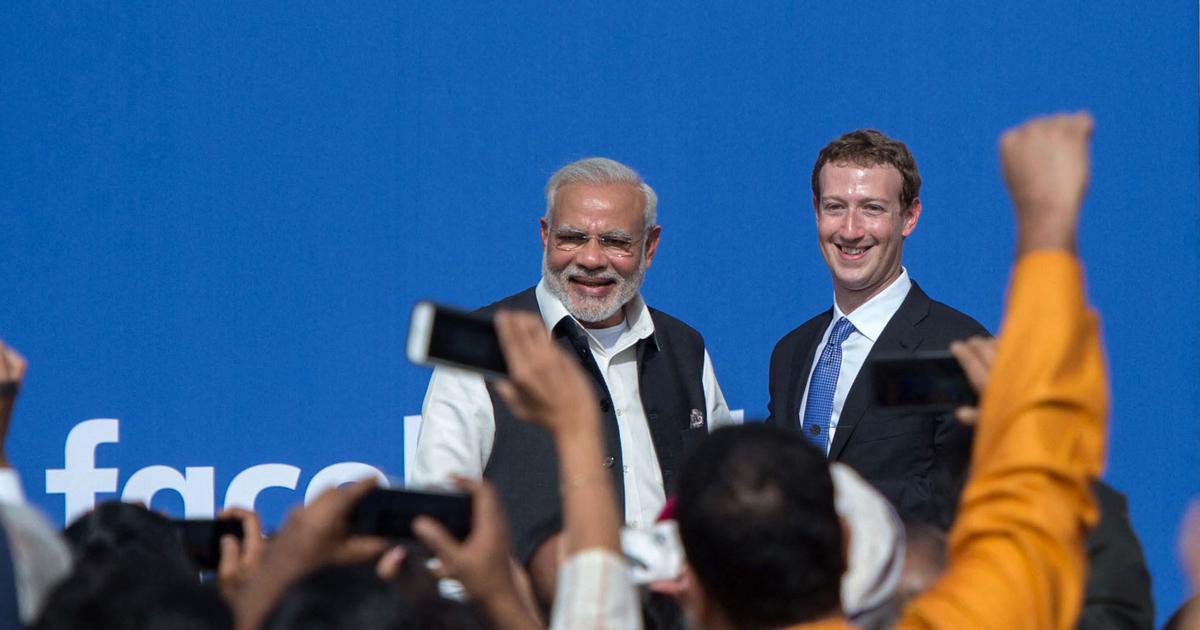 Prime Minister Narendra Modi with Meta chief Mark Zuckerberg. File image
|
Susana Bates/AFP
scroll.in
Prime Minister Narendra Modi with Meta chief Mark Zuckerberg. File image
|
Susana Bates/AFP
scroll.in
India threatens to strip Meta of legal immunity over Modi video, parliament panel demands Zuckerberg apology after five-hour Facebook restriction, safe-harbour status becomes a lever over platform governance
India’s parliamentary standing committee on information technology has told Meta chief executive Mark Zuckerberg to apologise within three days after Facebook briefly restricted a video posted by Prime Minister Narendra Modi. According to The Independent and Scroll.in, the committee warned that failure to comply could lead to Meta losing “safe harbour” protection under India’s Information Technology Act, a change that would expose the company and its executives to legal liability for user content.
The dispute stems from a video Modi posted on Instagram on 23 July addressing the nationwide “cockroach” protests over leaked competitive exam papers. When the clip was later shared on Facebook, it was temporarily unavailable in India; Scroll.in reports users saw a message saying access had been withheld following a legal request, and that the restriction lasted about five hours on 28 July before the post was restored. Meta has said the block was inadvertent. India’s technology ministry, however, said Meta’s explanation was “not reasonable” and demanded the company engage at the “highest level,” according to ministry secretary S Krishnan as cited by The Independent.
In practice, the fight is less about a single post than about who sets the rules for a platform used by hundreds of millions of Indians. Safe harbour is designed to treat platforms as intermediaries rather than publishers, but it is conditional on compliance with government directions. The committee’s argument, as reported by Scroll.in, is that temporarily removing the prime minister’s video showed conduct beyond that of a neutral intermediary—an assertion that collapses the distinction whenever a politically sensitive account is involved.
Meta’s response has been to offer process concessions. The Independent reports the company told Indian authorities it had introduced new protocols for “accounts of prominent persons” to prevent similar incidents. That kind of carve-out is a familiar corporate survival tactic in large regulated markets: build special handling for the people who can change the law, and treat the rest of the user base as a moderation problem.
The confrontation also arrives alongside a separate, more damaging content issue. India has recently pressed Meta to remove child sexual abuse material from Instagram after a BBC Eye investigation found paid adverts in India promoting such material and pointing users toward Telegram channels. The Independent reports that, in meetings with officials, Meta executives conveyed an apology from Zuckerberg over the availability of such content and deepfakes, and unnamed ministry sources claimed Meta acknowledged that money had been paid to boost certain illegal content to a specific audience.
For now, the immediate demand is narrow: an apology for a short-lived restriction of a prime minister’s video. The larger signal is that in India, a legal shield meant to protect platforms from endless litigation is being discussed as something that can be revoked on a political timetable.