
Latin American governments expand military role in public security
Street patrols and prison control replace slow police reform, human rights complaints become the civilian system’s leftover file
Images
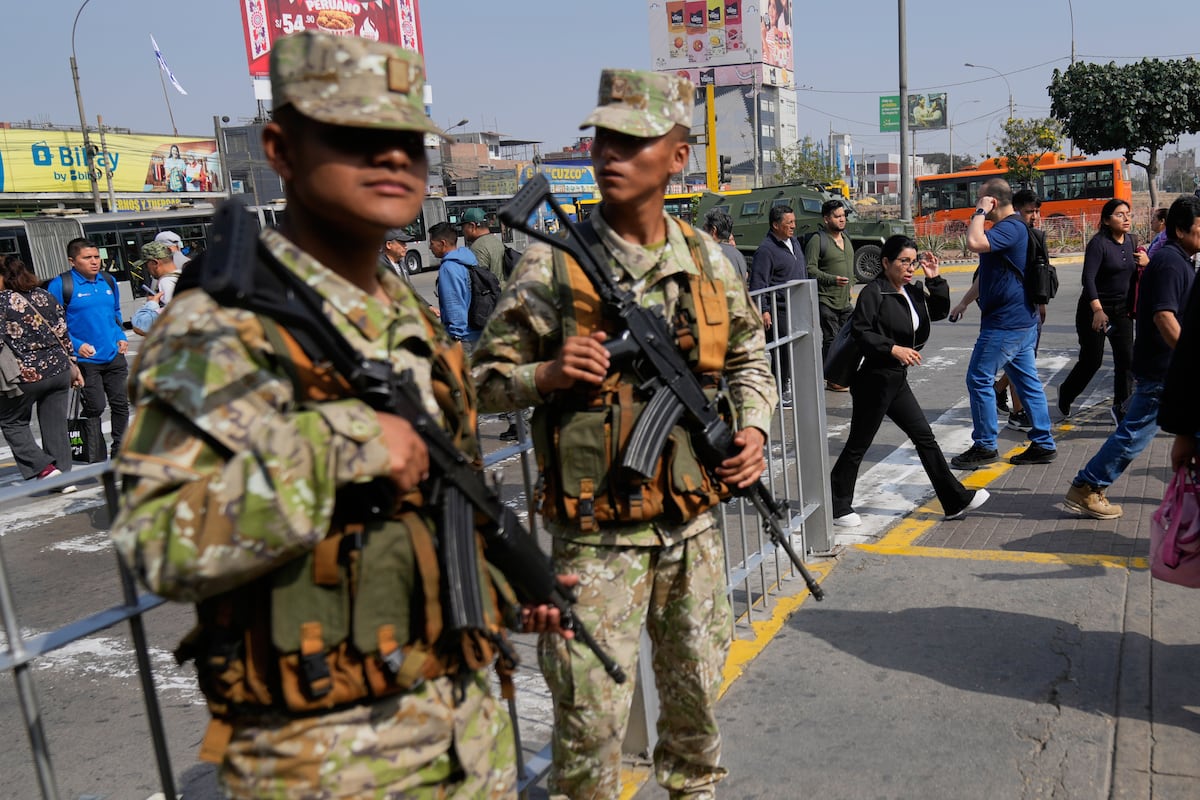 Latin America leaves public security in the hands of the military
english.elpais.com
Latin America leaves public security in the hands of the military
english.elpais.com
Latin American governments are increasingly turning to soldiers for tasks that used to belong to police forces: patrolling streets, controlling prisons and enforcing states of emergency. An El País report describes deployments across the region as extortion, drug trafficking and contract killings rise, with countries such as Ecuador, Mexico and El Salvador expanding the armed forces’ domestic footprint while Chile and Argentina show more resistance.
The shift is partly administrative convenience. Armies are large, disciplined, and already funded; moving troops into public security can be done by decree, while rebuilding investigative policing takes years of recruitment, training and internal clean-up. In Ecuador, President Daniel Noboa’s declaration of an internal armed conflict in early 2024 allowed an immediate transfer of responsibility for streets and prisons to the military, El País notes, at a moment of acute violence. In Peru, the report says, new administrations repeatedly reach for the same tool: uniformed presence as proof of action.
But the tasks are not the same. Tania Pariona of Peru’s National Human Rights Coordinator told El País that military patrols may increase a sense of safety without reducing crimes such as extortion or contract killings. The military is trained for external threats and armed conflict; when it is asked to do policing, the likely outputs are checkpoints, raids and mass detention rather than case-building, financial investigations and witness protection. That changes what gets measured: weapons seized and people arrested become the headline numbers, while the harder work of dismantling cashflows and corrupt networks remains under-resourced.
The report also points to the political side effects. Once the armed forces become the default answer to crime, they gain leverage over budgets, legal powers and public narrative, while civilian institutions are left to manage the complaints. Peru’s own history makes the trade-off explicit: the country’s Truth and Reconciliation Commission found that during the internal war from the 1980s to the early 2000s, tens of thousands died and a substantial share were killed by state agents. More recently, El País recalls, the deployment of troops after Pedro Castillo’s ouster was followed by dozens of demonstrators killed by lethal ammunition.
Costa Rica is offered as a counterexample: it has no army and instead leans on financial intelligence and stronger civilian institutions. That comparison underlines what militarisation often substitutes for—effective prosecution, prison control, and police forces that can operate without being captured by the same criminal economies they are sent to fight.
In Peru, President Keiko Fujimori’s government is now seeking legislative powers to put the armed forces in charge of prisons, El País reports, turning a temporary security measure into a new operating model.