
Chipotle pulls jalapeños after salmonella outbreak probe
Minnesota officials count at least 110 illnesses and say other restaurants involved, share drop shows markets react before traceback does
Images
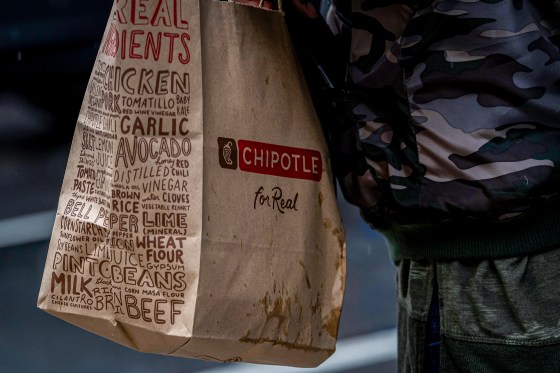 A to-go bag from Chipotle.
nbcnews.com
A to-go bag from Chipotle.
nbcnews.com
 Chipotle pulls jalapeños from some restaurants as health officials investigate salmonella outbreak
independent.co.uk
Chipotle pulls jalapeños from some restaurants as health officials investigate salmonella outbreak
independent.co.uk
Chipotle Mexican Grill says it has removed jalapeños from some of its restaurants as US health officials investigate a salmonella outbreak that Minnesota authorities say has sickened at least 110 people. The Minnesota Department of Health told reporters it is looking at illness reports tied to several Mexican-style quick-service restaurants, with Chipotle accounting for most of the cases among those interviewed. The Food and Drug Administration has opened a federal “traceback” investigation into ingredients connected to the outbreak, according to NBC News.
Chipotle’s move is a reminder of how quickly a single produce item can become a national operational problem for a chain built around standardized ingredients and high throughput. The company said it replaced the jalapeños with product from different growers, but it has not identified the supplier or said how many locations received the suspected product, leaving customers and investors to infer risk from sparse disclosures. Minnesota epidemiologist Carlota Medus said early evidence points beyond one brand: people who fell ill reported eating at other restaurants as well, and officials cautioned it is too soon to know whether the outbreak is still ongoing.
The investigation also illustrates a familiar sequencing in US food safety: illness clusters are detected locally, interviews establish a pattern, and only then do federal agencies begin tracing shipments back through distributors and growers. That means the system is strongest at reconstruction and weakest at prevention; by the time a “vehicle” like jalapeños is suspected, the product has often moved through multiple kitchens and states. Chipotle’s cooperation and record-sharing won praise from Minnesota officials, who said they were not currently concerned about the chain given the measures taken—an assessment that can coexist with an outbreak that continues elsewhere if the same ingredient was sold to other retailers.
Markets tend to price the operational uncertainty faster than regulators can resolve it. The Independent reports Chipotle shares fell more than 9% after the company’s announcement, even though officials have not named other states involved and have not confirmed the source. NBC notes that case counts can rise simply because diagnosing and reporting take time, a lag that can extend the reputational and financial tail even when a restaurant has already swapped ingredients.
Minnesota officials interviewed 84 sickened people and said most reported eating at Chipotle between mid-June and mid-July. The FDA’s traceback work is now trying to determine where the jalapeños—and any other implicated ingredients—entered the supply chain.