
Russia blames Ukraine for Moscow restaurant bombing
Officials also report deadly drone strikes on Black Sea resort and Crimea, holiday crowds become part of the battlefield
Images
 Arkhipo-Osipovka is a resort town near Gelendzhik on the Black Sea shore in Russia. Photograph: Andrey Khrobostov/Alamy
theguardian.com
Arkhipo-Osipovka is a resort town near Gelendzhik on the Black Sea shore in Russia. Photograph: Andrey Khrobostov/Alamy
theguardian.com
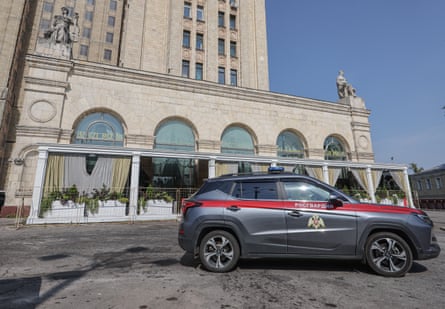 According to Russia’s national anti-terrorism committee (NAC), an improvised explosive device detonated outside the entrance to the ‘Balzi Rossi’ restaurant in Kudrinskaya Square, on 1 August 2026. Photograph: Sergei Ilnitsky/EPA
theguardian.com
According to Russia’s national anti-terrorism committee (NAC), an improvised explosive device detonated outside the entrance to the ‘Balzi Rossi’ restaurant in Kudrinskaya Square, on 1 August 2026. Photograph: Sergei Ilnitsky/EPA
theguardian.com
Russian officials say Ukrainian drone attacks hit holiday areas on the Black Sea coast and in the annexed Crimea peninsula, killing 11 people. The Guardian reports that seven people, including three children, were killed when what Russia’s Krasnodar regional crisis taskforce described as “drone debris” struck a beach in Arkhipo-Osipovka, a resort town near Gelendzhik. In Crimea, the Moscow-installed governor Sergey Aksyonov said four people were killed in a separate strike.
The same weekend brought an attack far from the front. Russia blamed Ukraine for an explosion outside an Italian restaurant in central Moscow that killed five people and injured 19, according to Russian prosecutors and the national anti-terrorism committee, as cited by The Guardian. Prosecutors said an unidentified woman carrying an improvised explosive device tried to enter the restaurant but was stopped by a security guard, and the device detonated moments later.
Russian authorities have not publicly identified the intended target or named the victims. But pro-Kremlin military bloggers and some independent Russian outlets speculated the attack may have been aimed at a senior officer, Colonel General Alexander Chaiko, commander of Russia’s aerospace forces, who was reportedly attending a private banquet at the restaurant. The Guardian reports that photos and video posted online after the blast showed a stage with the words “Aleksandr 55,” and that one Telegram channel, VChK-OGPU, said Chaiko escaped unharmed.
Kommersant, cited by The Guardian, reported that investigators believed the woman carrying the device may not have known she was transporting a bomb, and that it may have been detonated remotely, killing her. If that account is accurate, it suggests a method that lowers the operational barrier for urban attacks by shifting risk onto an unwitting courier—while also widening the pool of potential suspects and making prevention more dependent on private security checks at entrances than on intelligence disruptions upstream.
The geography of the strikes matters. Crimea and the Black Sea coast are popular summer destinations for Russian tourists, and beach footage verified by Reuters and the BBC showed tourists watching a drone crash into a busy shoreline, The Guardian reports. A war that has largely been sold domestically as distant and manageable becomes harder to compartmentalise when it interrupts leisure travel and when Moscow restaurant security guards become the last line of defence.
Russia’s foreign ministry accused Kyiv of carrying out the Moscow attack and described it in inflammatory terms, but has offered no public evidence. The two sets of incidents—drones over resorts and an improvised device in the capital—arrive as both sides look for ways to impose costs without committing to a single decisive battlefield gamble.
On the beach in Arkhipo-Osipovka, the dead included children. In Moscow, investigators are still deciding who the bomber was and whether she knew what she was carrying.