
Danube drought forces emergency moves to protect power supply
Romania detonates river rock and Hungary cuts output at Paks, heatwave turns cooling water into a national-security input
Images
 Record low Danube levels prompt governments to take emergency action
euronews.com
Record low Danube levels prompt governments to take emergency action
euronews.com
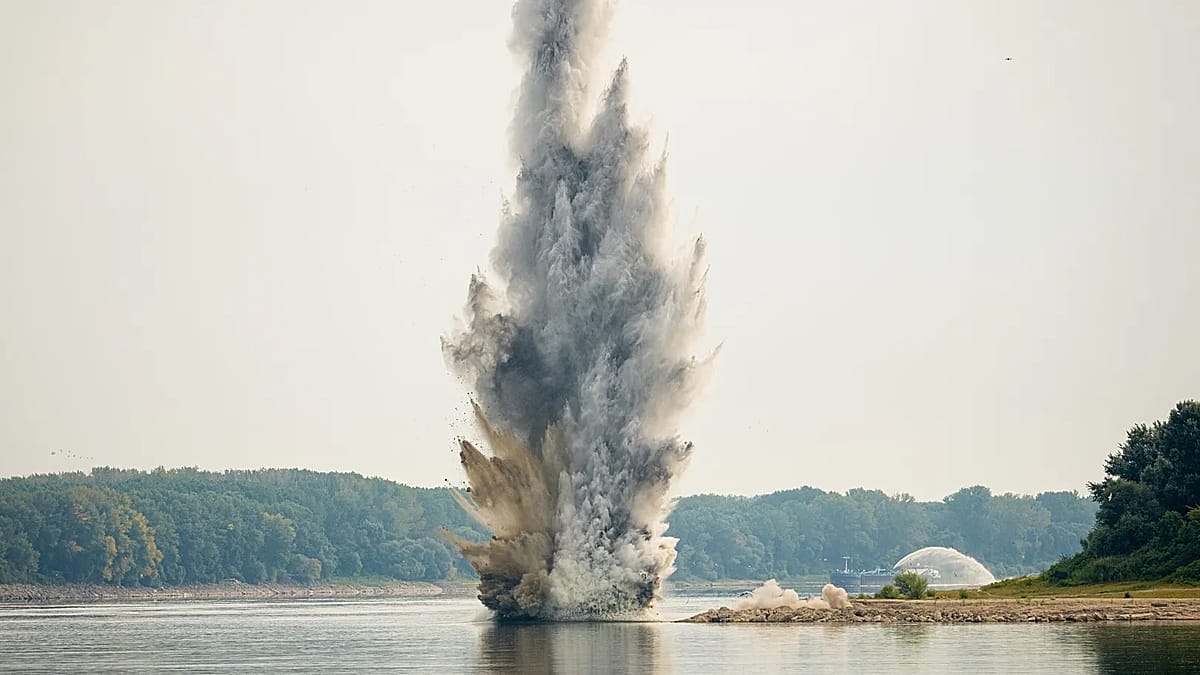
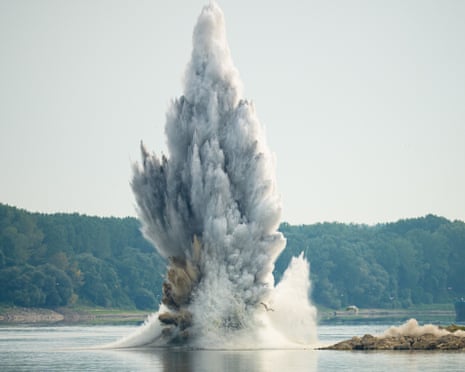 The Romanian Navy detonates underwater explosives during a controlled demolition of submerged rocks to improve water flow to the Cernavodă Nuclear Power Plant amid exceptionally low water levels on the Danube River, in Izvoarele, Romania. Photograph: Andreea Alexandru/AP
theguardian.com
The Romanian Navy detonates underwater explosives during a controlled demolition of submerged rocks to improve water flow to the Cernavodă Nuclear Power Plant amid exceptionally low water levels on the Danube River, in Izvoarele, Romania. Photograph: Andreea Alexandru/AP
theguardian.com
Hungary’s prime minister said one of the last two generating units at the Paks nuclear power plant would shut down overnight after the Danube’s water level fell, as drought pushed central Europe’s main river toward record lows. In Romania, the navy carried out a controlled explosion to clear submerged rock near the Bala Canal to maintain water flow linked to the safe operation of the Cernavodă nuclear power plant, according to Euronews and the Guardian’s Europe live blog. Serbia, meanwhile, has cut output at its biggest hydroelectric sites as low water reduces generation.
The immediate problem is mechanical: nuclear stations that use river water for cooling and hydro plants that rely on flow both lose operating room when rivers run shallow and warm. Euronews reports Romania’s energy sector was put on alert and the acting prime minister urged residents to voluntarily reduce electricity use during peak evening hours, a request that turns household behaviour into a grid-management tool. In Hungary, Péter Magyar described the Paks reduction as tied to river conditions and heat, while later saying forecasts had become “slightly more optimistic” and that levels were stable at Paks and Budapest.
The longer problem is financial. A river that is too low for cooling water or turbines forces operators into partial shutdowns and emergency workarounds, but the bill is not sent to the weather; it is sent through electricity prices, industrial curtailments, and taxpayer-funded interventions. Romania’s use of military assets for river works illustrates how quickly energy reliability becomes a state task when infrastructure is built around assumptions of normal hydrology. Serbia’s reduced hydro output shows another constraint: when water is scarce, the cheapest domestic power becomes the first to disappear, increasing dependence on whatever generation remains available.
The Danube is also a transport corridor, and the Guardian notes Romanian officials framed the demolition as helping both cooling and water transport. That pairing matters because low water can hit energy twice—first by reducing production, then by complicating the movement of fuels and equipment that keep the rest of the system running. Central Europe’s energy mix leaves little slack when heatwaves arrive at the same time across borders: one country’s shortfall can become another’s import problem, and emergency measures tend to cluster on the same days.
Romania’s controlled blast reportedly bought time for Cernavodă, but officials still warned the plant may have to suspend operations if extreme conditions persist. On the Danube this week, the region’s contingency plan included asking households to switch off lights and using explosives to move a rock.