
Chinese researchers model nuclear option for asteroid deflection
Space Science and Technology paper simulates crater-buried detonation on near-Earth objects, planetary defense planning still runs into treaties and fragment risk
Images
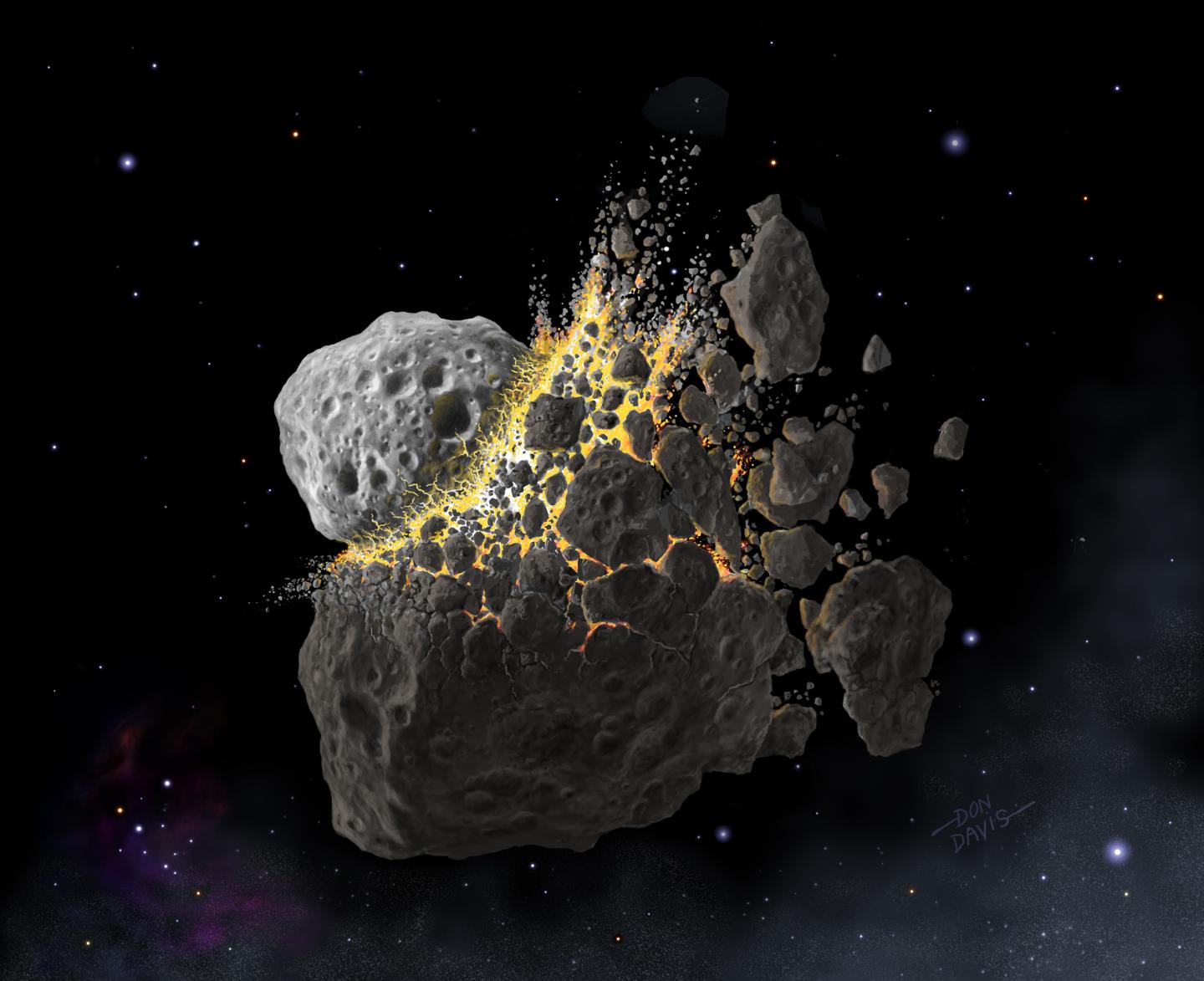 Illustration of a giant asteroid collision in outer space (Don Davis, Southwest Research Institute, via Eurekalert)
independent.co.uk
Illustration of a giant asteroid collision in outer space (Don Davis, Southwest Research Institute, via Eurekalert)
independent.co.uk
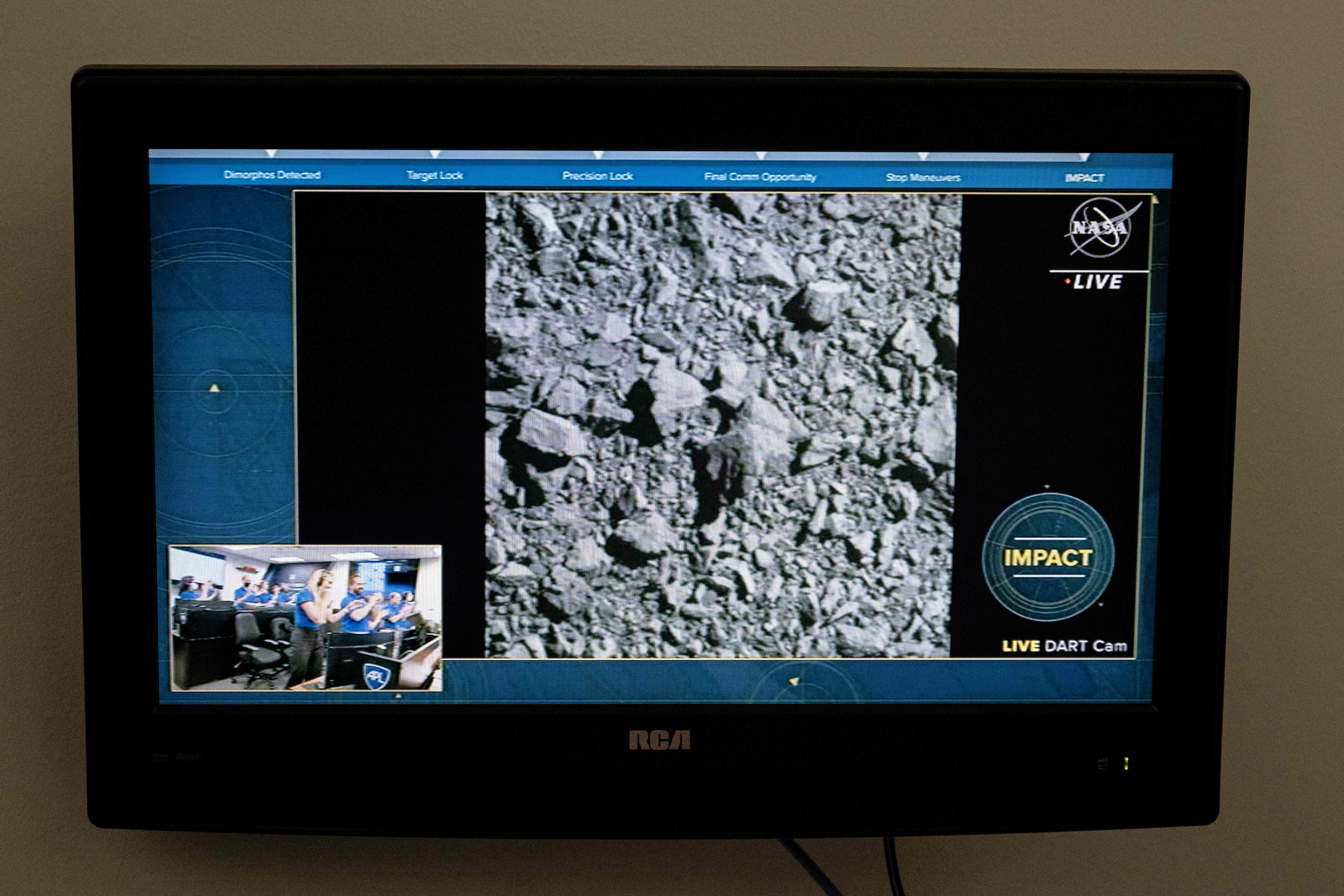 A TV at Nasa’s Kennedy Space Center in Cape Canaveral, Florida, captures the final images from the Dart test (AFP/Getty)
AFP/Getty
A TV at Nasa’s Kennedy Space Center in Cape Canaveral, Florida, captures the final images from the Dart test (AFP/Getty)
AFP/Getty
Chinese researchers have modelled a blunt solution for a blunt problem: burying a nuclear device inside a large near‑Earth asteroid and detonating it to prevent a catastrophic impact. The work, published in Space: Science & Technology and reported by The Independent, simulates a spacecraft that first excavates a deep crater with a penetration device and then guides a nuclear charge into the cavity for an underground blast.
The paper is framed around a practical constraint that planetary‑defence planners rarely control: warning time. Astronomers continue to spot asteroids tens to hundreds of metres across on close approaches, and the study argues that many large objects remain undiscovered, leaving potential lead times of days or weeks rather than years. That matters because the best‑known non‑nuclear demonstration—NASA’s DART mission—was designed for a specific target and a long planning horizon; the Chinese team argues that for larger bodies, or for short‑notice scenarios, a kinetic impactor may not deliver enough change in trajectory fast enough.
Their simulations focus on how much of an asteroid’s momentum can be altered, and how sensitive that is to where and how the energy is deposited. According to The Independent’s summary, the researchers find that detonating deeper can significantly increase the resulting “push”: burying the device roughly tens of metres beneath the surface produced a larger change in the asteroid’s speed than a shallower explosion in their models. They also report that for an asteroid on the order of 100 metres across, an explosion on the order of hundreds of Hiroshima equivalents could fully disrupt the body, while a larger, kilometre‑scale asteroid might be shifted by a smaller but still meaningful increment in velocity if the blast is coupled efficiently through a crater.
The attraction of the approach is obvious: it substitutes raw energy for exquisite precision, and it can be packaged as an engineering problem—launch vehicle performance, impact velocity, penetration depth—rather than a decades‑long survey problem that depends on finding every hazardous object early. But the same features that make nuclear deflection appealing on paper are what make it hard to operationalise. Any plan that involves nuclear devices in space runs into treaty limits and political trust, and the modelled success case—rapidly imparting momentum—sits next to a failure mode the paper itself cannot legislate away: fragmentation. Blasting an object apart might reduce the risk, or it might turn one impact point into many, depending on how the debris spreads and how much time remains before Earth encounter.
The study’s deeper implication is that planetary defence is drifting from a purely scientific question into a capability race. The Independent notes the work comes from the China Academy of Launch Vehicle Technology, placing the proposal inside a launch‑systems context rather than an abstract astrophysics one.
For now, the researchers are offering simulations and design references rather than a flight programme. The next time a newly discovered asteroid arrives with a short clock, the hardest part may be less the crater depth than who is authorised to light the fuse.