
UK Home Office recognises Al Fayed abuse survivors as trafficking victims
Conclusive grounds decisions via modern slavery referral system bolster claims of an organised pipeline, Operation Cornpoppy has questioned four people after 21 months
Images
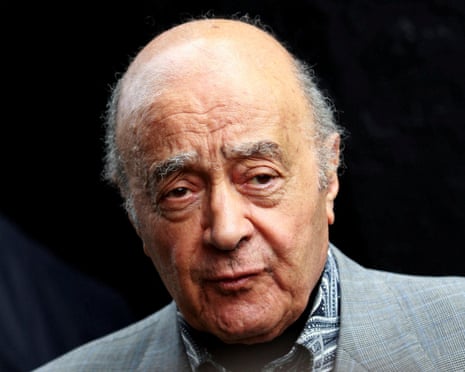 Officers are looking into who may have facilitated Fayed’s crimes, in an investigation known as Operation Cornpoppy. Photograph: Luke MacGregor/Reuters
theguardian.com
Officers are looking into who may have facilitated Fayed’s crimes, in an investigation known as Operation Cornpoppy. Photograph: Luke MacGregor/Reuters
theguardian.com
 standard.co.uk
 standard.co.uk
 standard.co.uk
At least five women who say they were abused by Mohamed Al Fayed have now been formally recognised by the UK Home Office as victims of human trafficking, according to The Guardian and the Evening Standard. The confirmations came through the National Referral Mechanism, the state process used to determine “conclusive grounds” that someone is a victim of modern slavery. Survivors and advocates argue the decisions strengthen the case that Fayed’s alleged crimes depended on a system that recruited, placed and silenced women around him.
The reporting describes multiple routes into Harrods and Fayed’s orbit: some women say they were recruited under false pretences for roles within Harrods, while others say they were hired for legitimate jobs and then selected from the shop floor. One survivor told the Press Association that trafficking happened both internationally and domestically, including within the Harrods building itself. Another account cited by the Evening Standard says a survivor was employed as a domestic worker for a member of the Fayed family after recruitment via a letting agency. The allegations span from the 1990s to after Harrods was sold in 2010, suggesting that ownership changes did not automatically dismantle the pipeline that brought women into proximity with a powerful employer.
The scale of the wider claims is also part of the picture. The Guardian notes that more than 400 allegations of sexual misconduct have been made against Fayed over decades, including rape, sexual assault, human trafficking, false imprisonment, drugging, physical violence and forced abortions; Fayed died in 2023 without facing charges. Survivors say the pattern required more than one man’s access and appetite: it required gatekeepers who could offer jobs, arrange travel, control accommodation, and manage complaints. Isabella, identified as a survivor who worked in the chair’s office at Harrods, is quoted describing an organisation that “processed” women to Fayed and silenced them; she and others argue the network extended beyond Harrods to other Fayed-controlled businesses and properties.
For institutions, the case is becoming less about whether abuse allegations were “credible” in isolation and more about why the same workplace could repeatedly generate the conditions for exploitation. The NRM decisions do not themselves assign criminal liability, but they are official acknowledgements that recruitment and control met the state’s threshold for trafficking or modern slavery. That matters because it shifts the story from individual misconduct to operational questions: who hired whom, who handled visas or travel, who supervised accommodation, who dealt with HR complaints, and who benefited from keeping a high-status figure insulated from consequences.
Police scrutiny is moving slowly. The Metropolitan Police investigation, Operation Cornpoppy, has questioned four people, according to The Guardian, 21 months after it began. Separately, the Independent Office for Police Conduct is examining complaints about how the Met handled allegations between 2018 and 2024. Harrods, for its part, said it supports survivors pursuing justice and is working closely with police.
The Home Office decisions were issued case by case, after referrals made with the help of the charity Unseen UK, the Evening Standard reports. Years after the alleged abuse, the state’s paperwork is now describing the same women not only as complainants, but as trafficking victims.