
Kenyan court rejects religious marijuana exemption
Rastafari Society vows appeal after Kibera groundation gathering, prohibition stays enforceable through street-level discretion
Images
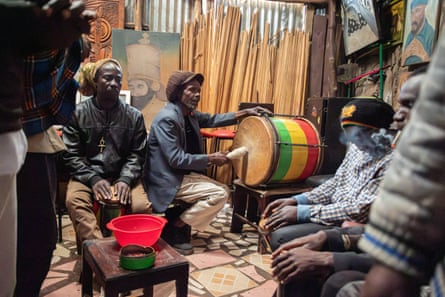 Rastafarians gather in Kibera, Nairobi. Photograph: Carlos Mureithi/The Guardian
theguardian.com
Rastafarians gather in Kibera, Nairobi. Photograph: Carlos Mureithi/The Guardian
theguardian.com
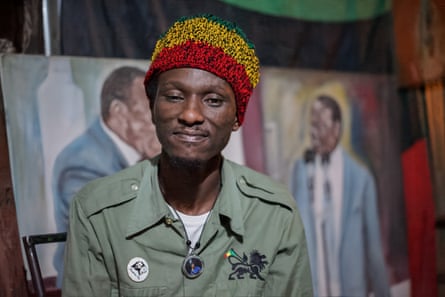 Ras Orudi, 38, began following Rastafari while at secondary school. Photograph: Carlos Mureithi/The Guardian
theguardian.com
Ras Orudi, 38, began following Rastafari while at secondary school. Photograph: Carlos Mureithi/The Guardian
theguardian.com
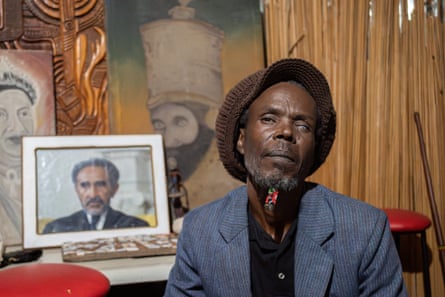 Ras Ndeto, 56, said the court’s decision marginalised followers of Rastafari. Photograph: Edwin Ndeke/The Guardian
theguardian.com
Ras Ndeto, 56, said the court’s decision marginalised followers of Rastafari. Photograph: Edwin Ndeke/The Guardian
theguardian.com
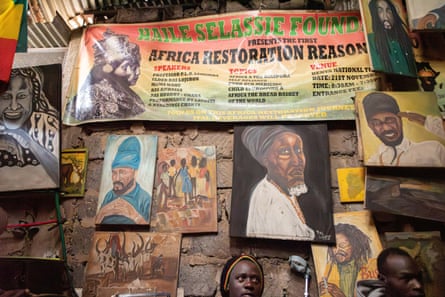 Artwork and a banner on a wall at the meeting venue for the House of Nyabhingi in Kibera, Nairobi. Photograph: Carlos Mureithi/The Guardian
theguardian.com
Artwork and a banner on a wall at the meeting venue for the House of Nyabhingi in Kibera, Nairobi. Photograph: Carlos Mureithi/The Guardian
theguardian.com
 Rastafarians chant during a ‘groundation’ - loop
theguardian.com
Rastafarians chant during a ‘groundation’ - loop
theguardian.com
A Kenyan court has dismissed a petition that sought to allow Rastafarians to use marijuana for spiritual purposes, according to The Guardian. The ruling came on July 15, and members of the House of Nyabinghi gathered days later in Kibera, Nairobi, for their weekly “groundation” meeting, where some attendees lit cannabis as prayers and songs continued.
The case is one of several attempts by Kenyan Rastafarians to carve out a narrow religious exemption inside a criminal-justice system built for blanket prohibition. The Rastafari Society of Kenya filed a petition in 2021 asking for protection from arrest and prosecution for sacramental use, arguing that marijuana is not recreational for them but part of worship and identity. The court’s refusal pushes the dispute into an appeal track where the burden shifts from public-health arguments to administrative questions: how police would distinguish a religious act from ordinary possession, and how courts would police boundaries without turning belief into a licensing regime.
The Guardian’s reporting sketches the practical stakes. In a dim room decorated with the red, yellow and green flag and images of Haile Selassie I, Bob Marley and Marcus Garvey, a small group sang hymnal-style lyrics about Zion and Jah—while the smell of cannabis hung in the air. Spokesman Ras Ndeto said the decision marginalised followers and that the group would appeal to a higher court; another attendee described trying to “integrate into the system” while defending their rights. In a country where drug enforcement typically runs through stop-and-search and discretionary arrests, the absence of an exemption leaves everyday practice exposed to the mood of the nearest officer.
The fight also sits inside a wider African debate on drug policy where the loudest voices are often not users, but institutions that benefit from enforcement: police budgets, prison systems, and political leaders who can signal moral seriousness by targeting a visible minority. A religious-use carve-out would not just change what is legal; it would change who has to justify themselves in public. For Rastafarians—who describe their culture as looked down upon—the legal question doubles as a social one: whether the state will treat them as a recognised faith or as a subculture to be managed.
For now, the court has kept the law simple on paper. In Kibera, it remains complicated in practice, and the next step is an appeal filed by a group that says it is still praying under threat of prosecution.