
Met Police closed Special Demonstration Squad after internal review found unjustified surveillance
Spycops inquiry hears unit targeted activists while terror infiltration lagged, decades of covert work end up audited in public
Images
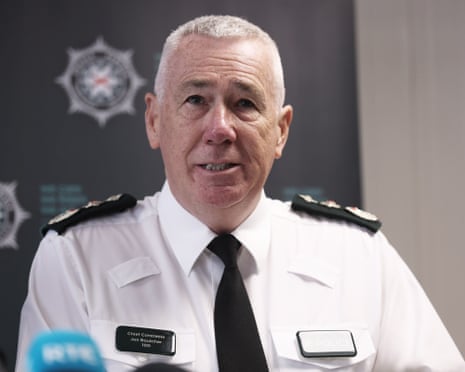 PSNI chief constable Jon Boutcher, who closed the SDS when he was at Scotland Yard’s counter-terrorist division. Photograph: Liam McBurney/PA
theguardian.com
PSNI chief constable Jon Boutcher, who closed the SDS when he was at Scotland Yard’s counter-terrorist division. Photograph: Liam McBurney/PA
theguardian.com
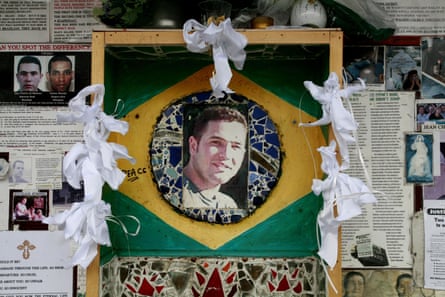 A memorial to Jean Charles de Menezes outside Stockwell tube station in London. Boutcher said the SDS should never have spied on the dead man’s family. Photograph: Stephen Kelly/PA
theguardian.com
A memorial to Jean Charles de Menezes outside Stockwell tube station in London. Boutcher said the SDS should never have spied on the dead man’s family. Photograph: Stephen Kelly/PA
theguardian.com
A senior counter-terrorism officer shut down an undercover Metropolitan Police unit after concluding it was conducting unjustified surveillance and was badly run, the Undercover Policing Inquiry has heard. According to The Guardian, Jon Boutcher decided within months that the Special Demonstration Squad, known as the SDS, had to be wound up after decades of infiltrating political groups.
The SDS spied on tens of thousands of political activists, the inquiry was told, with most of the groups infiltrated posing no threat to public order or democracy. The Guardian reports that targets included pro-Palestinian supporters and leftwing organisations, while very few undercover officers were directed to infiltrate terrorist groups—even as the country faced an “increasing and enduring threat” from international terrorism.
Boutcher, then a detective chief superintendent in Scotland Yard’s counter-terrorist division, described a unit that could not convincingly explain what it was achieving. He asked the SDS to list its successes in the previous five years and suspected it was gathering an “extremely limited” amount of useful information, according to The Guardian. The unit, once praised inside senior ranks as a “jewel in the crown”, responded with what Boutcher considered embellished claims.
The inquiry’s account also places operational drift alongside personal misconduct. The Guardian reports that SDS officers routinely formed intimate relationships with women they were spying on without revealing their real identities, and that sexual abuse of vulnerable women by some operatives caused “incalculable and intolerable harm”. The unit also gathered highly intrusive information about protesters’ friendships and living arrangements, and spied on grieving families, including relatives of Jean Charles de Menezes, the innocent man shot dead by police on the London Underground in 2005.
The SDS ran covert operations for decades, with deployments typically lasting years and officers assuming fake identities while pretending to be activists. In its final period there was a “toxic” atmosphere between the unit and senior Scotland Yard ranks, The Guardian reports, with the SDS mounting what Boutcher described as a rearguard action to justify its continued existence.
The inquiry is examining the conduct of 139 undercover officers in the SDS and another covert unit, who infiltrated mainly leftwing organisations between 1968 and at least 2010. A memorial to de Menezes still stands outside Stockwell tube station, while the record of the unit that spied on his family is now being reconstructed in a hearing room.