
Cyprus holds British-Azerbaijani man over alleged Iran-linked surveillance of RAF Akrotiri
UK applies 2023 National Security Act overseas, base security becomes the courtroom test
Images
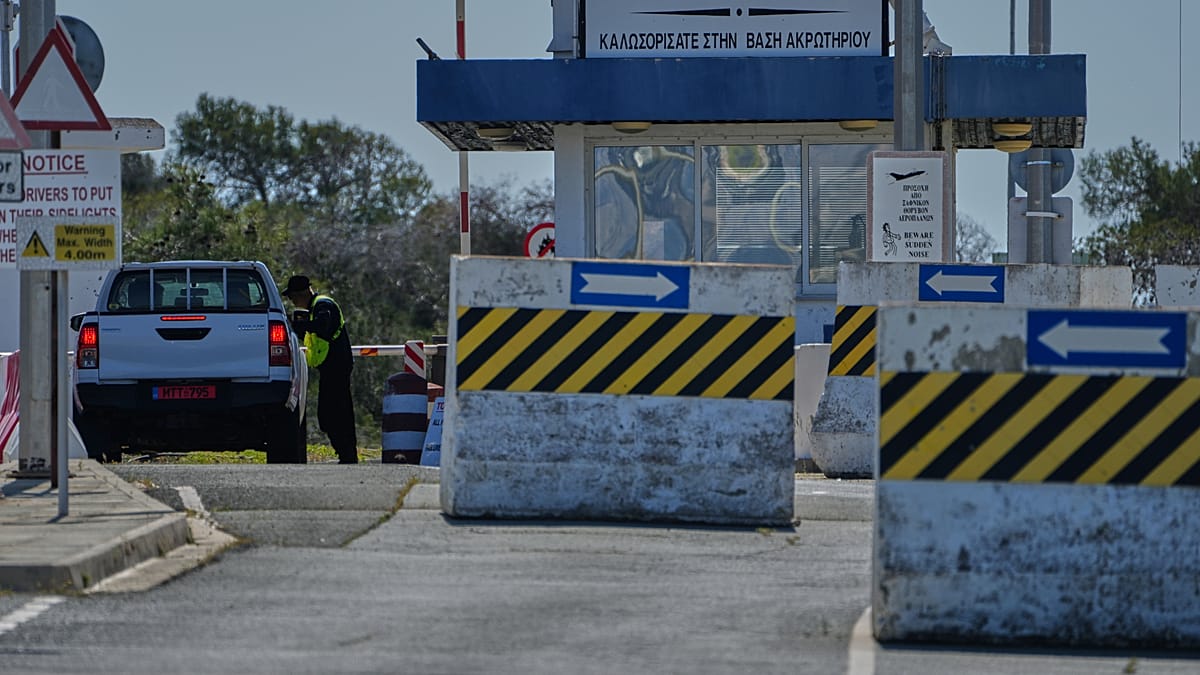 Cyprus: 44-year-old accused of spying on British base for Iran
euronews.com
Cyprus: 44-year-old accused of spying on British base for Iran
euronews.com
A dual British-Azerbaijani national is being held in Cyprus pending extradition to the United Kingdom over allegations he carried out hostile surveillance of the Royal Air Force base at Akrotiri and passed information to Iran’s Islamic Revolutionary Guard Corps. According to Euronews, the arrest was made at the request of UK authorities, and London’s counter-terrorism police are leading the investigation.
British prosecutors have authorised charges under sections of the UK’s 2023 National Security Act covering assisting a foreign intelligence service and entering or inspecting a prohibited place for a purpose prejudicial to the UK, Euronews reports. The case is being presented as the first time the law has been applied to alleged offences committed on overseas territory, because the Sovereign Base Areas of Akrotiri and Dhekelia remain under UK sovereignty even though they sit on Cyprus.
The choice of venue matters as much as the alleged conduct. RAF Akrotiri has become a central platform for UK and allied operations in the eastern Mediterranean, and its value rises when regional airspace is contested and shipping lanes are threatened. In that environment, surveillance does not need to be sophisticated to be useful: patterns of aircraft movements, security routines, and logistics flows can be monetised by an adversary that is willing to take risks but prefers others to pay the price.
The legal framing also signals how Western governments want to manage the problem. By treating the alleged activity as “hostile state” work rather than conventional espionage, the UK can move faster on detention, charging, and extradition, while pushing part of the operational burden onto partner authorities in Cyprus. That can be efficient, but it also turns jurisdictions with limited public visibility into the proving ground for new national-security tools.
The broader context is a region where bases, ports, and energy infrastructure are increasingly treated as interchangeable pressure points. Euronews notes that the strategic importance of Akrotiri has increased during the conflict involving Iran, the United States and Israel, and it references a past drone strike that caused minor damage at the base. Each additional incident—real, alleged, or threatened—creates demand for more perimeter security, more intelligence collection, and more legal reach, while the underlying question of who can safely operate where remains unresolved.
For now, the case turns on an extradition decision and evidence that has not been tested in court. A man accused of watching a runway in the Mediterranean is being prosecuted under a law designed for an era in which watching is treated as an attack in slow motion.