
El Salvador landfill project disturbs civil war burial site
Residents cite exhumations and ombudsman warnings as construction continues, constitutional guardrails weaken as Bukele seeks third term
Images
 View of crosses where remains from a war-era massacre where found less than 100 meters away from the work site for a landfill in Tecoluca, El Salvador, May 2026. Photograph: Camilo Freedman/The Guardian
theguardian.com
View of crosses where remains from a war-era massacre where found less than 100 meters away from the work site for a landfill in Tecoluca, El Salvador, May 2026. Photograph: Camilo Freedman/The Guardian
theguardian.com
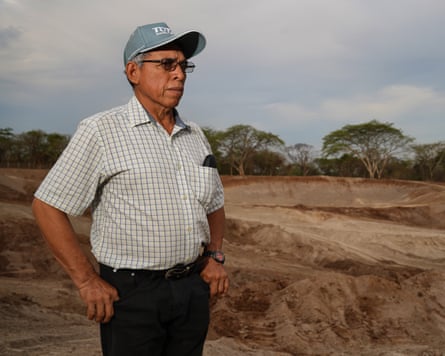 Félix Laínez, a community leader in San Francisco Ángulo, at the landfill site.
theguardian.com
Félix Laínez, a community leader in San Francisco Ángulo, at the landfill site.
theguardian.com
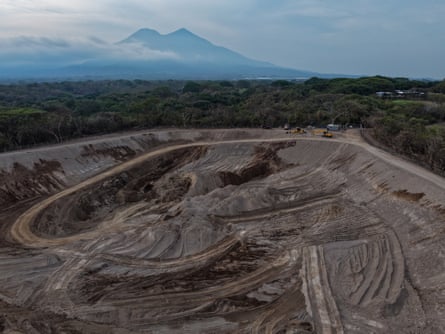 The landfill site, which is due to receive more than 265 tonnes of solid waste a day
theguardian.com
The landfill site, which is due to receive more than 265 tonnes of solid waste a day
theguardian.com
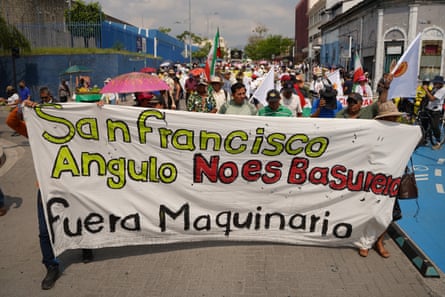 A protest by the community against the landfill plans on Labour Day in the capital, San Salvador. The banner translates as: ‘San Francisco Angulo isn’t rubbish. Out with the machinery!’
theguardian.com
A protest by the community against the landfill plans on Labour Day in the capital, San Salvador. The banner translates as: ‘San Francisco Angulo isn’t rubbish. Out with the machinery!’
theguardian.com
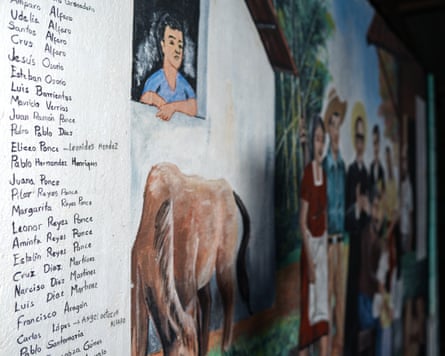 A mural in Tecoluca commemorating the victims of the civil war-era massacres that took place in San Francisco Ángulo
theguardian.com
A mural in Tecoluca commemorating the victims of the civil war-era massacres that took place in San Francisco Ángulo
theguardian.com
 Nayib Bukele’s route to erasing limits on power in El Salvador
english.elpais.com
Nayib Bukele’s route to erasing limits on power in El Salvador
english.elpais.com
On 16 February 2026, police in El Salvador escorted heavy machinery to San Francisco Ángulo, a rural community south of the capital, to begin building a landfill on ground residents say still contains victims of civil war-era killings. The Guardian reports that an excavator operator found grave sites as work began and says he was ordered to remove and rebury remains. In parallel, El País reports that President Nayib Bukele has formalised a bid for a third consecutive term after constitutional changes that loosened term limits.
The landfill dispute is not just a local planning fight. According to the Guardian, a 2018 ruling by the country’s human rights ombudsman documented two military operations at the site in 1981, including killings of civilians; a sociology professor at the University of El Salvador describes the area as an execution site used by state forces and death squads. Yet the ombudsman’s office can only request that construction stop, and work has continued despite an interim ruling asking the environment ministry and a local municipal association promoting the project to halt activity.
The same pattern appears in national politics. El País describes how Bukele’s government replaced top court magistrates and the attorney general after his party won an absolute majority in the Legislative Assembly, and how a reconstituted constitutional chamber reinterpreted the constitution to allow immediate re-election. The paper says that in the past year the constitution was amended again to allow indefinite re-election, while oversight bodies such as the supreme electoral tribunal were brought into line and critical voices pushed into exile or jail.
In practice, that combination—weak enforceable checks and a legislature that acts as a pass-through—changes what a community can expect when it disputes a project backed by authorities. The Guardian quotes the president of the community association, Félix Laínez, saying locals expect no support from any state institution, even as a final constitutional appeal remains pending. The landfill is planned to take in more than 265 tonnes of waste a day, while residents fear the site’s history will be covered over by rubbish.
At San Francisco Ángulo, the excavator operator told the Guardian the smell at the site was “like a cemetery” and said he refused an order to move remains a second time.