
Japan earthquake death toll rises to 17
Kyushu rescue effort slowed by aftershocks and heat, factory shutdowns show how disasters travel through supply chains
Images
 Police footage shows scale of damage inside Aeon mall after explosion cause by Japan quake – video
theguardian.com
Police footage shows scale of damage inside Aeon mall after explosion cause by Japan quake – video
theguardian.com
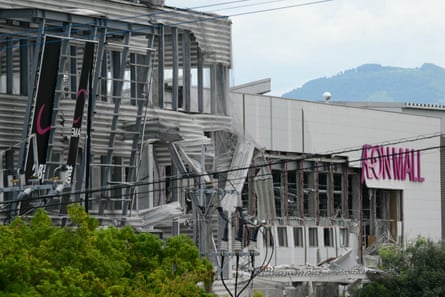 The damaged exterior of the Aeon Mall Kumamoto in Kashima. Photograph: Yuichi Yamazaki/AFP/Getty Images
theguardian.com
The damaged exterior of the Aeon Mall Kumamoto in Kashima. Photograph: Yuichi Yamazaki/AFP/Getty Images
theguardian.com
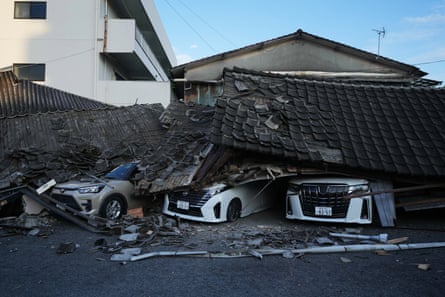 Vehicles are crushed under collapsed buildings in Yatsushiro, south-western Japan. Photograph: Hiro Komae/AP
theguardian.com
Vehicles are crushed under collapsed buildings in Yatsushiro, south-western Japan. Photograph: Hiro Komae/AP
theguardian.com
Japan earthquake death toll rises to 17 after a powerful quake in Kyushu, rescue teams search collapsed homes and a damaged shopping mall as aftershocks and heat slow operations. According to The Guardian, soldiers and emergency workers have been deployed across Kumamoto and neighbouring areas, with searches focused on an Aeon mall where part of the ceiling collapsed and a later gas explosion added to the damage.
The immediate numbers — dead, injured, evacuated — are only one layer of the disruption. Thousands of homes were reported without electricity and running water, pushing residents into hundreds of shelters where authorities have been adding power sources to run air conditioning as temperatures climb. That detail matters because Japan’s disaster response is built around moving people quickly into safe indoor spaces; when the grid is damaged, the shelter system becomes a test of logistics rather than engineering.
The quake has also hit a region that has become an industrial hub. The Guardian reports that some automakers and chip manufacturers halted production, with Toyota pausing operations at several plants while it checks the impact on suppliers and transport. Kyushu’s role in manufacturing means that even precautionary shutdowns ripple outward: factories stop not only because buildings crack, but because roads, parts deliveries and worker availability become uncertain. Japan’s industrial planning has long favoured clustering suppliers near major plants; earthquakes turn that efficiency into a single point of failure.
On the ground, the rescue effort is being shaped by constraints that do not show up in press conferences. Aftershocks force teams to re-check unstable structures and pull back from risky sites, while extreme heat narrows the safe working window for crews in protective gear. Japan’s Self-Defence Forces can supply manpower — thousands were deployed, according to the report — but they cannot compress time when rubble must be moved cautiously and survivors may be trapped in pockets that are hard to reach.
Japan’s Geospatial Information Authority reported substantial ground displacement, a reminder that the damage is not just broken walls but shifted terrain. Roads buckle, pipes shear, and buildings that look intact can be misaligned enough to be unsafe. Residents interviewed by Japanese media described it as the strongest shaking they had ever experienced, reaching the top of the country’s shindo intensity scale.
Rescuers were still searching the mall and collapsed houses as temperatures were forecast to rise further, with shelters relying on temporary power to keep evacuees cool.