
BMW plans up to 8000 job cuts in Germany
Voluntary redundancies target administration and development as Chinese EV competition intensifies, production spared while Europe’s carmakers retrench
Images
 BMW’s headquarters in Munich. The company has started a voluntary redundancy programme agreed with employee representatives, it said. Photograph: travelstock44/Alamy
theguardian.com
BMW’s headquarters in Munich. The company has started a voluntary redundancy programme agreed with employee representatives, it said. Photograph: travelstock44/Alamy
theguardian.com
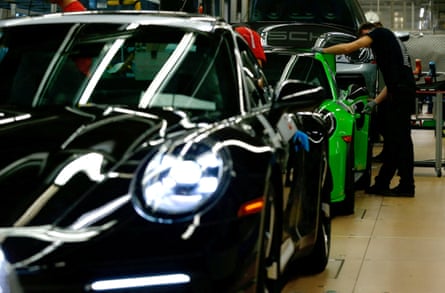 Porsche is also undergoing restructuring, with 9,000 redundancies – a fifth of its workforce – planned by 2035. Photograph: Ralph Orlowski/Reuters
theguardian.com
Porsche is also undergoing restructuring, with 9,000 redundancies – a fifth of its workforce – planned by 2035. Photograph: Ralph Orlowski/Reuters
theguardian.com
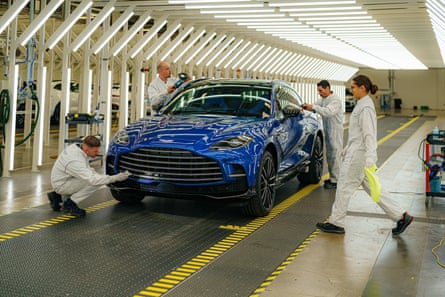 Aston Martin reported a loss before tax of £89m in the second quarter of 2026. Photograph: Ben Birchall/PA
theguardian.com
Aston Martin reported a loss before tax of £89m in the second quarter of 2026. Photograph: Ben Birchall/PA
theguardian.com
BMW is preparing to cut as many as 8,000 jobs in Germany, with reductions limited to administration and development while production is left untouched, The Guardian reports. The company has begun a voluntary redundancy programme agreed with employee representatives, and the planned cuts would come from a workforce of about 160,000.
The move lands in an auto industry where the pressure is no longer confined to cyclical demand. Chinese manufacturers have come to dominate the electric-vehicle market and have driven a price war in China, squeezing margins for incumbents that still carry the cost base of legacy engineering and European wage structures. At the same time, European carmakers have had to spend heavily to shift from petrol to electric models, a transition that pulls cash into new platforms and software while older lines still need support. The Guardian notes that US tariffs have also hit European manufacturers, adding another external constraint just as the sector tries to fund its retooling.
BMW’s choice to spare production while trimming white-collar functions points to where management believes the near-term slack sits: not on the factory floor, but in the layers that design, certify and coordinate increasingly complex model line-ups. The Guardian frames the restructuring around “technological transformation, geopolitical uncertainties, changing market conditions, and developments in China,” language that covers both the competitive shock from cheaper EVs and the policy risk around trade. Across the German industry, the same pattern is spreading. Volkswagen is planning cuts on a far larger scale, The Guardian reports, including closing factories and reducing the number of models produced, while Porsche is pursuing job reductions over the coming decade even after reporting higher profit before tax.
For Europe’s manufacturing base, the second-order effect is the slow migration of value from mechanical engineering to batteries, electronics and software supply chains that are increasingly built outside the continent. Partnerships with Chinese rivals, which the Guardian says several European manufacturers have pursued, can keep showrooms stocked and meet emissions targets, but they also shift bargaining power toward the firms that control the cheaper platforms and the component ecosystems.
BMW’s job cuts are still described as voluntary and confined to certain divisions. The company is reducing headcount in Germany while saying its production operations will not be affected.