
Fifteen elephants die near Kenya’s Amboseli park
Kenya Wildlife Service probes possible poisoning after paralysis reports, lab results conflict as tourism ecosystem depends on land beyond park gates
Images
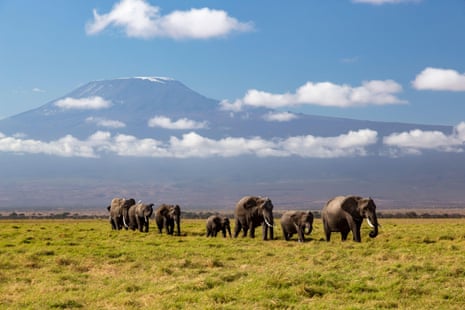 An elephant herd walking on the savannah in Amboseli national park, Kenya. An investigation has been opened into the unexplained death of 15 elephants in the park. Photograph: Ronald S Phillips/Alamy
theguardian.com
An elephant herd walking on the savannah in Amboseli national park, Kenya. An investigation has been opened into the unexplained death of 15 elephants in the park. Photograph: Ronald S Phillips/Alamy
theguardian.com
Fifteen elephants have died over the past month in and around Kenya’s Amboseli national park, prompting an investigation into possible poisoning, according to The Guardian. The Kenya Wildlife Service (KWS) said 10 of the animals showed signs of partial paralysis before dying within two days, while five other carcasses were too decomposed or scavenged to determine a cause.
The deaths were recorded in the Kimana sanctuary and Kuku ranch areas bordering the park, places where wildlife moves through community land rather than remaining inside a fenced reserve. That geography matters: when elephants drink from shared water points, raid crops, or cross grazing land, the conflict is not abstract and the tools available to settle it can be brutal. KWS said preliminary tests at a University of Nairobi laboratory detected a “potential toxic substance” in samples from the dead elephants, while separate analyses by a government laboratory were negative for the toxins tested, leaving investigators with an early signal but no confirmed mechanism. Further tests are under way, alongside checks of water sources and other environmental contaminants.
Amboseli is one of Kenya’s flagship conservation and tourism landscapes, known for large elephant herds and views of Mount Kilimanjaro across the border in Tanzania. KWS estimates roughly 2,000 elephants live in the ecosystem; the loss of 15 animals is not a population collapse, but it is large enough to raise alarms when many of the dead were females and calves, the slow-replacing core of a herd. Kenya has previously recorded elephants being poisoned in incidents linked to poaching and to human-wildlife conflict, a reminder that conservation outcomes are often decided outside park gates, in disputes over land, water, and compensation.
KWS said there is no evidence the condition affecting the elephants can be transmitted to humans. In the meantime, the clearest facts remain physical: paralysis, rapid deaths, and carcasses found on community land at the edge of a park that sells itself on living wildlife.