
Iran fires ballistic missiles at US base in Jordan
Centcom says intercepts follow weekend lull, shipping chokepoints keep war’s costs moving offshore
Images
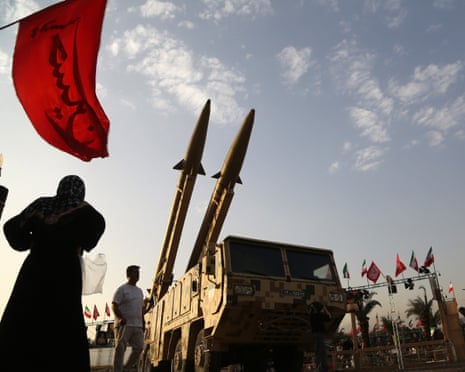 Iranian missiles are displayed in Tehran. The US said it intercepted a missile attack launched from Iran towards US forces in the Middle East. Photograph: Anadolu/Getty Images
theguardian.com
Iranian missiles are displayed in Tehran. The US said it intercepted a missile attack launched from Iran towards US forces in the Middle East. Photograph: Anadolu/Getty Images
theguardian.com
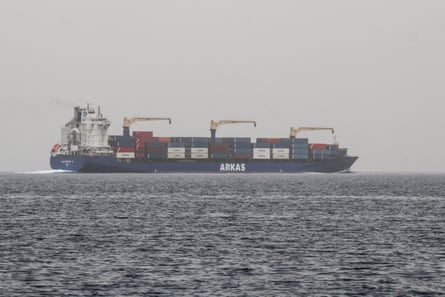 A commercial vessel passes through an international shipping lane off Yemen’s Hanish Island in the Red Sea. Photograph: Khaled Ziad/AFP/Getty Images
theguardian.com
A commercial vessel passes through an international shipping lane off Yemen’s Hanish Island in the Red Sea. Photograph: Khaled Ziad/AFP/Getty Images
theguardian.com
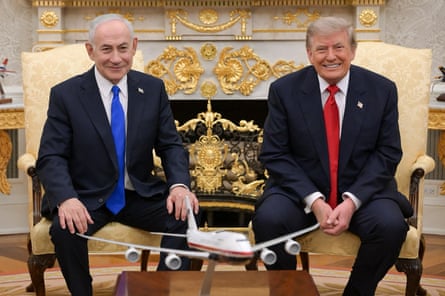 Benjamin Netanyahu meets Donald Trump in the Oval Office on Tuesday. Photograph: GPO/AFP/Getty Images
theguardian.com
Benjamin Netanyahu meets Donald Trump in the Oval Office on Tuesday. Photograph: GPO/AFP/Getty Images
theguardian.com
Iran fired multiple ballistic missiles at US forces late on Tuesday, a strike US Central Command described as a “surprise attack” by the Islamic Revolutionary Guards Corps after a weekend lull in fighting. According to The Guardian, the missiles targeted a US base in Jordan and were intercepted, with Centcom saying US forces remained at a high state of readiness.
The attack lands in a conflict that has already shifted from airstrikes to chokepoints and shipping lanes. The Guardian reports that after nearly two weeks of nightly US strikes on Iran, the weekend pause briefly pulled oil prices down, only for the maritime front to keep the risk premium alive: Iran has attacked vessels around the Strait of Hormuz and is demanding ships use a route near its coastline while claiming it can charge fees for passage. The same report says vessels have increasingly moved to a southern route along Oman’s coast under a US operation, and that Iran has struck some ships navigating there.
The missile salvo also widens the circle of actors who can escalate without formally owning the escalation. The Guardian describes US and Saudi warplanes striking Iran-backed militants in Iraq early on Wednesday after accusations that Iran-backed groups launched drone attacks on Saudi oil facilities, while Iraqi militias denied involvement and an umbrella group, the Islamic Resistance in Iraq, called the claims fabrications. In the same account, the group suggested the drone attacks may have been carried out by the Houthis, who have announced a blockade of Saudi shipping and claimed to have forced a Saudi oil tanker to turn around. The United Kingdom Maritime Trade Operations Center separately reported that a tanker heard explosions while traveling in the southern Red Sea, without naming the vessel, and said the crew and ship were safe.
This is the operating environment that turns ceasefires into paperwork and “lulls” into trading opportunities rather than durable de-escalation. An interim ceasefire deal was signed in June, The Guardian notes, but the battle for control over the Strait of Hormuz has erupted since then. Even when missiles are intercepted, the costs move elsewhere: rerouted shipping, higher insurance, and the constant need for navies and air defenses to stay on station.
The Guardian reports the missile attack coincided with Israeli Prime Minister Benjamin Netanyahu’s visit to Washington, where he met US President Donald Trump on Tuesday. The missiles were intercepted, and the base in Jordan became the latest place where the war’s “pause” ended in a radar track.