
US Senate confirms Jay Clayton as intelligence director
ODNI staffing shrinks after repeated layoffs under acting chief Bill Pulte, subpoena fight with New York Times lingers in the background
Images
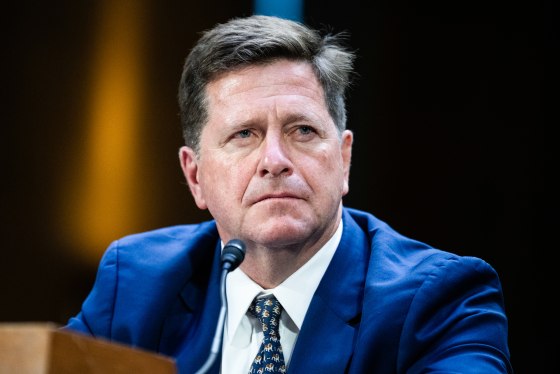 Jay Clayton sits in a hearing room
nbcnews.com
Jay Clayton sits in a hearing room
nbcnews.com
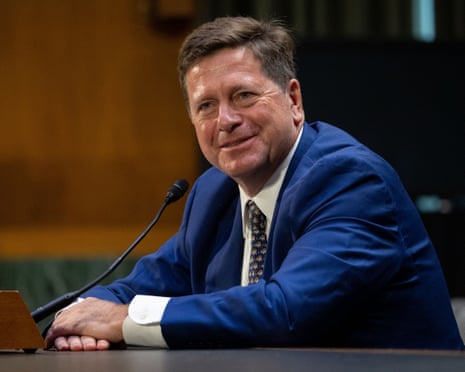 Jay Clayton at his confirmation hearing. Photograph: Nathan Posner/Shutterstock
theguardian.com
Jay Clayton at his confirmation hearing. Photograph: Nathan Posner/Shutterstock
theguardian.com
The US Senate confirmed Jay Clayton as director of national intelligence in a 51–47 party-line vote, installing a former Securities and Exchange Commission chair and current US attorney for the southern district of New York to run the post‑9/11 office meant to coordinate America’s spy agencies. Clayton replaces Bill Pulte, who had served as acting intelligence chief since June after the resignation of Tulsi Gabbard earlier this year. According to NBC News, the Office of the Director of National Intelligence has been cut down sharply in recent months, after repeated rounds of layoffs.
Clayton arrives at an agency caught between two pressures that pull in opposite directions: the White House’s demand for loyalty and speed, and the intelligence community’s need for process, documentation and insulation from politics. NBC reports the ODNI workforce has been reduced by about 30% as of June, after starting Trump’s second term with roughly 2,000 employees; former officials told the network the headcount could now be closer to about 1,000. The ODNI and the White House declined to comment on the reductions, while staff cuts have continued even as the office is expected to synthesize sensitive reporting across multiple agencies and brief elected officials who often want conclusions more than caveats.
Clayton’s confirmation hearing also previewed the kind of oversight fights likely to follow. The Guardian reports he sidestepped questions about the 2020 election and declined to say Trump lost, and previously suggested on CNBC that the US had “a deep problem” with voting integrity—claims that run against studies finding voter fraud is rare. For Democrats, that posture matters because the ODNI sits near the junction where intelligence can be declassified, framed and pushed into public debate. NBC notes Pulte was leading the office when Trump declassified and released intelligence supporting false claims about the 2020 election, a reminder that the director’s power is as much about what gets amplified as what gets collected.
There is also the question of how aggressively the new director will use legal tools against outsiders. The Guardian notes Clayton’s office issued subpoenas to New York Times journalists over reporting about security concerns tied to Trump’s Air Force One aircraft, a gift from Qatar—subpoenas that were later withdrawn abruptly during a court hearing after a federal judge pressed government lawyers about errors and irregularities. That episode left a paper trail: an intelligence and justice apparatus willing to reach into newsrooms, and a court system that can still force reversals when filings do not add up.
Senators framed the choice in starkly different terms. Democrats warned Clayton would bend to political pressure; Republicans argued his experience as a federal prosecutor made him fit to manage national security threats, according to NBC. The vote ended the argument for now, but did not resolve the underlying one: whether the ODNI is being resized to match a mission, or reshaped to match a president.
Clayton takes over a coordination office that Congress built to prevent agencies from missing signals. He is doing it with fewer staff than the office had at the start of the term, and with his first margin of support recorded as 51–47.