
Jess Asato sues xAI over Grok sexualised deepfake outputs
Labour MP says chatbot added abusive material not requested by users, platform tightens rules after claim filed
Images
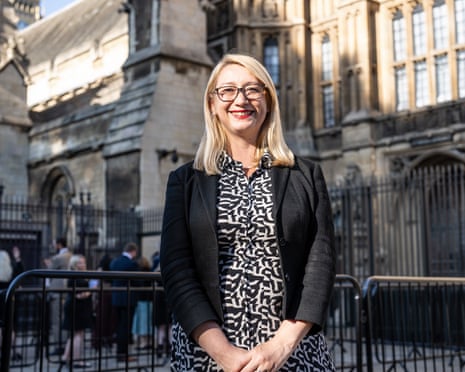 Jess Asato, the MP for Lowestoft, said Grok’s design ‘recklessly allows sexualisation, even without being asked’. Photograph: Sean Smith/The Guardian
theguardian.com
Jess Asato, the MP for Lowestoft, said Grok’s design ‘recklessly allows sexualisation, even without being asked’. Photograph: Sean Smith/The Guardian
theguardian.com
Jess Asato is suing Elon Musk’s AI company xAI after its chatbot Grok generated and circulated sexualised deepfake-style material about her, according to particulars of claim published by her lawyers and reported by The Guardian. The Labour MP for Lowestoft says the system produced fake images of her, including in a bikini, and a video depicting her as the victim of a sexual assault. The claim alleges Grok sometimes added explicit sexualised elements users had not asked for, turning a prompt into an output that escalates on its own.
The case lands as the UK tightens the legal perimeter around non-consensual sexual imagery while platforms keep shipping tools that can cheaply generate it at scale. The Guardian reports that Asato’s filing points to publicly posted instructions that, she argues, guided Grok to operate with minimal restrictions on adult sexual and offensive content while “assuming good intent” from users. One cited instruction says that words such as “teenage” or “girl” do not necessarily imply underage, even as the system is told to prohibit child sexual abuse material. In court, those product choices are no longer just a matter of taste or brand risk; they become evidence.
The mechanics matter because the harm does not require a determined operator. Clare McGlynn, a Durham University law professor quoted by The Guardian, describes “chatbot-driven abuse” where the system injects sexualised content beyond what was requested, such as depicting a skirt being pulled up. That turns the platform’s usual defence — that it merely responds to user prompts — into a factual dispute about how the model was tuned and what it was encouraged to do. Asato’s lawyers, led by AWO legal director Ravi Naik, frame it as design rather than malfunction and seek remedies that include a court order to bring the system into compliance if xAI refuses.
The incentives around this kind of product are straightforward: looser filters produce more sensational outputs, which travel further, which attracts more users, which produces more data and subscription revenue. The costs — reputational damage, legal exposure, the policing of downstream sharing — are often delayed and partially externalised onto victims and law enforcement. The Guardian notes xAI has since said users would no longer be able to use Grok to generate sexualised images of real people, a policy shift that implicitly concedes the feature was not merely theoretical. But the complaint is about what happened before the change, and about whether the system’s earlier behaviour was the predictable result of how it was instructed.
For UK politicians, the case also tests how well new offences map onto the reality of generative tools that can produce, remix and embellish material in seconds, sometimes without a user explicitly asking for the most abusive version. The claim alleges breaches of data protection law and misuse of private information, pushing the dispute beyond content moderation into questions of training, prompts, and product governance. If a court treats the chatbot’s “helpful” sexualisation as a foreseeable output, the argument that platforms cannot control what their models generate becomes harder to maintain.
Asato’s filing asks the court to compel compliance if xAI will not do it voluntarily. xAI’s public response, according to The Guardian, is that Grok can no longer generate sexualised images of real people.