
South Korea halts trading after chip stocks plunge
Kospi circuit breaker follows sharp AI-led run-up, Chinese memory IPO surge collides with global sell-off
Images
 bbc.com
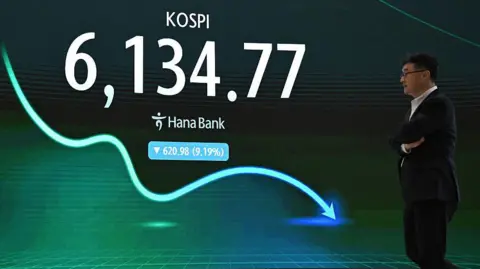 AFP via Getty Images A man walks past an electronic screen showing South Korea's benchmark stock index falling by 9.19%.
bbc.com
AFP via Getty Images A man walks past an electronic screen showing South Korea's benchmark stock index falling by 9.19%.
bbc.com
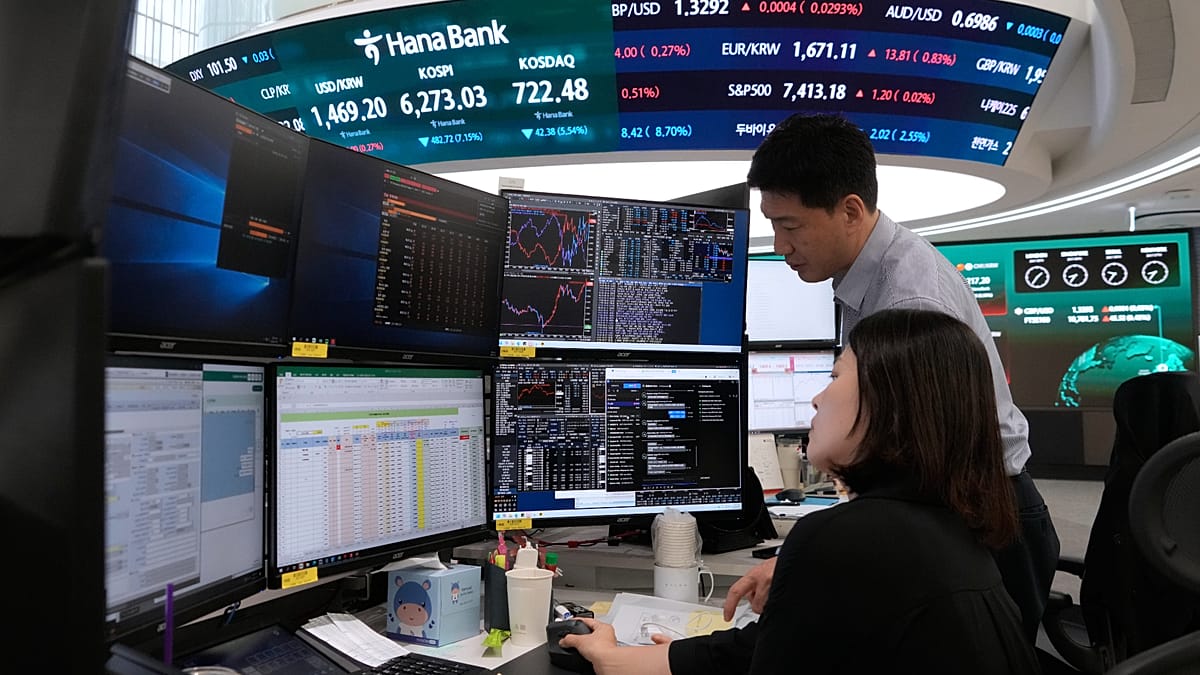 Shares slip as chip stocks come under heavy selling: Here's why
euronews.com
Shares slip as chip stocks come under heavy selling: Here's why
euronews.com
Trading halts hit South Korea as chip stocks sell off, kospi circuit breaker triggered after steep AI-driven run-up, Chinese memory IPO surge lands in the middle of the rout
South Korea’s Kospi triggered a circuit breaker and briefly halted trading on Tuesday morning after sliding sharply, according to the BBC. When trading resumed after a 20-minute pause, the index fell further, with the drop led by technology names; Samsung Electronics and SK Hynix were both down by about 12%.
The move is being read as an unwind of the AI trade rather than a country-specific shock. Nvidia fell in New York on Monday, and the BBC notes it also lost its position as the world’s most valuable listed company to Apple, whose shares are up about 25% this year. The sell-off arrives after months of heavy positioning around AI infrastructure, with governments and companies spending hundreds of billions of dollars on data centres, chips and related buildouts, while analysts increasingly question how quickly that spending can be turned into profits.
South Korea’s market structure amplifies the swings. The BBC points to high volatility in recent months tied to large numbers of retail investors, and notes the Kospi’s circuit breaker has been triggered multiple times this year. The index had more than doubled from the start of the year to mid-June, but has since lost around a third of its value — a pattern that makes “AI demand” look less like a steady industrial trend and more like a crowded financial narrative that can reverse quickly.
At the same time, the regional backdrop has become more complicated. Euronews reports that renewed concerns include the prospect that Chinese AI start-ups and chipmakers could compress margins for global incumbents just as the industry commits to more capacity. That fear was sharpened by the debut of ChangXin Memory Technologies (CXMT), which both the BBC and Euronews describe as China’s biggest memory chip maker: its shares surged on its Shanghai listing, and the company says it will use most IPO proceeds to expand production and fund research and development.
For investors, the juxtaposition is awkward: a sell-off in the established AI supply chain, while a new domestic Chinese champion raises large sums and signals it will plough them into more output. The market is effectively trying to price two things at once — the possibility that AI hardware spending is ahead of near-term cash returns, and the possibility that the next wave of competition arrives before the current wave has paid for itself.
The circuit breaker lasted 20 minutes. Samsung and SK Hynix were still down sharply when trading resumed.