
German officials seek tougher extremism laws after Berlin Pride attack
Suspect was known to police and had suspended juvenile sentence, election season turns case file into campaign material
Images
 Tributes were laid at the Brandenburg Gate in central Berlin after Saturday’s attack on one of Europe’s biggest Pride parades. Photograph: Filip Singer/EPA
theguardian.com
Tributes were laid at the Brandenburg Gate in central Berlin after Saturday’s attack on one of Europe’s biggest Pride parades. Photograph: Filip Singer/EPA
theguardian.com
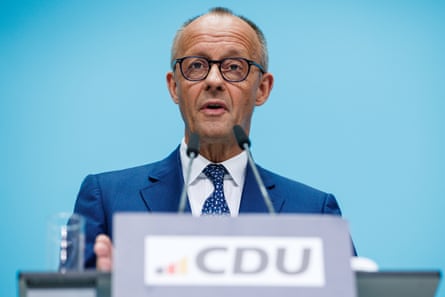 German chancellor Friedrich Merz said his government would act with ‘prudence but also determination’ to address security gaps. Photograph: Clemens Bilan/EPA
theguardian.com
German chancellor Friedrich Merz said his government would act with ‘prudence but also determination’ to address security gaps. Photograph: Clemens Bilan/EPA
theguardian.com
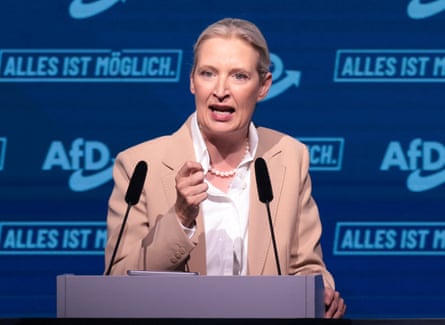 AfD co-leader Alice Weidel accused Merz on failing to take the problem of Islamist extremism seriously. Photograph: Christian Mang/Reuters
theguardian.com
AfD co-leader Alice Weidel accused Merz on failing to take the problem of Islamist extremism seriously. Photograph: Christian Mang/Reuters
theguardian.com
A rented van rammed into crowds near Berlin’s Pride celebrations over the weekend, killing a Polish woman and injuring dozens, according to The Guardian. Police later shot the suspected attacker dead after an hours-long manhunt, saying he ran at officers with a bladed weapon when they tried to arrest him.
German officials are now using the attack to push for tougher rules on known extremists and a rethink of how the justice system handles young offenders. The Guardian reports the suspect was a 21-year-old German national with Lebanese roots who was already known to police and believed by security authorities to be a supporter of Islamic State. He had previously been convicted of preparing a serious act of subversive violence and received a juvenile sentence that was suspended, allowing him to walk free; after his release he was under only sporadic observation.
The political timing is hard to miss. Berlin is one of Germany’s federal states and holds elections in September, alongside elections in two eastern regions, and Alternative für Deutschland is expected to perform strongly in all three, the paper reports. AfD is already the top party in national polls and is seeking to mobilise voters on immigration and security, accusing the government of failing to tackle Islamist radicalism.
Chancellor Friedrich Merz has promised to address security gaps with “prudence but also determination,” while Berlin’s top justice official, Felor Badenberg, has acknowledged public anger and called for an overhaul of juvenile criminal law. The case puts pressure on the practical mechanics of German counter-extremism: what counts as sufficient monitoring, who pays for it, and how long it lasts once a court has decided a person can return to ordinary life.
In the immediate aftermath, thousands gathered at the Brandenburg Gate for a sombre ceremony to mourn the dead. The suspect’s earlier conviction and suspended sentence remain part of the public record, as does the fact that the van used in the attack was rented in his name.