
Bihar police suspend constable after AK-47 fired at student protest
Videos from Siwan spread as exam leak movement escalates, resignation in Delhi does not end the crackdown debate
Images
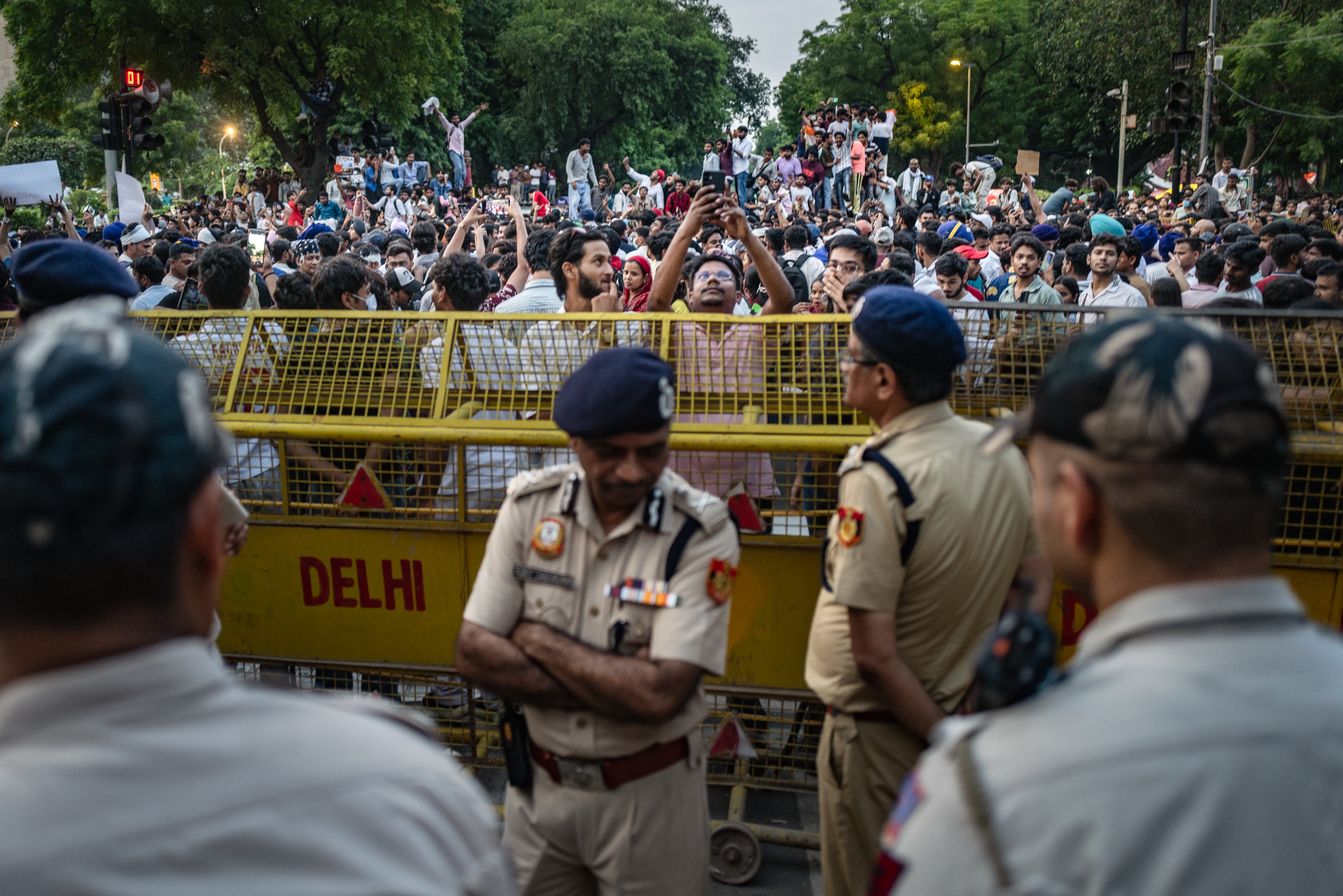 The protests led to the resignation of India’s education minister Dharmendra Pradhan on Saturday after weeks of Gen Z-led protests (Getty)
Getty
The protests led to the resignation of India’s education minister Dharmendra Pradhan on Saturday after weeks of Gen Z-led protests (Getty)
Getty
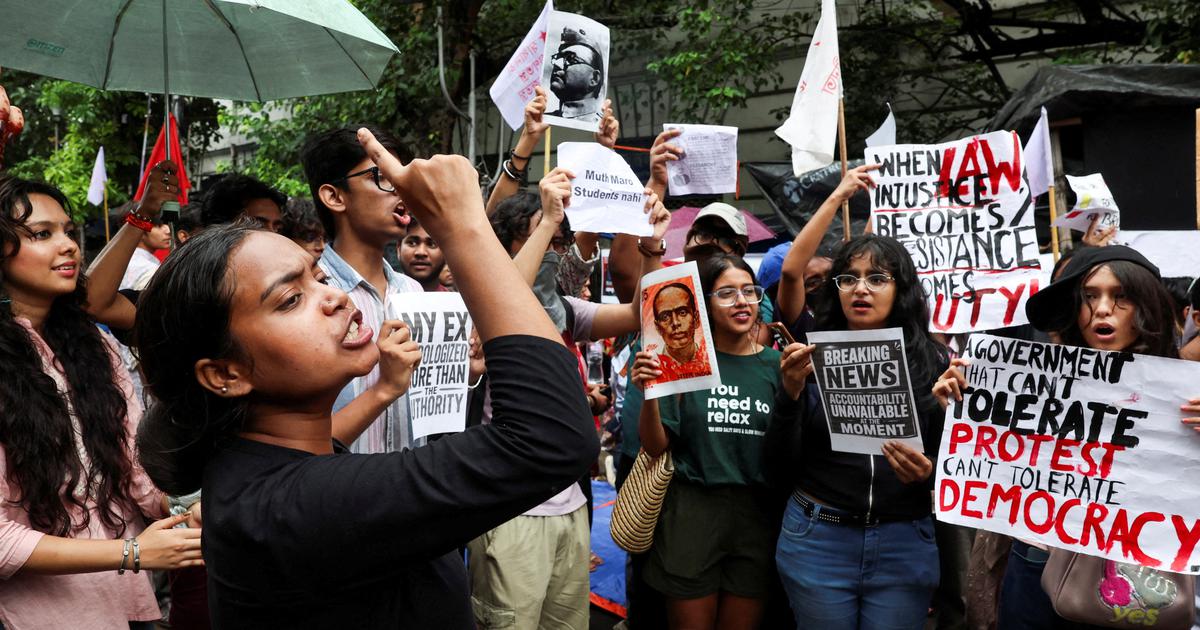 People gather in solidarity with Cockroach Janta Party protests held at Jantar Mantar, demanding the resignation of Education Minister Dharmendra Pradhan over exam paper leaks, in Kolkata on July 22.
|
Sahiba Chawdhary/Reuters
scroll.in
People gather in solidarity with Cockroach Janta Party protests held at Jantar Mantar, demanding the resignation of Education Minister Dharmendra Pradhan over exam paper leaks, in Kolkata on July 22.
|
Sahiba Chawdhary/Reuters
scroll.in
A police constable in India’s Bihar state was suspended after video showed him running toward student protesters and firing an AK-47 into the air, according to The Independent. The incident took place on Saturday in Siwan, as demonstrations spread following the resignation of India’s education minister Dharmendra Pradhan.
Police said no one was wounded, and a senior Bihar officer, Nilesh Kumar, called the use of the rifle “wrong and unjustified” because the crowd were students. The Independent reported the constable belonged to an intelligence unit typically used against “hard-core criminals,” a detail that underlines how protest policing can slide into counterinsurgency posture once the state begins treating public gatherings as a security problem rather than a civic one.
The protests were triggered by leaked question papers for a national medical college entrance exam in May, which forced more than two million students to re-sit the test, The Independent reported. The Guardian has described the wider movement—organized under the youth-led “Cockroach Janata Party”—as a Gen Z campaign that quickly grew beyond exam administration into a broader challenge to the government’s credibility, using Instagram memes and short videos to bypass television channels that critics say have become aligned with the ruling BJP.
As the street campaign expanded, institutions moved to contain it in ways that can outlast any single resignation. Scroll.in reported that police in Siwan first used tear gas and “mild force,” then opened fire after protesters allegedly threw stones, injuring the local superintendent of police and other officers. In West Bengal, the state’s chief minister said authorities would invoke a preventive-detention law—the West Bengal Public Safety and Control of Anti-Social Activities Act, 2026, known as the “Goonda Act”—against people accused of attacking police and journalists during a Kolkata march, a step that would shift the dispute from public order into pre-trial incapacitation.
At the national level, The Independent reported that parliament was adjourned amid a noisy dispute over the crackdown, while opposition leader Mallikarjun Kharge described the treatment of students as a “grave assault on democracy.” A sitting Supreme Court judge, Ujjal Bhuyan, gave a rare public warning that space for “divergent opinion” was shrinking, tying the immediate controversy to a longer-running argument about whether India’s political system still absorbs dissent or increasingly processes it through police files.
The state’s own response to the AK-47 footage—suspension, not denial—suggests officials understood how quickly a single clip can become a national symbol. The videos showed a uniformed officer in riot gear firing at least three shots into the air.
The rifle was not aimed at a target, police said, but it was carried to a student protest all the same.