
Zelenskyy meets Andy Burnham at UK naval base
New prime minister showcases Stone Cloak jammer and training mission, £25 billion Ukraine support becomes early Downing Street baseline
Images
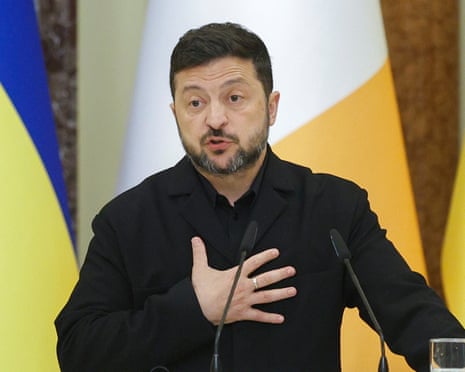 Volodymyr Zelenskyy was one of the first world leaders Burnham spoke to when he entered No 10 last week. Photograph: Sergey Dolzhenko/EPA
theguardian.com
Volodymyr Zelenskyy was one of the first world leaders Burnham spoke to when he entered No 10 last week. Photograph: Sergey Dolzhenko/EPA
theguardian.com
Andy Burnham’s first high-profile foreign engagement as Britain’s new prime minister is a visit by Ukraine’s Volodymyr Zelenskyy to a UK naval base where Ukrainian forces have been training, according to The Guardian. The meeting is being staged around a multinational exercise focused on mine and maritime operations in the Black Sea, with the Dorset phase involving more than 200 Ukrainian personnel.
According to The Guardian, Burnham has pledged to keep the UK’s policy of strong support for Ukraine, continuing the line set by his predecessor Keir Starmer. The symbolism is deliberate: Zelenskyy was among the first leaders Burnham spoke to after entering Downing Street, and the visit is framed as a show of “unwavering” backing. The practical content sits alongside the optics. Burnham and Zelenskyy are expected to discuss joint projects including “Stone Cloak”, an electronic jammer the UK says has been tested in combat and sent to Ukraine in large numbers to be fitted to drones.
The Guardian reports that the UK has shared Stone Cloak’s intellectual property with Ukraine, enabling immediate use and independent mass production. That kind of technology transfer is harder to unwind than a one-off shipment: once a design and manufacturing know-how are in place, the supplier’s leverage shifts from controlling deliveries to influencing upgrades and integration. The same report says the system is planned to be fitted to future UK weaponry as well, including cruise missiles, turning the Ukrainian battlefield into a proving ground for kit that later returns to British inventories.
Money and domestic politics sit in the background of the visit. The Guardian puts total UK support for Ukraine since the full-scale invasion in 2022 at £25 billion, including £16 billion in military assistance. In Westminster, those numbers function as both commitment and constraint: reversing them risks a public break with allies and the appearance of retreat, while extending them competes with other budget demands at home. The choreography of a naval-base meeting, with troops on display and a named piece of hardware in the foreground, offers a way to present continuity as policy rather than as sunk cost.
The practice of using visits to signal resolve is familiar from Starmer’s tenure, The Guardian notes, including regular hosting of Zelenskyy and high-profile gestures after a contentious White House encounter in 2025. Burnham’s first week in office is now being used to set expectations about what will not change.
The Guardian’s account places the meeting at a base where Ukrainian personnel have been training and where the latest phase of the exercise has just concluded. The new prime minister’s first overseas visitor will arrive not for a summit in London, but for a photo line beside equipment designed to keep drones from being tracked.