
Wildfires drive mass evacuations in France and Spain
Bordeaux officials weigh total city evacuation as winds feed flames, smoke forces face-mask logistics far beyond burn zones
Images
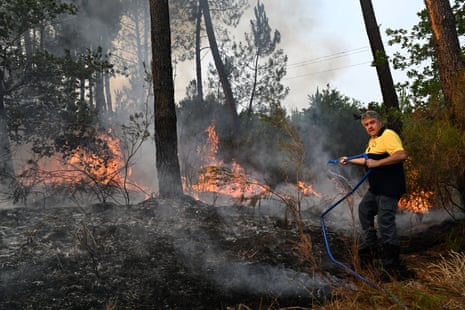 A local resident uses a hose to put out flames burning across the road from his house near Marcheprime, outside Bordeaux in France. Photograph: Emma Da Silva/AP
theguardian.com
A local resident uses a hose to put out flames burning across the road from his house near Marcheprime, outside Bordeaux in France. Photograph: Emma Da Silva/AP
theguardian.com
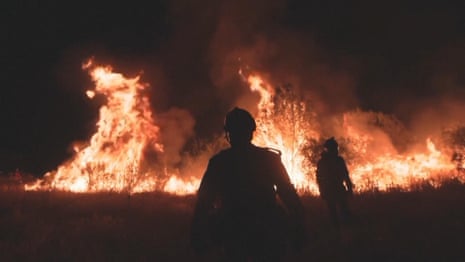 Firefighters in Spain and France battle raging wildfires – video
theguardian.com
Firefighters in Spain and France battle raging wildfires – video
theguardian.com
 independent.co.uk
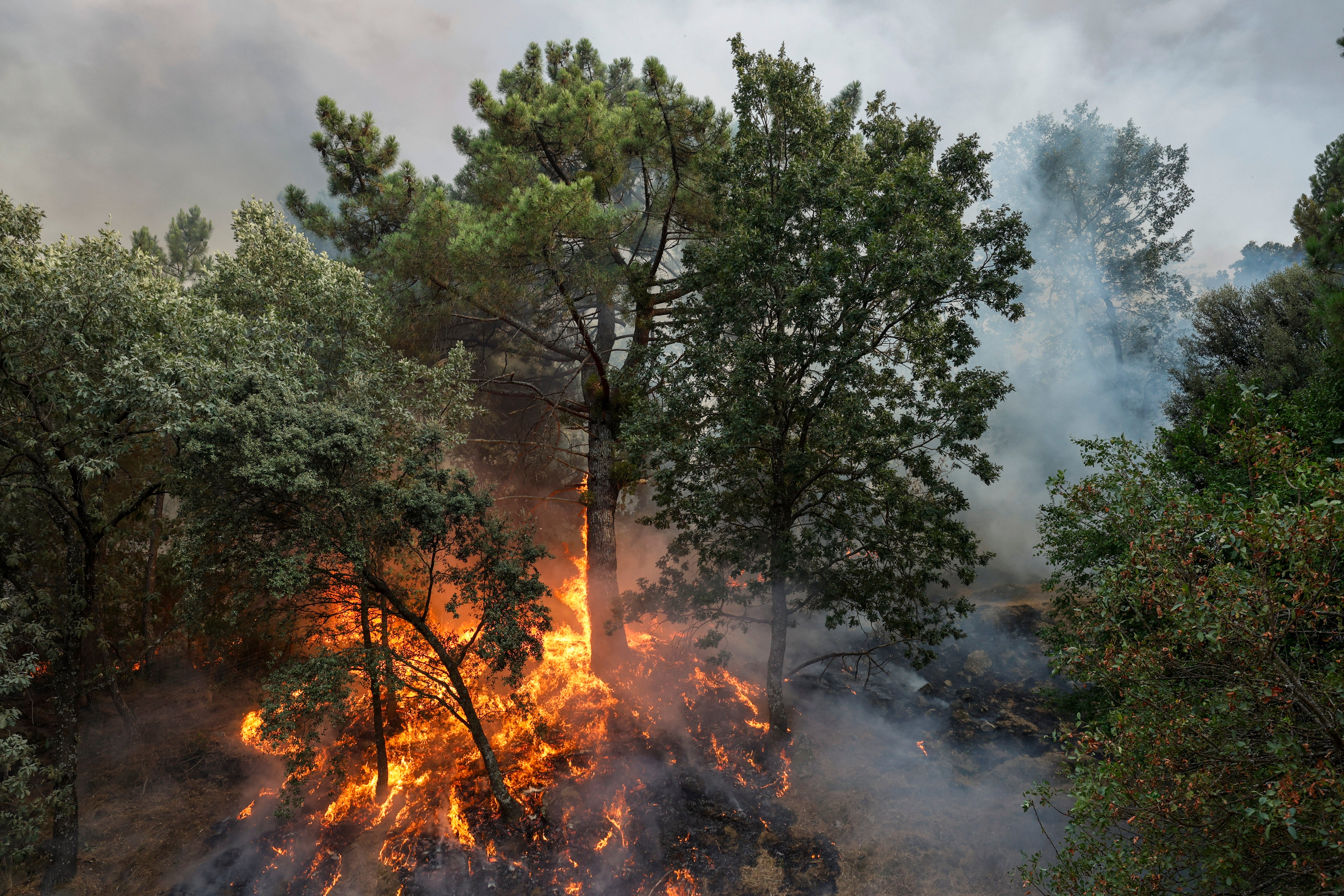 Trees burn during a wildfire next to La Atalaya neighborhood on 25 July 2026 in El Tiemblo, Madrid, Spain (Getty)
Getty
Trees burn during a wildfire next to La Atalaya neighborhood on 25 July 2026 in El Tiemblo, Madrid, Spain (Getty)
Getty
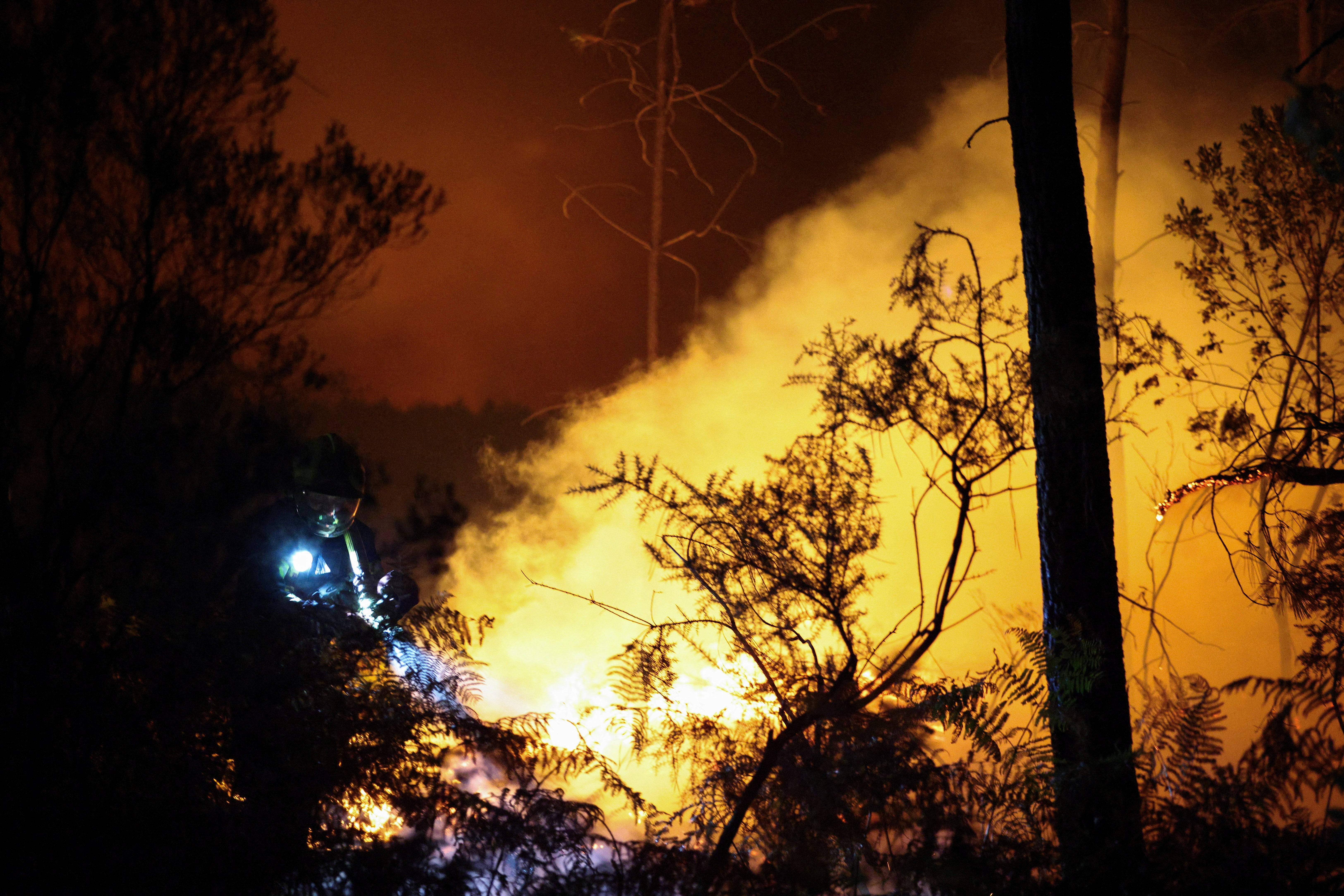 A firefighter works at the scene of a wildfire in Andernos-les-Bains in the Gironde department, amongst worsening drought conditions following a heatwave and water shortages across much of France, 26 July 2026 (Reuters)
Reuters
A firefighter works at the scene of a wildfire in Andernos-les-Bains in the Gironde department, amongst worsening drought conditions following a heatwave and water shortages across much of France, 26 July 2026 (Reuters)
Reuters
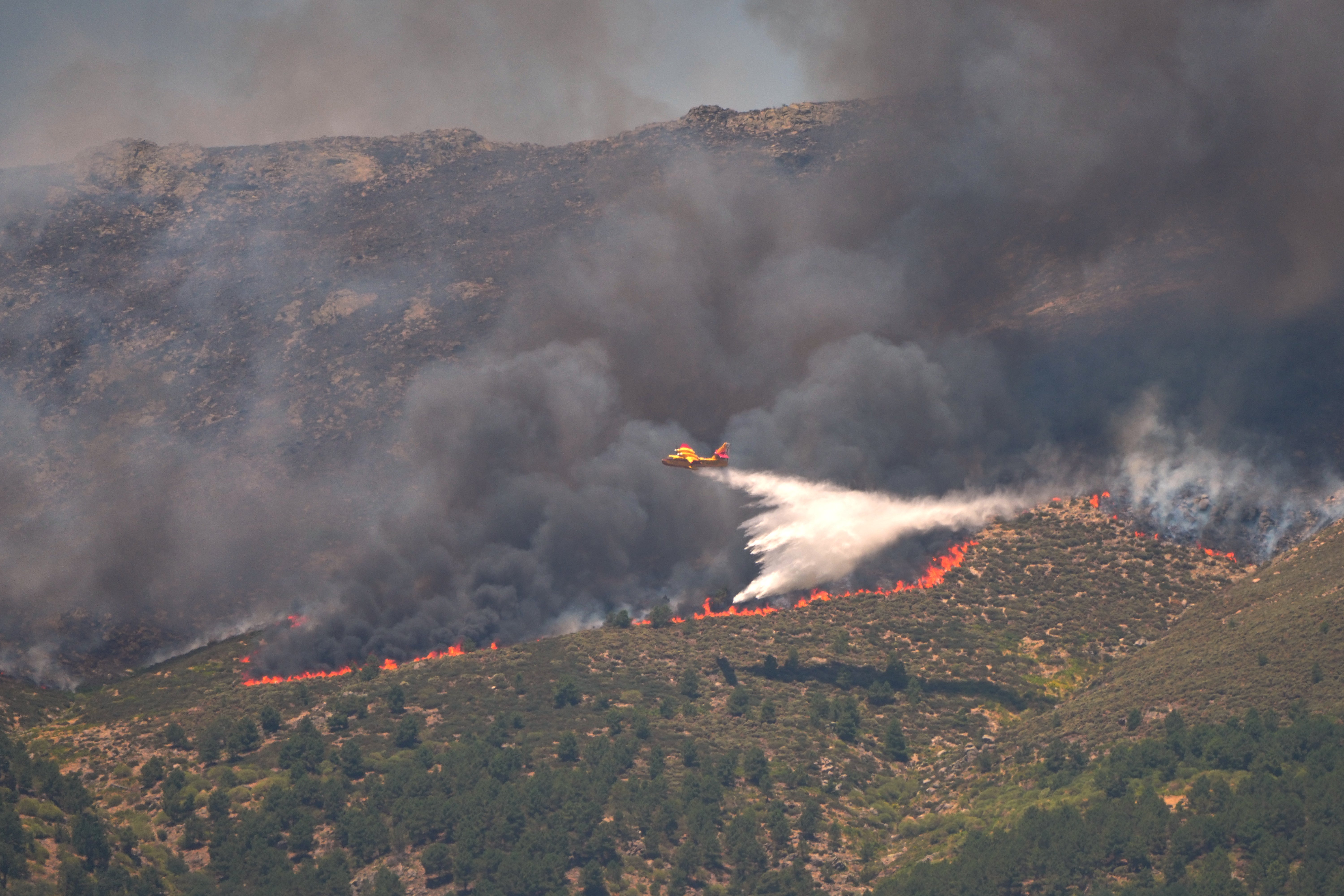 A seaplane drops water onto the fire as a wildfire advances near La Adrada, Ávila province, Spain (AP)
independent.co.uk
A seaplane drops water onto the fire as a wildfire advances near La Adrada, Ávila province, Spain (AP)
independent.co.uk
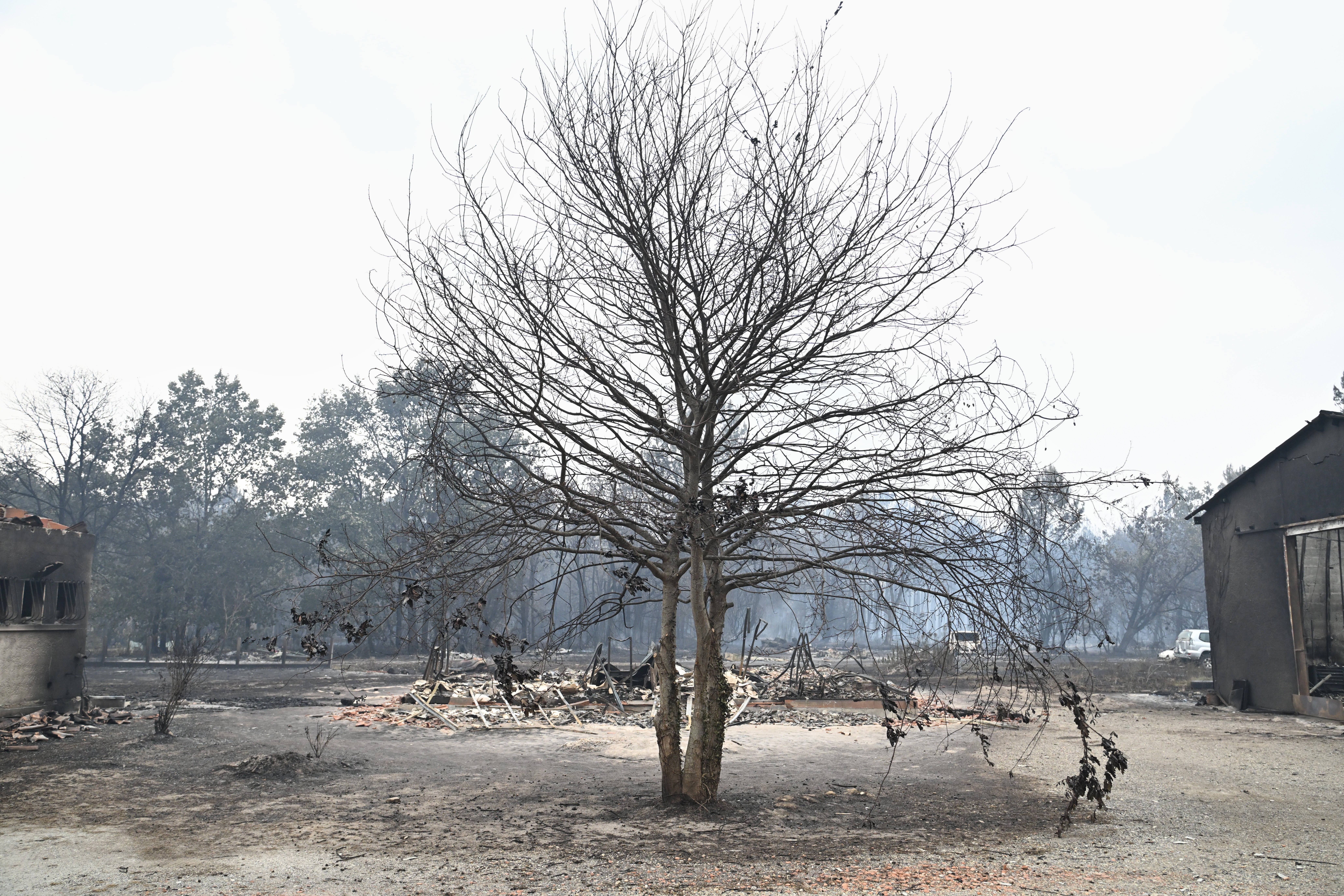 A burned tree is seen near Lacanau, in the Lege-Cap-Ferret region, southwestern France (AP)
independent.co.uk
A burned tree is seen near Lacanau, in the Lege-Cap-Ferret region, southwestern France (AP)
independent.co.uk
More than 300,000 people have fled homes and holiday accommodation in France and Spain as wildfires push evacuations into the hundreds of thousands, according to The Guardian. In south-west France, authorities have moved large numbers of residents out of areas around Bordeaux as flames advance in high winds, with officials describing the operation as one of the largest peacetime civilian evacuations the country has carried out.
The scale matters because evacuations are not just a fire-service task; they are a transport, shelter, and supply-chain problem that has to work under smoke and road closures. The Guardian reports that thousands crowded into emergency shelters as fires destroyed houses and displaced residents, while France alone has seen tens of thousands of hectares burned. The Independent adds that Bordeaux’s city council has discussed scenarios that include a total evacuation of the city if conditions worsen, a step that turns a regional wildfire into a metropolitan contingency plan.
Across the border in Spain, evacuations have extended beyond rural areas into regions around Madrid and Ávila, with new orders also issued near Toledo, The Guardian reports. That spread changes the politics of emergency response: when fires threaten dense population centres, the costs shift from forestry and agriculture into housing, health care, and lost economic activity. Smoke has already degraded air quality beyond the immediate fire zones, according to The Independent, prompting the French government to promise large-scale distribution of face masks.
The reporting also shows how quickly “seasonal” hazards become year-round governance. When wind-driven fires jump containment lines, officials are forced into blunt measures—closing roads, emptying villages, and moving people before the fire arrives—because the alternative is trying to rescue them once the smoke and heat make access impossible. The same dynamic appears in the way authorities communicate: public updates become a rolling logistics brief, not a reassurance.
By Sunday, major fires were still burning in both France and Spain, with officials issuing fresh evacuation orders even as earlier evacuees waited in temporary shelters. Bordeaux’s contingency discussions were taking place while surrounding areas were already being cleared.
The immediate unit of policy is no longer the fire perimeter. It is the number of people who can be moved and housed before the wind changes again.