
UK journalist safety fears reshape coverage
Government-ordered study finds one in three changed reporting habits, intimidation shifts from the comment section to the street
Images
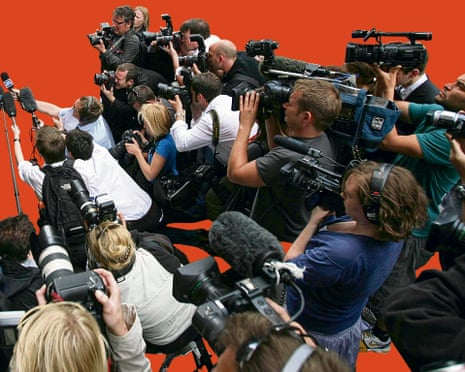 Investigators found a widespread belief that abuse linked to reporting had increased, especially online. Composite: PA Images/Guardian Design / Alamy
theguardian.com
Investigators found a widespread belief that abuse linked to reporting had increased, especially online. Composite: PA Images/Guardian Design / Alamy
theguardian.com
Hundreds of UK journalists told a government-ordered investigation that safety fears are changing what they cover and how they report it. According to The Guardian, the study found roughly a third had altered their reporting practices because of intimidation, while almost half said safety concerns influenced their willingness to pursue certain stories.
The inquiry was commissioned by ministers and carried out by Alma Economics, which surveyed 531 journalists and conducted 55 in-depth interviews, The Guardian reports. Respondents described a newsroom environment where abuse is treated as a background condition—something to be endured by being “thick-skinned”—even as the volume and specificity of threats rises, especially online. The result is not a single act of censorship but a series of small editorial decisions: whether to attend a protest, whether to put a byline on a sensitive piece, whether to film a stand-up that makes a reporter easily identifiable.
The topics cited by journalists are revealing because they combine high emotion with high visibility. The Guardian reports that rightwing anti-immigration protests were most frequently mentioned in connection with in-person risks and backlash. Journalists also described self-censoring around the Trump administration—particularly protests linked to US Immigration and Customs Enforcement—and around trans issues. In Northern Ireland, reporters said they faced intimidation from masked men while covering anti-immigration riots. Elsewhere, footage of journalists at protests was shared in Facebook groups where users tried to identify and locate them, turning routine reporting into a doxxing exercise.
The investigation also highlights how changes in media production have shifted the risk calculus. The move toward online and video journalism makes reporters more recognisable than in an era when many could remain relatively anonymous behind print copy. A reporter who once blended into a crowd now appears on camera with a name, a face and a predictable social-media footprint. That visibility is valuable for audience growth and platform distribution, but it also lowers the cost of harassment for anyone willing to weaponise it.
Gendered abuse emerges as a separate layer of pressure. The Guardian reports that female journalists described sexualised harassment, explicit threats and messages focused on appearance, alongside the standard barrage of political hostility. In one example cited, a female journalist was subjected to misogynistic heckling at a rally, with footage later uploaded to social media—an incident that combines real-world confrontation with online amplification.
The study’s findings land at a moment when governments and platforms both claim to be defending public debate while expanding their own levers over speech: policing “harmful content” on the one hand, and investigating leaks and sources on the other. The journalists in the survey describe a more mundane constraint—personal security—that does not require a new law to narrow coverage.
In the investigation, one journalist summed up the new editorial arithmetic in a single question: whether a story is “worth it.”