
Anti-immigrant raids spread in South Africa
El País reports March & March shifts from protests to door-to-door searches, small shopkeepers close after repeated looting
Images
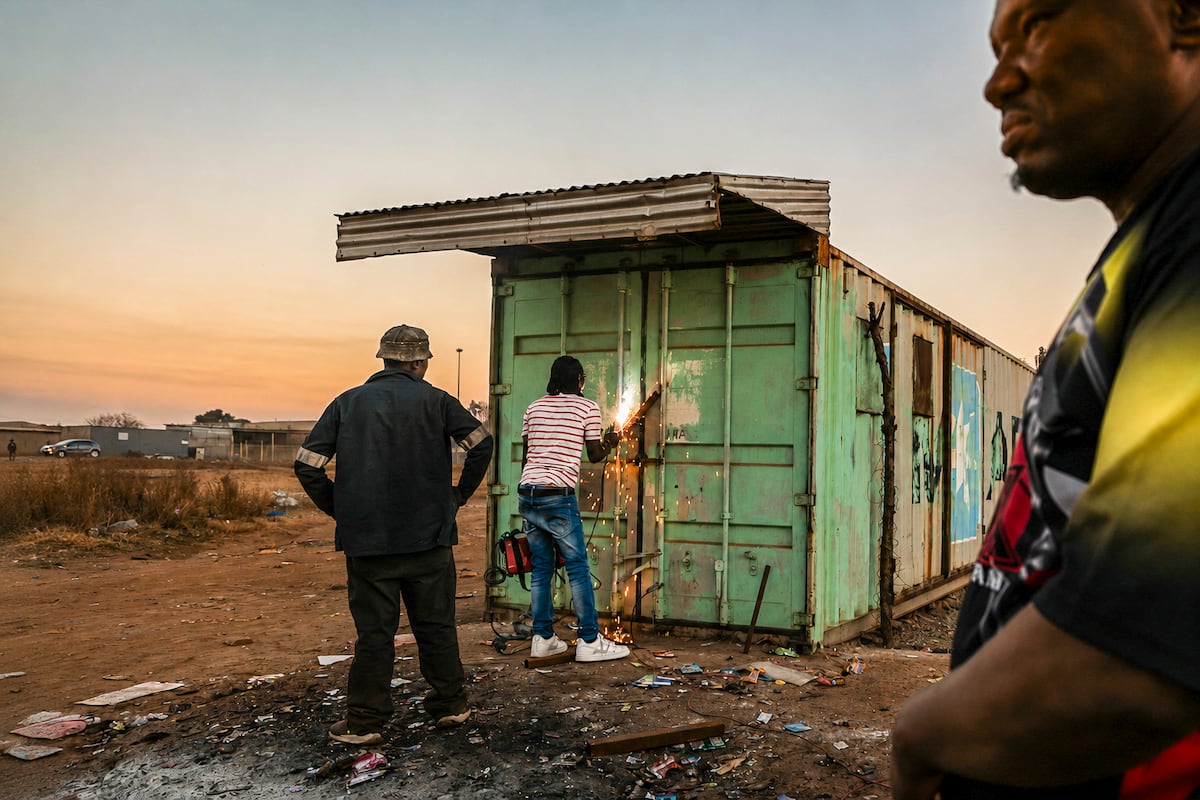 From being unemployed to hunting migrants in South Africa: The movement that has turned foreigners into scapegoats
english.elpais.com
From being unemployed to hunting migrants in South Africa: The movement that has turned foreigners into scapegoats
english.elpais.com
In Katlehong, a township southeast of Johannesburg, an Ethiopian shopkeeper has shut his small business after it was looted repeatedly, El País reports. Biranu Hajiso, described as the owner of a metal container used as a spaza shop, says it has been looted three times. Around the site, the paper describes broken bottles, trash and damaged storefronts—street-level evidence of a campaign that has moved from slogans to raids.
The reporting centres on a movement called March & March, which has launched a campaign to expel African foreigners from South Africa. El País says it initially focused on migrants from neighbouring countries such as Zimbabwe, Lesotho, Mozambique and Malawi, and has since widened to include refugees and asylum seekers from Congo, Ethiopia and Somalia. Some of those targeted already hold South African citizenship, blurring the line between an immigration crackdown and a broader assertion of who gets to belong.
The timing matters. El País says that on June 30 the movement gave the government a deadline to expel undocumented immigrants, and that thousands demonstrated across multiple cities that day. Since then, the protests have evolved into door-to-door campaigns in which groups of residents search neighbourhoods for immigrants. That shift changes the state’s role: instead of policing a march, authorities face dispersed, semi-organised enforcement carried out by civilians who can claim they are merely “checking” who lives next door.
The backdrop is an economy that has offered little relief. The article cites the World Bank describing South Africa as the most unequal country in the world, and notes an official unemployment rate above 30% alongside a decade of near-stagnation. High crime and deteriorating public services are presented as daily realities, not abstract indicators. In that setting, immigration becomes a visible, localised target—shops with foreign owners, crowded inner-city areas like Yeoville—while the harder question of why the state cannot deliver basic security and services remains unanswered.
Loren Landau, a migration expert and Oxford University professor quoted by El País, frames the movement as frustration with the post-apartheid state’s failure to meet expectations. The article’s examples show how that frustration is being operationalised: looting, intimidation and informal “verification” campaigns that impose costs on small traders first. When a spaza shop closes, the neighbourhood loses a supplier; the people who organised the raid do not have to replace the goods they destroyed.
Hajiso’s decision to shut down is a small business choice made under pressure, but it also functions as a data point. If repeated looting is enough to close a shop, the movement does not need to win elections or pass laws to change who can live and work in Katlehong.