
Rohingya families fear hundreds died in Myanmar shipwrecks
UN links two boats to capsizes off the coast, statelessness and camp policing feed trafficker routes
Images
 Siraz Ullah, centre, clung on to a dream of being a professional football player.
theguardian.com
Siraz Ullah, centre, clung on to a dream of being a professional football player.
theguardian.com
 Siraz Ullah, right, with his nephew Mumtaz.
theguardian.com
Siraz Ullah, right, with his nephew Mumtaz.
theguardian.com
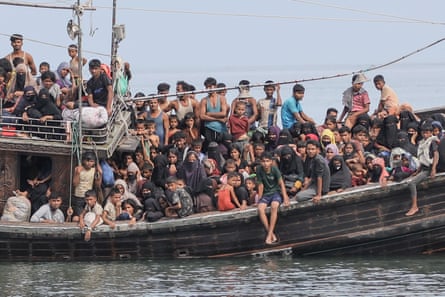 Newly arrived Rohingya refugees are stranded on a boat as they were denied permission to land, Pineung, Aceh province, Indonesia, November 2023. Photograph: Amanda Jufrian/AFP/Getty Images
theguardian.com
Newly arrived Rohingya refugees are stranded on a boat as they were denied permission to land, Pineung, Aceh province, Indonesia, November 2023. Photograph: Amanda Jufrian/AFP/Getty Images
theguardian.com
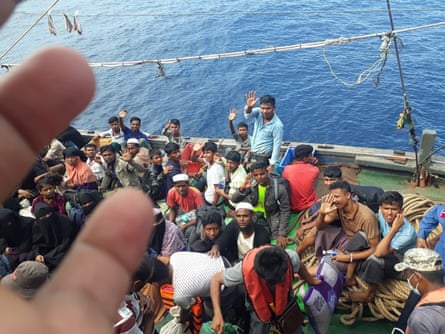 Siraz with other Rohingya in 2022.
theguardian.com
Siraz with other Rohingya in 2022.
theguardian.com
A Rohingya family in Bangladesh has spent two years replaying a final voice message from a young man who boarded a boat out of Myanmar. According to The Guardian, relatives of Siraz Ullah fear he is among roughly 500 Rohingya who vanished at sea after setting sail for Malaysia in late June 2023, as the UN believes two boats carrying 250 and 280 people capsized off Myanmar’s coast.
The numbers sit inside a migration system that is both heavily policed and effectively ungoverned. The Rohingya were stripped of Myanmar citizenship in 1982, leaving hundreds of thousands inside Myanmar without legal status and more than a million in Bangladesh in camps where movement is restricted and legal work is scarce, The Guardian reports. That combination compresses people into a narrow set of options: stay in place without rights, or pay to move through criminal channels. Families describe traffickers and other criminals luring refugees with promises of jobs and safety in Malaysia, then abusing and extorting them before placing them on unsafe boats. When departures fail, passengers may be turned back and sent out again, or disappear into ransom schemes; the article cites reports of relatives being kidnapped from Myanmar and Bangladesh and held until payments were made.
The sea route has become a predictable choke point because it is one of the few routes that does not require documents most Rohingya cannot obtain. The Guardian notes that a vast criminal network has operated between the Bay of Bengal and Malaysia since the early 2000s, and it profits from the same constraints that governments present as “control”: tight borders, limited legal entry, and camp confinement that prevents ordinary earning. Each additional restriction raises the price of escape, and higher prices attract more organised coercion. Even when boats do not sink, regional states can still treat them as someone else’s problem; the article recalls Rohingya arrivals being denied permission to land in Indonesia’s Aceh province in late 2023.
Siraz Ullah left Myanmar in 2017 during the military campaign that drove hundreds of thousands into Bangladesh, but he kept talking about football, his nephew told The Guardian. His family last heard from him on 22 June 2023; the next contact was silence.