
Amazon border communities report being held hostage by organised crime
Brazil and Peru sign cooperation plan as armed incursions target Asháninka leaders, troops arrive after gunmen vanish into forest
Images
 Masked gunmen entered homes in the Brazilian village of Apiwtxa, within the Amazon Forest, earlier this month. Photograph: Jorge Sáenz/AP
theguardian.com
Masked gunmen entered homes in the Brazilian village of Apiwtxa, within the Amazon Forest, earlier this month. Photograph: Jorge Sáenz/AP
theguardian.com
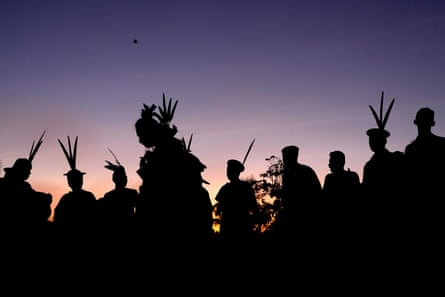 The Asháninka Indigenous people are seeking protection from the Brazilian government. Photograph: Jorge Sáenz/AP
theguardian.com
The Asháninka Indigenous people are seeking protection from the Brazilian government. Photograph: Jorge Sáenz/AP
theguardian.com
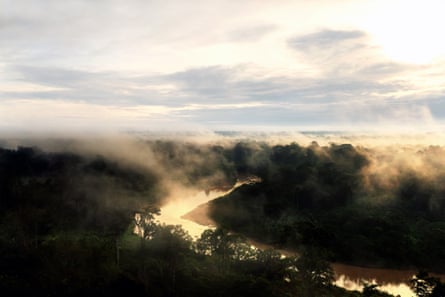 Sunrise on the Amônia River, which runs through the Kampa do Rio Amônia Indigenous territory in Brazil. Photograph: Nicoló Lanfranchi/The Guardian
theguardian.com
Sunrise on the Amônia River, which runs through the Kampa do Rio Amônia Indigenous territory in Brazil. Photograph: Nicoló Lanfranchi/The Guardian
theguardian.com
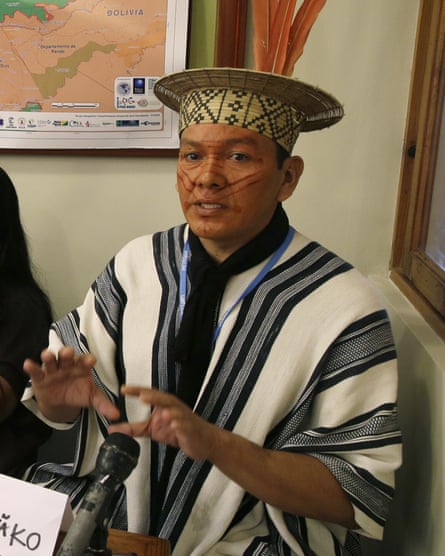 Francisco Piyãko, general coordinator of the Organisation of Indigenous People of the Juruá River, is part of the delegation to Brasília. Photograph: Martín Mejía/AP
theguardian.com
Francisco Piyãko, general coordinator of the Organisation of Indigenous People of the Juruá River, is part of the delegation to Brasília. Photograph: Martín Mejía/AP
theguardian.com
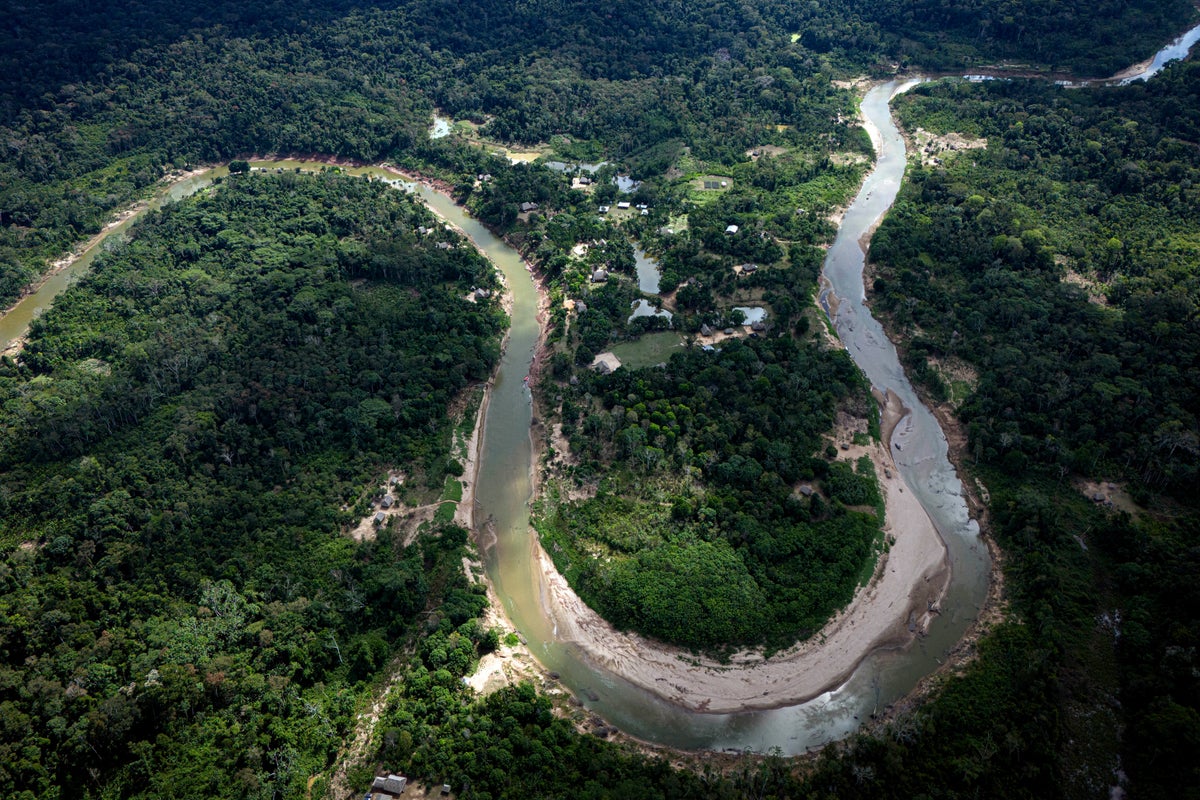 Brazil's government says it is working with Peru to protect border Indigenous lands
independent.co.uk
Brazil's government says it is working with Peru to protect border Indigenous lands
independent.co.uk
Masked gunmen with semi-automatic weapons entered homes in the Brazilian village of Apiwtxa in early July 2023, indigenous leaders told The Guardian, searching for community leaders and forcing residents to gather children into a single building for protection. The village lies in the Kampa do Rio Amônia Indigenous territory in Acre state, near the Brazil–Peru border, an area now described by local leaders as being held “hostage” by organised crime.
The immediate threat is violent, but the mechanism is logistical. According to The Guardian, criminal groups in the region are destroying rainforest, building roads and using rivers and adjacent land as trafficking routes, turning remoteness into cover. Indigenous territories have become some of the last barriers against illegal occupation along this border, and leaders say the latest incursions are the worst danger they have faced after decades of pressure from intruders. The Guardian notes that villagers notified authorities during the July 2023 incident; the Brazilian army arrived around midnight, after the gunmen had already disappeared back into the forest.
Brazil’s government is now trying to formalise a cross-border response. The Independent reports that Brazil’s Ministry of Indigenous Peoples has signed a memorandum of understanding with Peru’s Ministry of Culture to strengthen cooperation in protecting Indigenous territories, especially those of isolated peoples along the border. The agreement, negotiated since 2024 and expected to be published in the coming weeks, is meant to create a framework for information-sharing and coordinated protection. The Independent also reports that Brazil’s federal police opened an investigation and launched an operation in the region with state authorities to combat incursions, drug trafficking and environmental crimes, while the Brazilian Army reinforced its presence by deploying about 30 troops.
The gap between paperwork and presence is what local leaders are warning about. Francisco Piyãko, an Asháninka leader and coordinator of the Organisation of Indigenous People of the Juruá River, told The Guardian that either the state provides protection or communities will start organising to defend themselves—something he called disastrous. The Independent adds that Indigenous groups criticise military deployments as temporary while threats remain permanent, a complaint that mirrors the way trafficking routes adapt faster than public agencies can rotate personnel. In this part of the Amazon, control is exercised through who can move, who can extract, and who can intimidate without consequence.
Apiwtxa was the last Indigenous village visited by British journalist Dom Phillips before he was murdered in 2022 while reporting on illegal extractivist activity, The Guardian notes. A memorandum is expected to be published in the coming weeks; the gunmen have already mapped the rivers.