
Madison police shooting kills Corey Ruiz
Video shows officer firing at close range during struggle, protesters seize press conference as officials promise investigation
Images
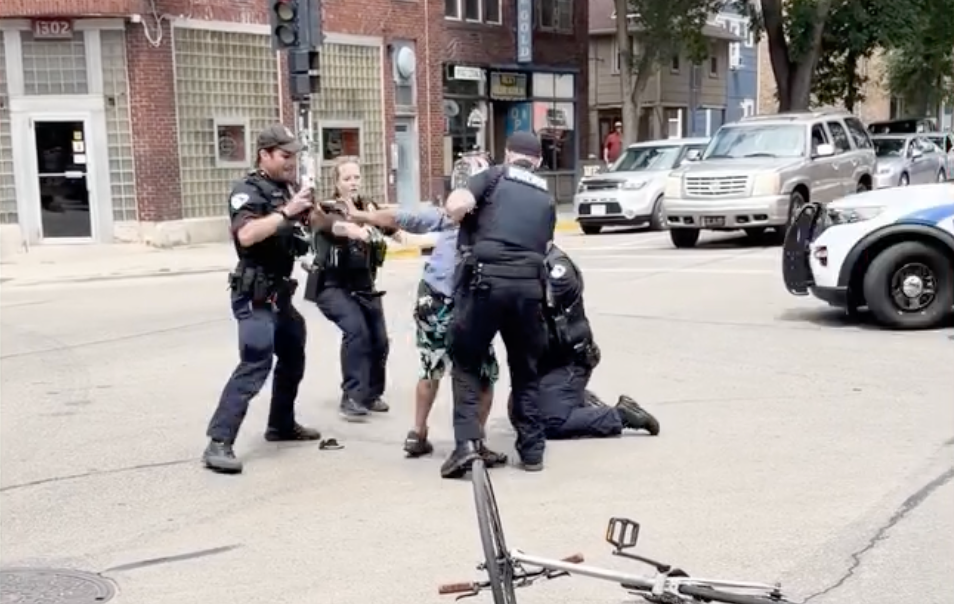 A fatal police shooting in Madison, Wisconsin, has fueled anger as harrowing footage shows the moment an officer killed Corey Ruiz at point-blank range in the middle of the street (Michael Doubek)
Michael Doubek
A fatal police shooting in Madison, Wisconsin, has fueled anger as harrowing footage shows the moment an officer killed Corey Ruiz at point-blank range in the middle of the street (Michael Doubek)
Michael Doubek
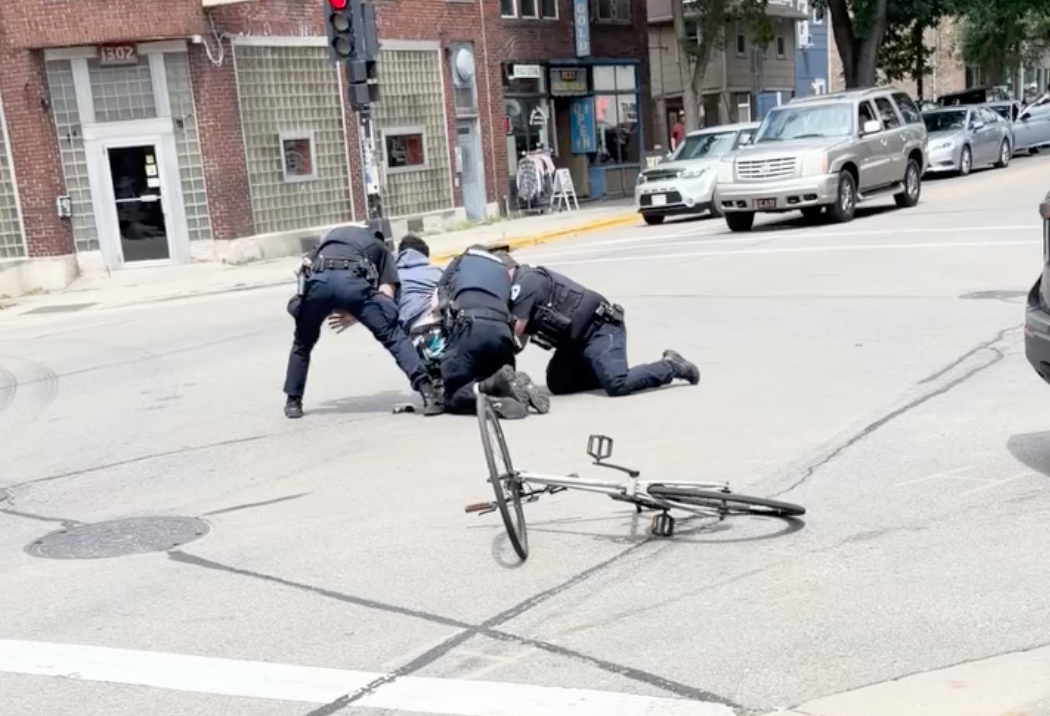 Bystanders have shared disturbing footage of the shooting that took place Wednesday at the busy intersection of Madison’s South Baldwin and Williamson Streets around 1:34 p.m. (Michael Doubek)
Michael Doubek
Bystanders have shared disturbing footage of the shooting that took place Wednesday at the busy intersection of Madison’s South Baldwin and Williamson Streets around 1:34 p.m. (Michael Doubek)
Michael Doubek
 Madison Police Department shared a photograph of the knife they said Corey Ruiz injured an officer with. The officer then fired his weapon (Madison Police Department)
Madison Police Department
Madison Police Department shared a photograph of the knife they said Corey Ruiz injured an officer with. The officer then fired his weapon (Madison Police Department)
Madison Police Department
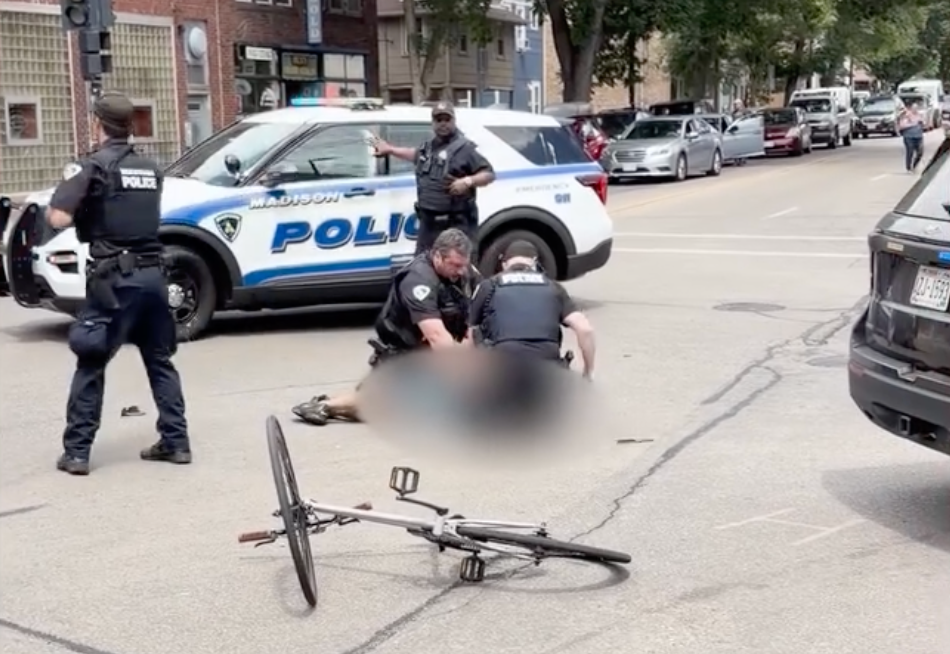 With the victim face down on the ground as blood poured from his head, the officer then placed the man’s hands behind his back. Another officer removed the knife (Michael Doubek)
Michael Doubek
With the victim face down on the ground as blood poured from his head, the officer then placed the man’s hands behind his back. Another officer removed the knife (Michael Doubek)
Michael Doubek
 Madison Police Chief Patterson appealed for calm at a press conference in the aftermath, recounting the official narrative and pointing out that video of the shooting seen online only offered one side of the story (Michael Doubek)
Michael Doubek
Madison Police Chief Patterson appealed for calm at a press conference in the aftermath, recounting the official narrative and pointing out that video of the shooting seen online only offered one side of the story (Michael Doubek)
Michael Doubek
Three shots were fired at point-blank range in broad daylight on a commercial street in Madison, Wisconsin, after police officers wrestled a man to the ground, according to video described by The Independent. The man, identified by police as Corey Ruiz, was taken to hospital and pronounced dead. Within a day, protesters had taken over a city press conference demanding answers and outside investigators.
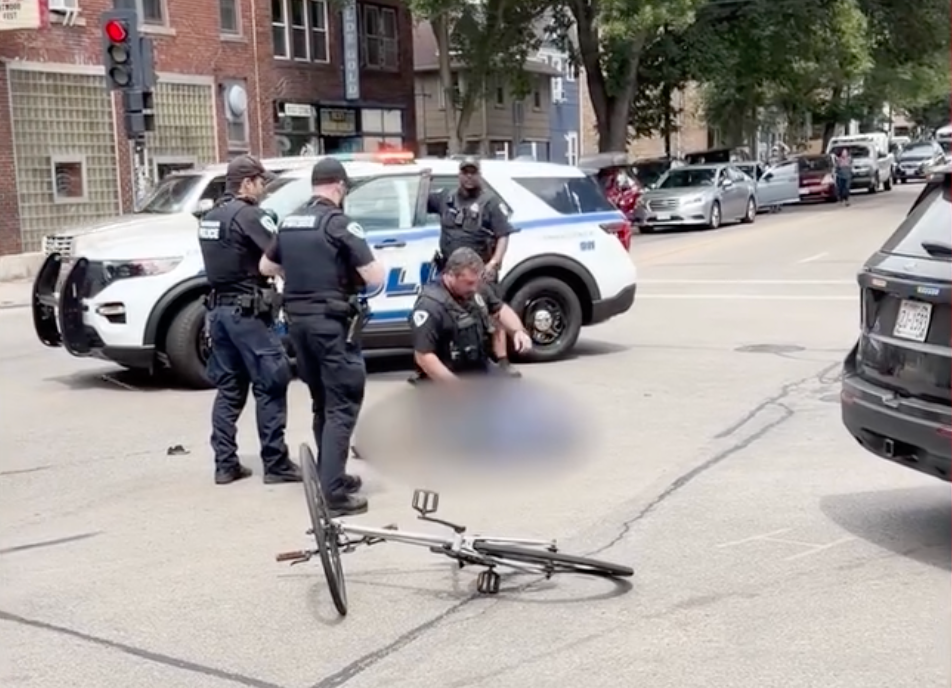
According to The Independent, Madison police say Ruiz was armed with a knife and had injured an officer during the encounter near South Baldwin and Williamson Streets, an area surrounded by homes, bars, restaurants and shops. Footage shows four officers attempting to restrain him, with Ruiz struggling to break free while held by the arms on the ground. Police said a Taser was used but failed to discharge; the video then shows one officer drawing a gun and firing three shots at close range, before reholstering. A knife is later removed from Ruiz and thrown aside, and another officer appears to place Ruiz’s limp hands behind his back as if to handcuff him.
The immediate conflict is over sequence and threshold: whether the shooting was a last resort after an officer was cut, or a decision made once control had already been established. That dispute matters because it shapes what the public believes the rules are. When the state’s most coercive power is exercised on camera, the institutional reflex is to insist on process—“under investigation”—while the street judges the clip. Both sides then behave as if the other is trying to lock in a narrative before facts are settled.
City leaders tried to hold the line. Mayor Satya Rhodes-Conway said no one should lose their life in an encounter with law enforcement, but the event was disrupted as protesters challenged the city and police department. The Common Council president, Sabrina Madison, called for justice and questioned how protocol could allow three shots to the head, pressing for a swift investigation by state officials. A Democratic state representative running for governor, Fran Hong, called the shooting an “execution,” while police urged the public not to jump to conclusions based solely on the video.
The pattern is familiar: departments control evidence and timelines, communities respond to what they can see, and elected officials are pulled between defending institutions they fund and acknowledging outrage from constituents who do not experience policing as a service. Video compresses that cycle into hours. The costs—legal exposure, officer safety measures, and public trust—arrive later and are often paid by parties who were not in the struggle on the pavement.
Ruiz was shot around 1:34 p.m. on Wednesday, and by Thursday the city’s attempt to explain itself had become another contested scene.