
UK cancels British Army training exercise in Kenya
Defence agreement stalls over jurisdiction for offences by British soldiers, BATUK economic benefits collide with demands for accountability
Images
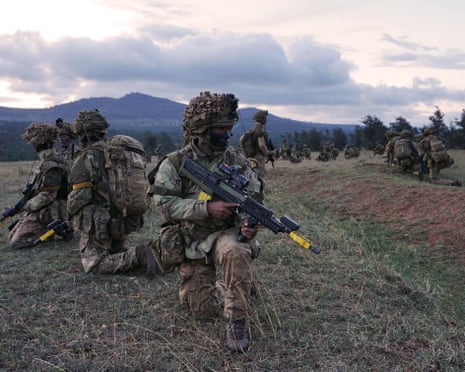 Soldiers of the British army training unit in Kenya (BATUK) with troops from the Kenya Defence Forces (KDF) on a training exercise on the Laikipia plateau. Photograph: Tony Karumba/AFP/Getty
theguardian.com
Soldiers of the British army training unit in Kenya (BATUK) with troops from the Kenya Defence Forces (KDF) on a training exercise on the Laikipia plateau. Photograph: Tony Karumba/AFP/Getty
theguardian.com
A planned British Army exercise in Kenya has been cancelled after Nairobi declined to ratify a renewed defence agreement that would govern how British troops can be prosecuted for offences committed in the country. According to The Guardian, the UK Ministry of Defence said the necessary licences for training on the Laikipia plateau were not granted, and the exercise will now be held at an alternative location outside Kenya.
The dispute is about more than paperwork. Kenyan lawmakers have pushed for wider local jurisdiction over serious cases involving British soldiers, and the negotiations also cover the money Britain pays Kenya to host the training camp. Kenya’s economy benefits from the presence of the British Army Training Unit Kenya (BATUK) near Nanyuki, and the MoD acknowledged “lost economic activity” from the cancellation. But the political cost of hosting a foreign force has risen after allegations aired in a Kenyan parliamentary report last year, including claims of human rights violations, environmental damage and sexual abuse linked to the base.
The most prominent case is the 2012 death of Agnes Wanjiru. A British soldier, Robert Purkiss, has been charged with her murder, and Kenya has retained jurisdiction; an extradition hearing is due in November and Purkiss denies the charge. The Guardian reports that progress in the case accelerated after John Healey’s tenure as defence secretary, underscoring how much the partnership depends on London’s willingness to accept consequences when cases become public and politically unavoidable.
In practice, overseas training arrangements work when the host country can show its voters that rules apply to the visitors, and when the visiting country can assure its own troops that the legal boundaries are clear. When that balance breaks, training relocates quickly; the MoD can move an exercise, while Kenya cannot as easily replace the spending and jobs BATUK brings. The Kenyan committee chair Nelson Koech told the paper the two governments are still engaging to resolve outstanding issues, but the immediate leverage sits with the side issuing licences.
The cancellation lands as Kenya debates how much sovereignty it is willing to trade for security cooperation and local economic inflows. A base that is described as “mutually beneficial” is now being renegotiated around who gets to prosecute whom, and under what terms.
The September exercise involving the 1st Battalion the Duke of Lancaster’s Regiment will not take place in Kenya.