
Mother and teenage daughter drown off West Mersea beach
Essex Police say family group got stranded on sandbank as tide came in, seven-year-old relative remains critically ill
Images
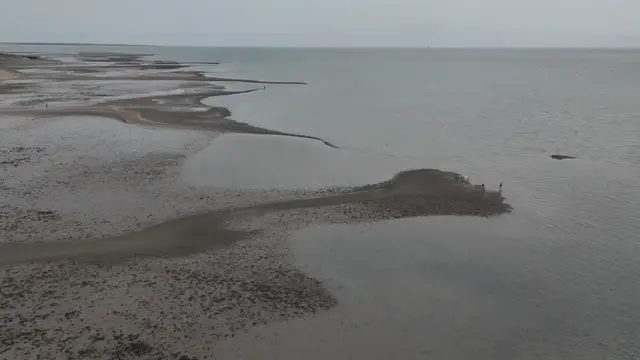 Scene in West Mersea as teenage girl and woman from London die after getting into difficulty at beach
standard.co.uk
Scene in West Mersea as teenage girl and woman from London die after getting into difficulty at beach
standard.co.uk
 standard.co.uk
 Prime Minister Andy Burnham has paused the plan for the early release of certain prisoners (Toby Melville/PA)
standard.co.uk
Prime Minister Andy Burnham has paused the plan for the early release of certain prisoners (Toby Melville/PA)
standard.co.uk
 <p>Shally Rahman</p>
standard.co.uk
<p>Shally Rahman</p>
standard.co.uk
 Samiha Rahman
standard.co.uk
Samiha Rahman
standard.co.uk
Two members of an east London family died in the water off West Mersea beach in Essex on Wednesday evening, after emergency services were called shortly after 5.30pm, the Standard reports. Police named the victims as Shally Rahman, 42, and her daughter Samiha Rahman, 15. A seven-year-old child, described as a cousin, remained in serious condition in hospital, with two other relatives treated for less serious injuries.
According to Essex Police, the incident unfolded amid reports of several people getting into difficulty during high tides, with witnesses describing a group stranded on a sandbank as the water came in. A detective inspector said the two who died had been trying to help the seven-year-old boy when he got into trouble. Dozens of witnesses were being spoken to as investigators pieced together a timeline from bystanders, emergency responders and family members.
The pattern is familiar on Britain’s coast: a beach that looks benign at low water can turn into a moving boundary line when channels fill and sandbars disappear. West Mersea is a popular day-trip destination, and the risk is not confined to strong swimmers or reckless behaviour; it is often a matter of local knowledge about tides, currents and the speed at which a safe route back can vanish. When a hot spell pushes more families toward open water, the pressure lands on the same limited set of safeguards—signage, public warnings and the capacity of local rescue services to respond within minutes.
The Standard quoted a relative describing shock and grief and said the family was of Bangladeshi heritage. The details matter because they point to how beach safety information actually travels: through informal networks, assumptions about what is safe, and the decisions people make when a child is in trouble. In those moments, the calculation is immediate—help first, sort out the risks later—and the cost is paid by the nearest capable adult.
Authorities can add patrols and warnings, but the sea does not enforce rules; it enforces physics. The Standard reported that police were asking anyone with information to come forward, while the seven-year-old remained in critical condition.
Emergency crews arrived after the call shortly after 5.30pm, but by the time the family was pulled from the water, two of them could not be saved.