
Road traffic noise links to higher Parkinson’s risk
Danish registry study follows 3.1 million adults for 18 years, quiet side of home appears to weaken association
Images
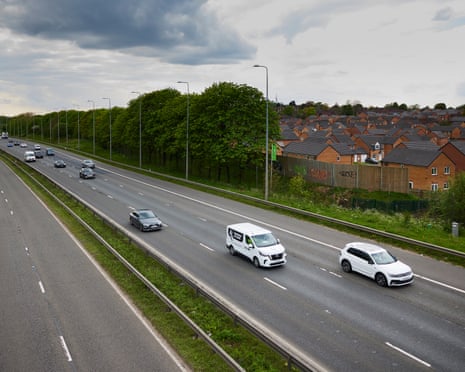 Research suggests a quiet or less exposed part of the home could mitigate the association between road traffic noise and risk of Parkinson’s disease. Photograph: Christopher Thomond/The Guardian
theguardian.com
Research suggests a quiet or less exposed part of the home could mitigate the association between road traffic noise and risk of Parkinson’s disease. Photograph: Christopher Thomond/The Guardian
theguardian.com
A Danish registry study tracking 3.1 million adults for 18 years has found a small but consistent association between road traffic noise and Parkinson’s disease. Published in JAMA Neurology, the analysis linked higher modeled noise at the most exposed side of a person’s home to a higher risk of later Parkinson’s diagnosis. According to The Guardian, each 11.5-decibel rise at the loudest facade corresponded to a 3% increase in risk over the study period.
The result lands in a crowded field of environmental explanations for neurological disease, where air pollution, pesticides and other exposures have been studied for years. Noise is harder to treat as an “exposure” because it is uneven: levels differ between streets, buildings and even rooms, and people change their daily patterns in ways that are rarely captured in health registers. The Danish team tried to handle that complexity by modeling noise at both the most and least exposed exterior parts of each residence, then comparing the difference—an attempt to approximate whether a home has a quieter side. In the study, having a quieter part of the home appeared to weaken the association, a detail that points to a plausible pathway through sleep disruption rather than a single toxic agent.
The researchers adjusted for air pollution, but they did not have lifestyle data, a gap that often decides whether an epidemiological signal holds up under scrutiny. Outside experts quoted by The Guardian stressed that the design cannot prove causation, and that noise may act as a general stressor rather than a Parkinson’s-specific trigger. Parkinson’s risk factors also cluster with socioeconomic status: people who live near busy roads may differ in work patterns, health behaviors, and access to care in ways that are difficult to fully measure. The study’s authors argued that the association looked similar across education and income groups, but registry-based analyses still depend on what the registries record—and what they do not.
The broader policy question is less about Parkinson’s specifically and more about how modern cities price noise. The World Health Organization’s thresholds are exceeded by chronic noise exposure for nearly a third of Europeans, the report notes, yet noise mitigation is usually treated as a local planning nuisance rather than a health intervention. If the “quiet side of the home” matters, then building design, zoning choices, and traffic routing become part of the exposure pathway—decisions typically made long before any health system pays for the downstream disease burden.
The study’s effect size is modest, but its scale is not. It leaves a concrete, testable proposition for future work: in the same apartment block, the bedroom facing the road may matter more than the address on the register.