
European drought is increasingly driven by heat
World Weather Attribution links 2026 soil moisture loss to extreme temperatures, winter rain no longer guarantees spring water
Images
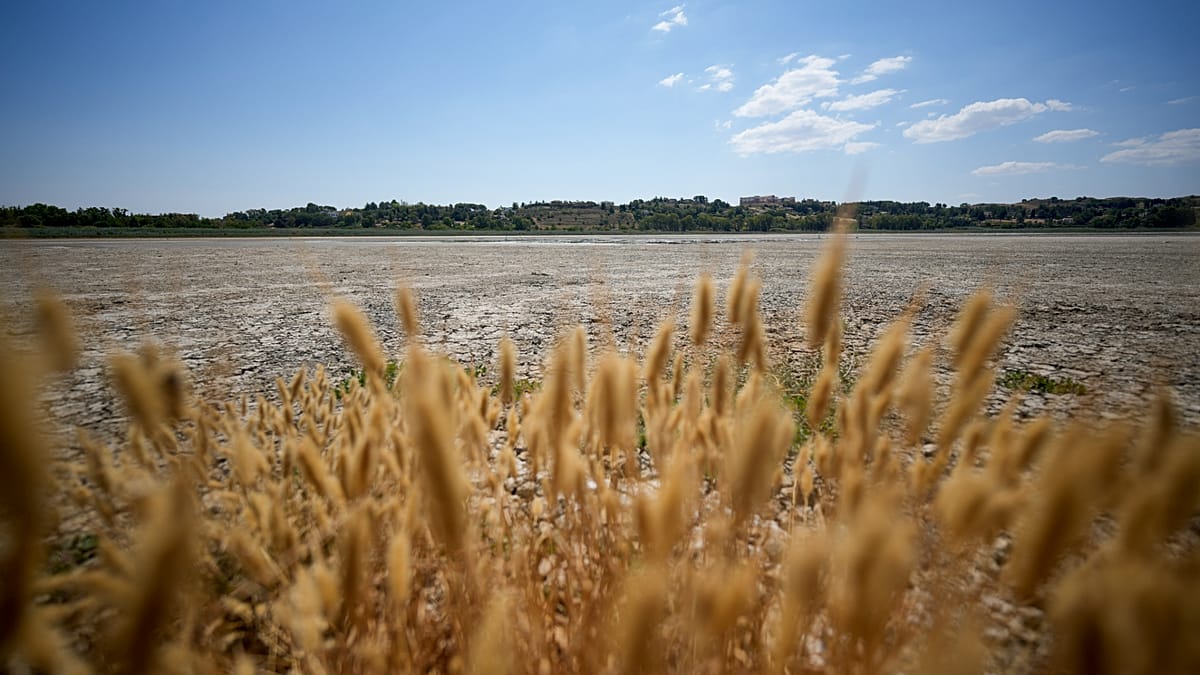 Heat-driven droughts are making life for Europeans more costly
euronews.com
Heat-driven droughts are making life for Europeans more costly
euronews.com
Scientists say Europe’s 2026 drought is being driven less by missing rain than by unusually hot air that pulls moisture out of soils faster than it can be replaced. Euronews reports that an assessment by World Weather Attribution (WWA) finds record summer heat is accelerating evaporation and turning dry spells into agricultural drought across the continent, with knock‑on effects from crop losses to low river levels.
The shift matters because it changes what “normal” winter rainfall can and cannot fix. Researchers from 12 European countries compared rainfall trends with measures of soil moisture and potential evapotranspiration — the atmosphere’s demand for water — and concluded that higher temperatures are doing more of the damage than rainfall deficits, particularly when spring warming dries out soils before summer even begins. Dr Sarah Kew of the Royal Netherlands Meteorological Institute told Euronews that extreme heat is becoming the main driver, while ETH Zurich’s Dominik Schumacher pointed to a pattern where increased winter rain does not prevent spring drying.
WWA’s estimates put numbers on the new baseline. Euronews cites the group’s finding that agricultural soil droughts in Western Europe are now five times more likely because of climate change, and 11 times more likely in Eastern Europe, where dry conditions have persisted for months. Heatwaves that create intense evaporative conditions are described as dramatically more likely than in a world without climate change — about 80 times more likely in Western Europe and 40 times more likely in Eastern Europe.
Those probabilities translate into concrete shortages. Euronews notes France is facing its worst maize harvest in 50 years and Romania has lost more than one million hectares of crops. Low rivers disrupt shipping and strain energy production — a reminder that drought is not only a farming problem but a logistics and power‑system constraint that shows up in prices. The article also highlights distributional effects: when food and basic goods rise in price, households with the least slack absorb the shock first.
The policy response implied by the analysis is less about waiting for rain and more about managing demand and resilience under heat: water storage, irrigation efficiency, and energy systems that can operate when rivers are too low for cooling or transport. Merel Laauwen, cited by Euronews, argues the drought crisis reaches beyond farmers to Europe’s most vulnerable populations.
The WWA assessment describes a continent where the atmosphere is increasingly the limiting factor, and where “enough rain” no longer guarantees enough water in the ground.