
Nicolás Maduro gets June 2027 US trial date
New York courtroom appearance follows commando raid in Caracas, immunity fight moves from geopolitics to federal docket
Images
 Nicolás Maduro in a courtroom sketch in March. Photograph: Jane Rosenberg/Reuters
theguardian.com
Nicolás Maduro in a courtroom sketch in March. Photograph: Jane Rosenberg/Reuters
theguardian.com
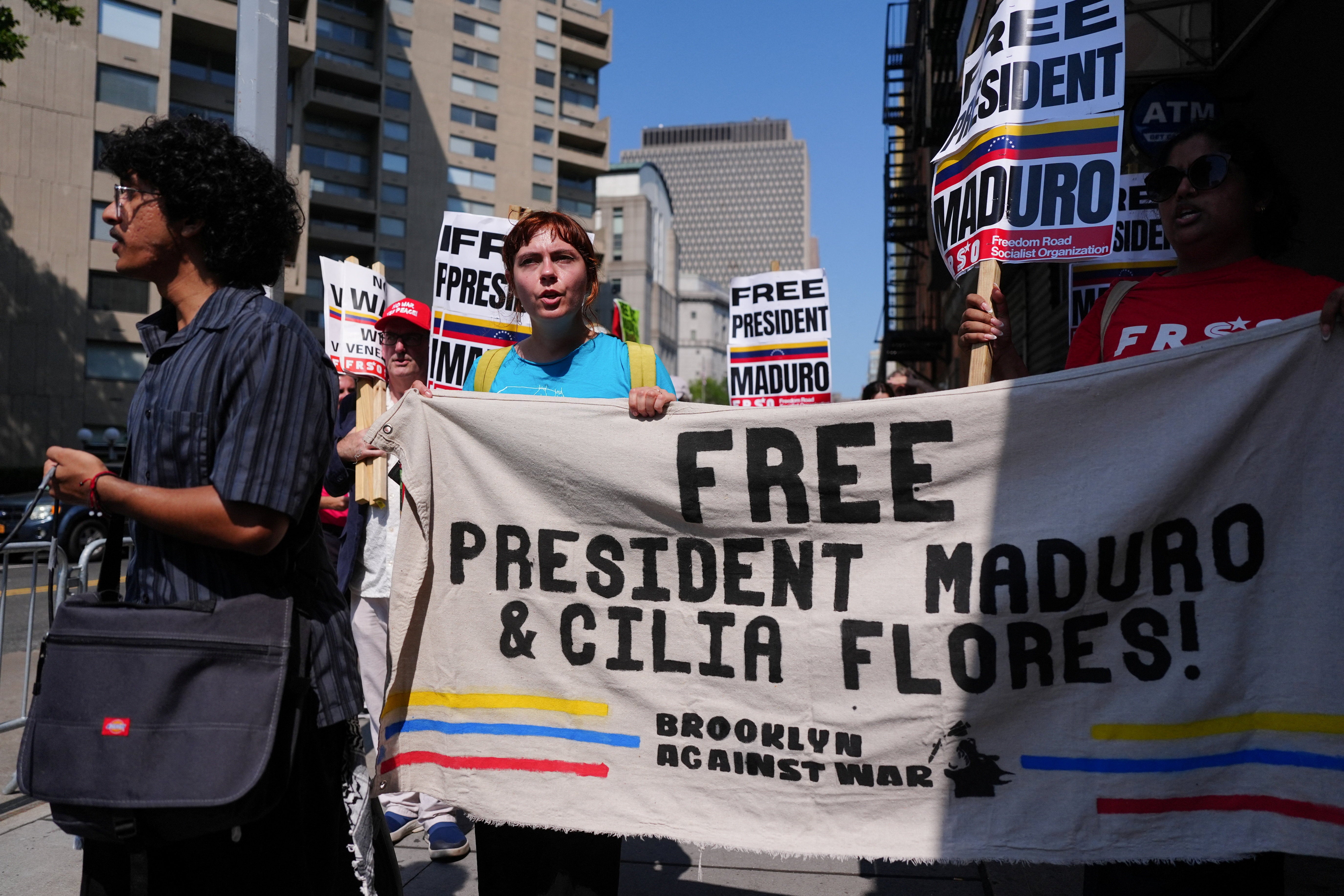 Demonstrators demanding the release of ousted Venezuelan President Nicolas Maduro and his wife Cilia gather outside the New York City court (Reuters)
Reuters
Demonstrators demanding the release of ousted Venezuelan President Nicolas Maduro and his wife Cilia gather outside the New York City court (Reuters)
Reuters
 Reuters
Nicolás Maduro is due to stand trial in New York on US drug-trafficking charges on 1 June 2027, after a federal judge set the date at a hearing in Manhattan. According to the Associated Press via the Guardian, the ousted Venezuelan leader appeared in beige prison clothing and was led into court by US marshals, with his wife Cilia Flores also charged. The case, first brought years ago, now sits on a calendar that stretches well beyond the next US election.
The trial date crystallises what Washington has been trying to treat as a law-enforcement matter while its own actions look like a foreign operation. Both the Guardian report and the Independent describe a middle-of-the-night raid in Caracas in early January in which US forces seized Maduro and Flores and brought them to New York. The Trump administration has framed the raid as a “surgical” operation rather than a military strike; the Independent adds that the Justice Department’s Office of Legal Counsel produced an advisory opinion saying the president could order the operation unilaterally and that it did not amount to a war requiring congressional approval.
In court, the defence is preparing to test whether that framing survives contact with basic rules of statecraft. Maduro’s lawyer, Barry Pollack, said he would seek dismissal on the grounds that Maduro is immune from prosecution as the head of a sovereign state, according to both outlets. Judge Alvin Hellerstein set a separate hearing later this year to consider motions to dismiss, and the schedule anticipates further litigation after prosecutors disclose any classified material to the defence, the Independent reports.
Prosecutors allege Maduro used the machinery of government to facilitate cocaine shipments into the United States, with the Guardian summarising claims of conspiracies to move vast quantities of drugs and collusion with Venezuelan officials. The political context has never been far away: the United States stopped recognising Maduro as Venezuela’s legitimate president in 2019 and has accused him of rigging elections, while Maduro has described himself as a “prisoner of war” and called his capture a kidnapping.
For Washington, the case offers a public narrative of accountability while pushing the hardest questions into procedural hearings: whether a sitting or recently deposed foreign leader can be tried in a US courtroom, and what precedents are set when arrest is delivered by commandos rather than extradition. For Caracas and other capitals, it reads as a reminder that the boundary between sanctions, covert action, and criminal prosecution can be crossed without a vote.
Maduro did not request bail, and the court did not set him free. The next concrete milestone is not a diplomatic summit but a motions hearing on the judge’s calendar.